Proudly serving Mesa, Tempe, Phoenix, Chandler, Gilbert, Queen Creek & surrounding areasCall or Text 24/7: 602-905-5577

Water Softener Services in Glendale, AZ | Softeners, Reverse Osmosis & Whole-House Filtration

Mesa Water Softeners provides water softener services in Glendale, AZ for homeowners and businesses dealing with hard Phoenix metro water. Our team installs water softeners, reverse osmosis systems, whole-house filtration, salt and saltless water softener options, and commercial treatment systems. We also handle water softener repair, maintenance, resin replacement, brine tank service, and carbon filtration add-ons when your water test shows additional treatment needs. Every recommendation starts with the local water conditions in mind, not a one-size-fits-all package.

Glendale's blended surface water and groundwater often carries calcium and magnesium hardness that shows up as white scale, dry-feeling skin, spotty dishes, and stress on water heaters. Phoenix metro water hardness routinely measures between 12 and 25 grains per gallon, which is well into very hard water conditions. We test hardness, iron, pH, chlorine or chloramine, total dissolved solids, and sediment before sizing equipment, so your system is matched to your home, plumbing, and water use. Contact our team when you want clear pricing, clean installation, and support after the system is installed.

From Catlin Court and downtown Glendale to Arrowhead Ranch, the Westgate corridor, and neighborhoods along the 101, our team understands older homes without softener loops as well as newer properties with pre-plumbed connections. Schedule a water quality assessment to see what your Glendale water contains before you choose equipment.

★ ★ ★ ★ ★4.9/5 Average Rating - 20+ Years of Experience - Glendale Water Treatment Experts - Residential & Commercial
Water Treatment Services

Water Softener & Filtration Services in Glendale, AZ

Mesa Water Softeners helps Glendale property owners choose point-of-entry softening, drinking-water reverse osmosis, and filtration combinations based on measured hardness and household or business demand. We serve older homes near downtown Glendale, newer neighborhoods around Arrowhead Ranch, and commercial properties near the 101 and Westgate corridor; for nearby Phoenix-area coverage, our team also supports Ahwatukee . Use the service categories below to match the problem you are seeing with the system or repair that fits best.

Water Softeners

Placeholder image 1

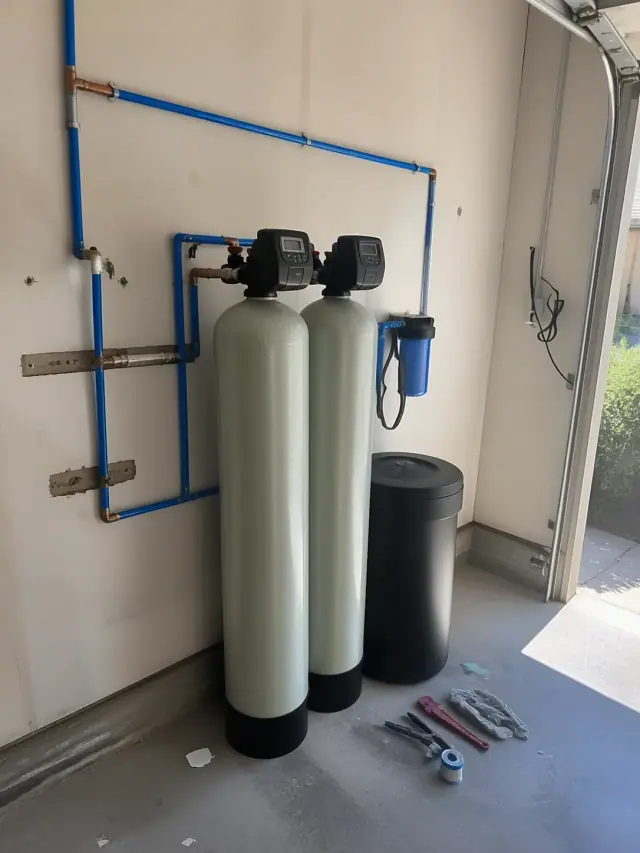
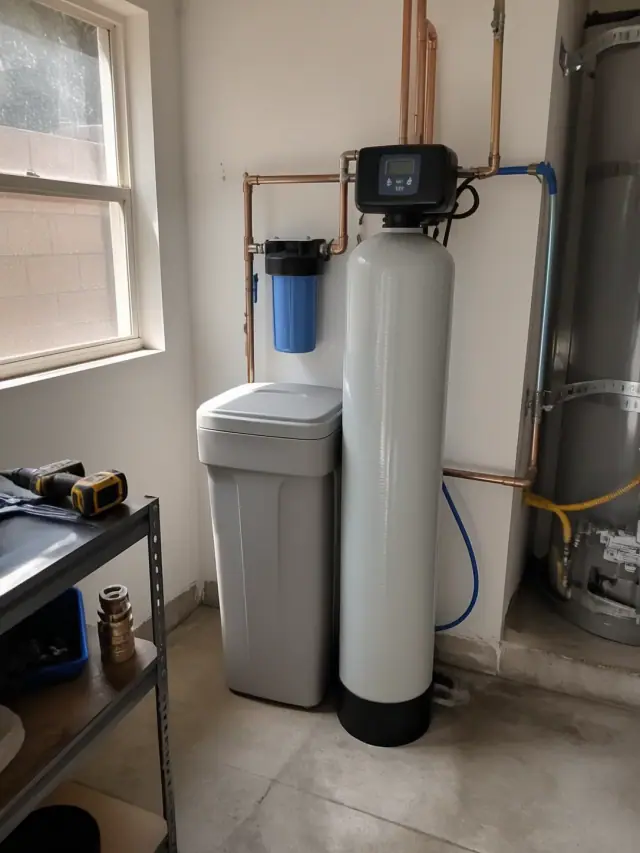
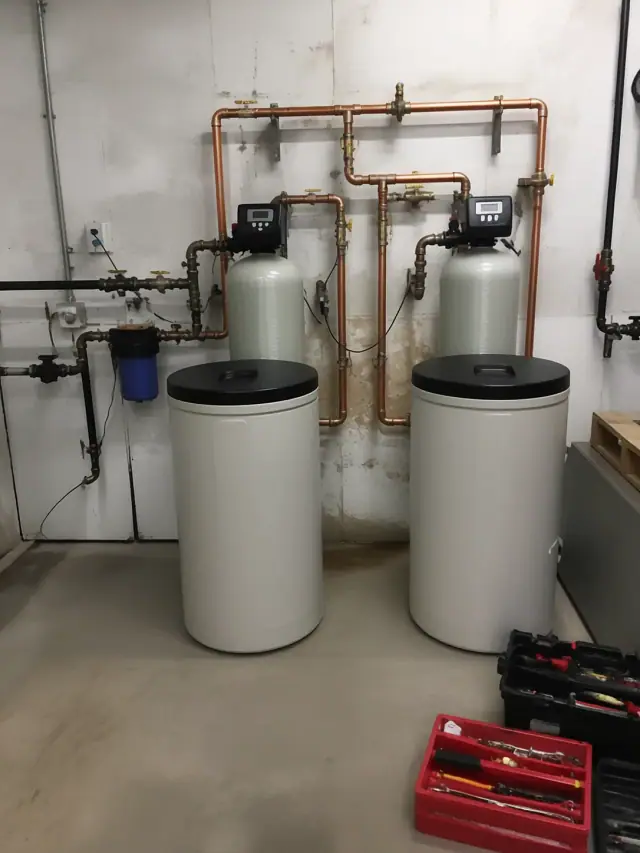
Water softeners address the calcium and magnesium that create scale in Glendale plumbing, fixtures, water heaters, dishwashers, and laundry equipment. We install ion exchange softeners, demand-initiated systems, twin-tank configurations, and related pretreatment when your water test shows sediment or iron concerns. Proper sizing helps the system regenerate efficiently without wasting salt or allowing hardness breakthrough between cycles.

Explore Service

Reverse Osmosis

Placeholder image 2

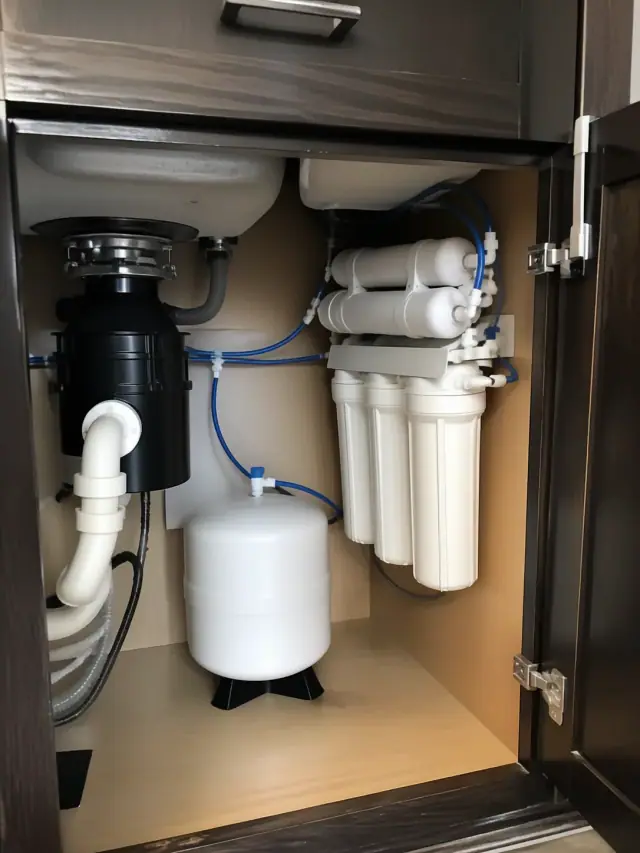
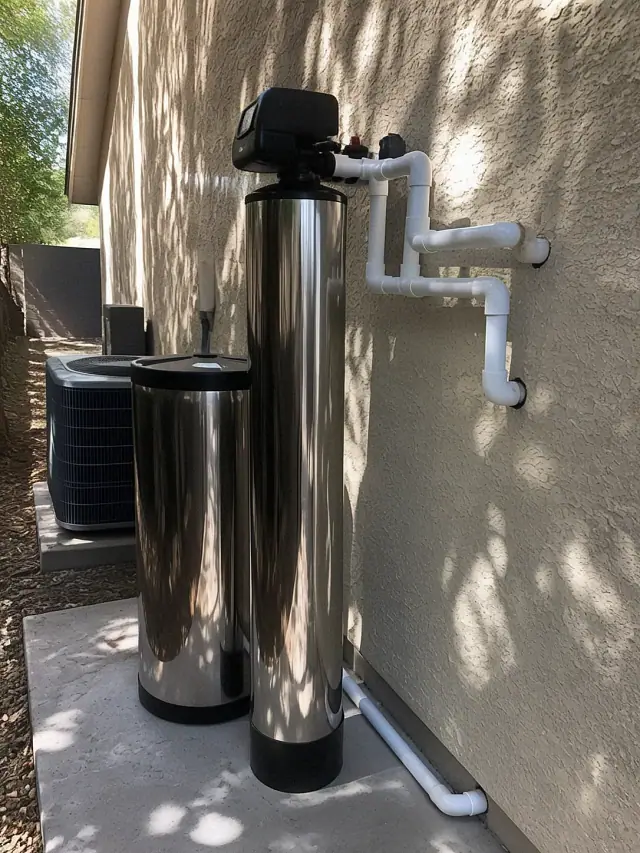
Reverse osmosis systems improve drinking water from a dedicated faucet by reducing dissolved solids, nitrates, and other contaminants that a softener is not designed to address. In Glendale homes, pairing RO with a water softener protects the membrane from scaling while giving the kitchen a cleaner drinking-water supply. We can integrate reverse osmosis with softening and whole-house filtration based on your water test results.

Explore Service

Whole House Filtration

Placeholder image 3

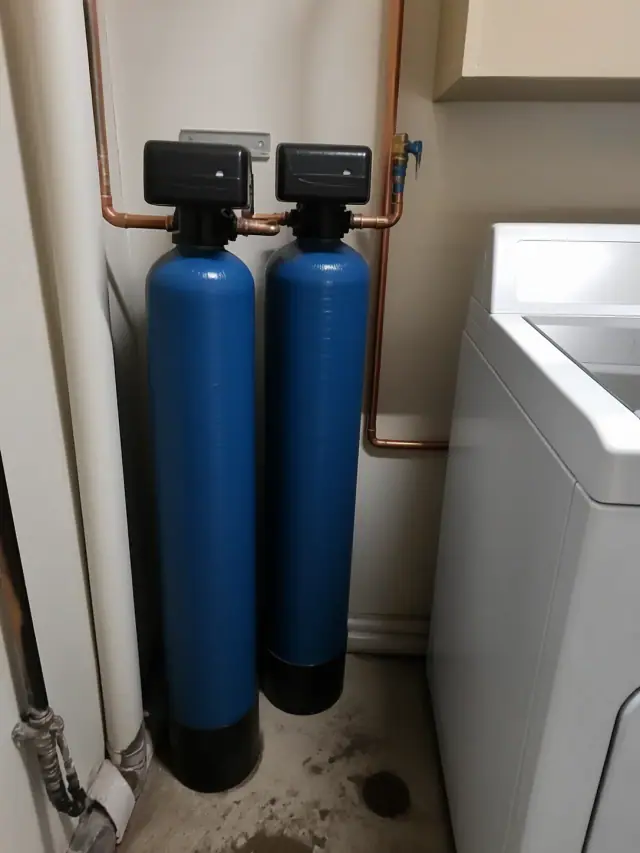
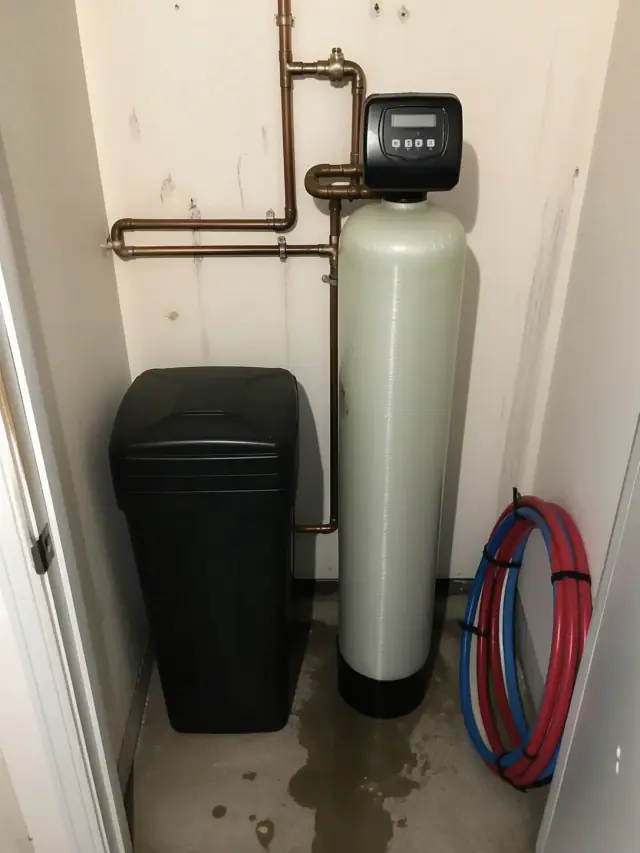
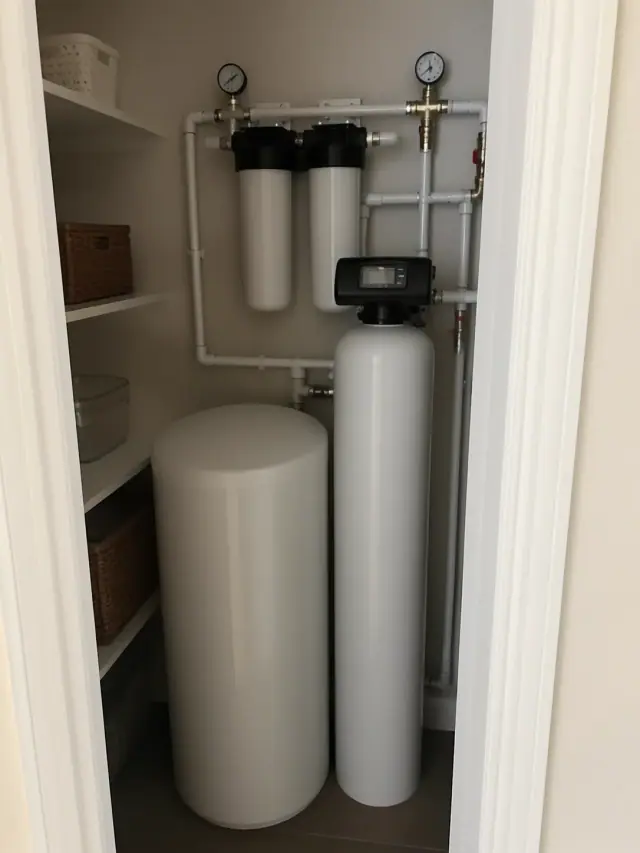
Whole-house filtration can be added at the point of entry when taste, odor, sediment, chlorine or chloramine, iron, or other water-quality concerns go beyond hardness alone. We design filtration as part of a complete water treatment system instead of treating every home with the same package. The result is equipment that protects downstream softeners, plumbing, appliances, and fixtures from the specific conditions found at your property.

Explore Service

Water Softener Repair

Placeholder image 4

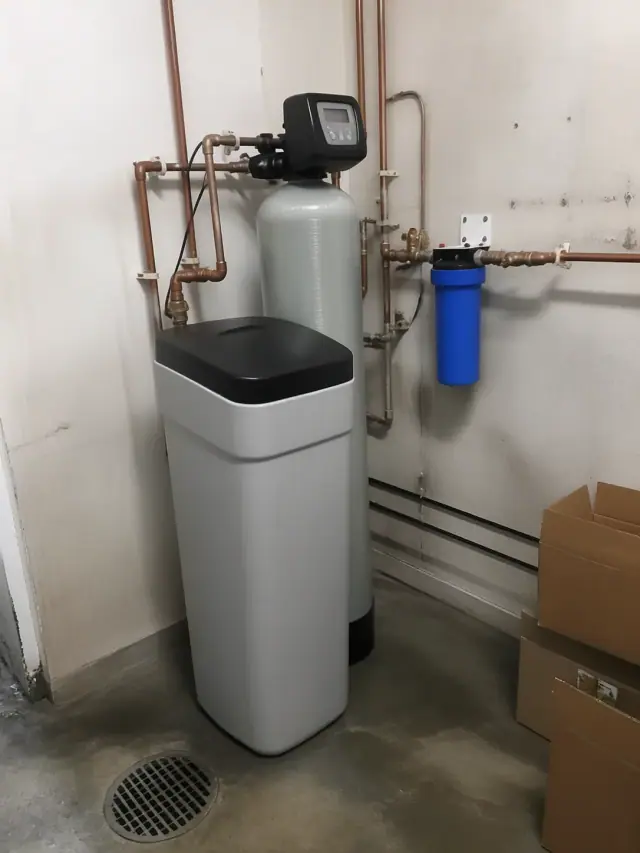
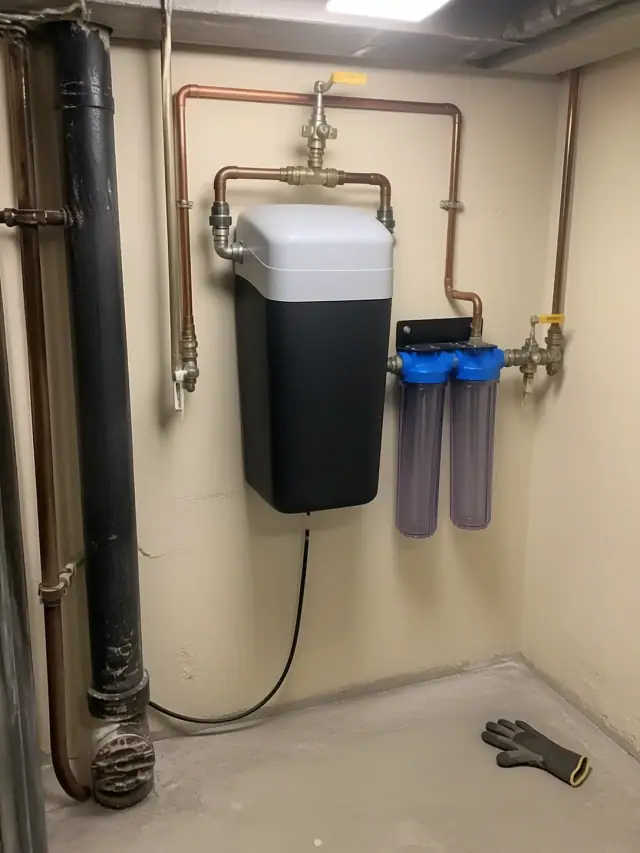
When a softener stops regenerating, leaks, uses salt abnormally, or lets scale return, repair keeps hard water from exposing your plumbing longer than necessary. We diagnose control valve failures, motor and timer issues, worn seals, fouled resin, salt bridges, brine-line restrictions, and bypass valve problems. Common replacement parts for major residential system platforms help many repairs get completed during a single service visit.

Water Softener Maintenance

Placeholder image 5

Routine maintenance keeps a Glendale softener working before the first signs of scale return. Service can include checking effluent hardness, inspecting the brine tank for salt bridges or mushing, cleaning the venturi valve and brine line, verifying regeneration timing, and reviewing resin bed condition. Annual inspections are especially useful in local water where sediment, iron, and disinfectants can shorten performance intervals.

Residential Water Softener Systems

Placeholder image 6

Residential systems should be sized around the number of occupants, daily water use, and the measured grain hardness in the home. For example, a four-person household using about 80 gallons per day at 20 grains per gallon creates about 1,600 grains of hardness load each day. We use that kind of calculation to choose the right tank capacity and regeneration settings for Glendale homes.

Salt Water Softener Installation

Placeholder image 7

Salt-based water softeners use ion exchange resin and a brine regeneration cycle to remove hardness minerals before they reach the rest of the home. A proper installation includes a bypass valve assembly, drain line with an appropriate termination point, brine tank setup, initial salt charge, control valve programming, and post-installation hardness testing. This is the strongest option when the main goal is true hardness removal and scale prevention.

Saltless Water Softener Installation

Placeholder image 8

Saltless conditioner options may fit homeowners who want a no-salt approach for scale management, but they should be chosen carefully after testing. These systems are different from ion exchange softeners because they condition minerals rather than removing calcium and magnesium from the water. We explain the difference clearly so Glendale customers understand where a saltless system makes sense and where a conventional softener is the better fit.

Commercial Water Softener Installation

Placeholder image 9

Restaurants, laundries, medical offices, car washes, and other Glendale-area businesses can lose money quickly when hard water scales equipment or reduces cleaning efficiency. We install commercial and light commercial softening systems for operations where water heaters, fixtures, dish machines, and process equipment need protection. System selection is based on measured hardness, business water use, and the operating costs created by scale buildup.

Carbon Filtration Additional Treatment

Placeholder image 10

Carbon filtration can be added when chlorine or chloramine taste and odor concerns need treatment alongside hardness control. In the Phoenix metro area, municipal disinfection practices can affect resin life, so carbon treatment may also be considered as part of a broader equipment-protection plan. We place carbon filtration based on water chemistry, service goals, and the rest of the treatment train.

System Selection

How to Choose the Right Water Treatment System in Glendale

Choosing between a softener, reverse osmosis, carbon filtration, saltless conditioning, or commercial equipment starts with the water test and the property goal. Glendale's mix of surface water and groundwater can create hardness, dissolved solids, sediment, and disinfectant-related concerns, so the best system is the one matched to your measured water and actual usage. The categories below explain the selection factors we review before recommending equipment.

Water Testing Before Equipment Selection

A useful recommendation starts with testing the water, not guessing from a brochure. We review total hardness in grains per gallon, iron content, pH, chlorine or chloramine levels, total dissolved solids, and sediment. The on-site water test takes about 30 minutes and gives the data needed to choose between softening, filtration, reverse osmosis, or a combined system.

Capacity Matched to Daily Water Use

System sizing determines whether a softener regenerates efficiently or falls behind between cycles. An undersized unit regenerates too often, while an oversized unit can sit too long between regenerations and allow resin fouling. We calculate capacity from actual water use and measured hardness so the system fits the home instead of simply matching a box label.

Salt, RO & Filtration Fit

Different systems solve different water problems. A water softener targets calcium and magnesium hardness, reverse osmosis treats drinking water from a dedicated faucet, and carbon or whole-house filtration can address taste, odor, sediment, chlorine, chloramine, or pretreatment needs. The right design may be one system or a coordinated treatment train.

Plumbing Access and Drain Planning

A clean installation depends on the home's plumbing layout, softener loop, water heater placement, and safe drain routing. Newer Glendale homes may already have softener connections, while older homes often need more careful bypass plumbing. We plan the bypass valve assembly, supported pipe connections, and drain line with a proper air gap where required by local code.

High-Efficiency Regeneration Settings

Modern demand-initiated softeners regenerate based on actual water use instead of a fixed timer schedule. That matters in the Phoenix metro area because unnecessary regeneration wastes salt and water. Proper programming helps the resin bed reach capacity without letting hard water break through.

Maintenance and Resin Life

A well-maintained residential softener commonly lasts 10 to 15 years, and some systems reach 20 years with consistent care. The resin bed typically lasts 10 to 15 years under normal conditions, but Glendale and Mesa water can shorten that to 7 to 10 years when iron and chloramine exposure are significant. Maintenance planning helps you decide when repair, resin replacement, or full replacement is the better value.

Glendale Water Quality Issues

Common Water Problems in Glendale Homes & Businesses

Hard water shows up in daily routines before it becomes an expensive plumbing issue. Glendale property owners often notice scale on fixtures, spotting on glass, dry-feeling skin, short water-heater life, salt use changes, or a softener that no longer regenerates correctly. Testing helps separate hardness problems from dissolved solids, sediment, iron, or taste-and-odor concerns so the right solution can be chosen.

Test My Water

White Scale on Fixtures and Glass

White deposits on faucets, shower doors, and glassware are classic signs of calcium and magnesium hardness. Water Quality Association classifications place water above 7 grains per gallon in the hard range and above 10.5 grains per gallon in the very hard range. Glendale homes routinely need treatment designed for those mineral loads rather than light conditioning only.

Dry Skin, Flat Hair, and Soap Waste

Hard water makes soaps and shampoos less effective, which can leave a dry or filmy feeling after showers. It also increases detergent use in laundry and makes rinsing less effective. Soft water helps soap lather and rinse more completely throughout the home.

Water Heater and Appliance Scaling

Scale builds faster as water is heated, which makes water heaters, tankless heat exchangers, dishwashers, ice makers, and washing machines especially vulnerable. Even a thin layer of scale acts like insulation and forces equipment to work harder. Published efficiency research shows water softening can improve water-heating energy performance by 22 to 29%.

Sediment, Iron, and Discolored Water Concerns

A softener sized only for hardness can struggle when the water also carries sediment or iron. Iron can foul resin beads and may call for dedicated pretreatment or resin selected for the water conditions. Testing identifies whether the problem is simple hardness or a broader water-quality issue.

Softener Salt Bridges and Brine Tank Sludge

Salt bridges form when salt crusts over an empty pocket in the brine tank, preventing proper brine production. Salt mushing happens when dissolved salt recrystallizes into sludge at the bottom of the tank and blocks the pickup line. Both problems can leave the softener regenerating without actually restoring the resin bed.

Poor Taste, Odor, and Dissolved Solids

A softener does not remove every taste, odor, or dissolved-solids concern from drinking water. Reverse osmosis can reduce dissolved solids and nitrates at a dedicated faucet, while carbon filtration can support taste and odor treatment in a broader system. Matching the treatment method to the water test prevents overbuying and undertreating.

Why Choose Us

Why Choose Mesa Water Softeners in Glendale?

Mesa Water Softeners focuses on Glendale water conditions rather than generic catalog recommendations. Our work combines on-site testing, correct system sizing, clean plumbing practices, transparent written pricing, and ongoing support for softeners, reverse osmosis, filtration, repair, and maintenance. That local approach helps homeowners and businesses choose equipment that solves the problem they actually have.

Local Glendale Water Knowledge

Glendale receives water from a blend of surface water and groundwater, including Colorado River supply through the Central Arizona Project. Local geology, seasonal blending, and municipal disinfection practices all affect how treatment equipment performs. We account for those factors when recommending softeners, resin, carbon filtration, or reverse osmosis.

Transparent Written Pricing

You receive clear pricing before work begins, including equipment, labor, materials, and any access fittings required for the job. Standard installation labor in the Phoenix metro area commonly runs from $200 to $600, with higher labor costs when extended pipe runs or complex drains are required. We explain line items such as sediment pre-filters instead of adding them without context.

Installation Support After the Sale

Support continues after the system is installed and programmed. If scale returns, salt use changes, an error code appears, or a repair decision is needed, we can test performance and inspect the softener. Periodic resin testing is especially helpful as a system approaches the 7-year mark in local water conditions.

Simple Process

Our Water Treatment Process in Glendale

A good system starts with diagnosis and ends with a verified performance test. Our process uses the same practical steps for new installations, upgrades, repairs, and integrated softener-plus-RO projects: test the water, size the equipment, explain the options, install cleanly, program the system, and confirm the results.

01.

Test Your Water

We begin with an on-site water test that checks total hardness, iron, pH, chlorine or chloramine, total dissolved solids, and sediment. This step usually takes about 30 minutes and gives the baseline for every recommendation.

02.

Size the System

We calculate grain capacity requirements from the home's daily water usage and measured hardness level. This prevents undersized systems that exhaust too early and oversized systems that regenerate too infrequently.

03.

Explain Equipment Options

You get a clear explanation of the options that fit your water: a demand-initiated softener, twin-tank system, saltless conditioner, sediment pre-filter, carbon filtration, reverse osmosis, or a combined system. The recommendation is tied to the test results and your property goals.

04.

Install Bypass and Drain Connections

For a standard installation, the main supply is shut off and the system is connected at the point of entry. The work includes a bypass valve assembly, clean pipe connections, a brine tank connection for salt systems, and a drain line routed to an appropriate termination point with an air gap where required.

05.

Program and Regenerate

After installation, the control valve is programmed to the measured hardness and household water use. We run the system through a manual regeneration cycle to confirm the service, backwash, brine draw, and rinse stages are functioning correctly.

06.

Verify Soft Water and Support

The treated water line is tested after startup to confirm the system is performing as intended, including zero hardness where a salt-based softener is installed. We also explain salt use, maintenance expectations, and when to call for repair, resin testing, or filter replacement.

Result Examples

Water Treatment Outcomes for Glendale Homes & Businesses

Case Study 1: Home Softener Upgrade: A Glendale home seeing white scale on fixtures and spotty dishes receives a properly sized ion exchange softener, programmed to measured hardness and household use, so the treated line can be verified after installation.

Case Study 2: Softener Plus RO: A kitchen drinking-water concern is handled by pairing whole-home softening with reverse osmosis at the sink, protecting the RO membrane from scale while reducing dissolved solids at the dedicated dispenser.

Case Study 3: Commercial Scale Control: A restaurant, laundry, medical office, or car wash can reduce hard-water stress on water heaters, fixtures, and operating equipment by using a commercial softener sized for business water demand.

Get Better Water

Schedule a Glendale
Water Treatment
Consultation

Get clear answers before you buy equipment. Mesa Water Softeners can test your Glendale water, explain the difference between softening, reverse osmosis, carbon filtration, and saltless conditioning, and recommend a system or repair based on what the test shows. Request an estimate or call to schedule service.

Glendale Water Help

FAQs About Water Softener Service in Glendale, AZ

These answers cover Glendale water softener installation, repair, maintenance, reverse osmosis, filtration, system sizing, and cost questions based on the services described above. For a specific recommendation, schedule an on-site water test so the equipment can be matched to your actual water chemistry.

Call Our Water Experts

In the Phoenix metropolitan area, water softener installation can range from about $207 at the very low end to more than $6,000 for complex whole-house systems with advanced filtration or reverse osmosis integration. Most standard residential installations fall between $1,800 and $2,800 depending on system size and site conditions. We provide clear pricing before work begins so you know what equipment, labor, and materials are included.

A basic 32,000-grain single-tank softener with standard installation is listed in the $925 to $1,241 range for equipment and labor. Larger Glendale homes or more demanding water chemistry may require higher-capacity systems. Full residential systems with high-capacity tanks, iron filtration, or sediment pre-filters commonly fall in the $2,250 to $2,800 range.

Sizing is based on the daily grain load, which comes from multiplying daily water use by measured hardness in grains per gallon. A four-person household using about 80 gallons per day with water testing at 20 grains per gallon needs to handle about 1,600 grains of hardness each day. We use that calculation to select tank capacity and set regeneration intervals.

Yes. Testing identifies hardness, iron, pH, chlorine or chloramine, total dissolved solids, and sediment, all of which can change the right equipment choice. The on-site test takes about 30 minutes and prevents guessing based on averages alone.

Phoenix metro water hardness routinely measures between 12 and 25 grains per gallon depending on season and water-source blend. Water above 7 grains per gallon is considered hard by Water Quality Association classifications, and above 10.5 grains per gallon is very hard. That is why Glendale homes often need true softening rather than light filtration only.

Yes. The softener treats hardness at the point of entry, while reverse osmosis treats drinking water at a dedicated faucet. This combination protects the RO membrane from scale and can reduce dissolved solids, nitrates, and sodium ions at the drinking-water dispenser.

A water softener is designed to address hardness minerals such as calcium and magnesium. Whole-house filtration can address other issues such as sediment, taste, odor, chlorine, chloramine, iron, or pretreatment needs depending on the media and layout. Many Glendale properties benefit from combining treatment methods rather than relying on one device for every issue.

No. Salt-based ion exchange softeners remove hardness minerals through resin and brine regeneration, while saltless conditioners are generally used for scale management rather than true hardness removal. We explain both options after testing so you understand the tradeoffs before choosing equipment.

A well-maintained residential water softener commonly lasts 10 to 15 years, and some systems reach 20 years with consistent care. Resin life can be shorter in local conditions when iron and chloramine exposure are significant. Many Glendale and Mesa systems need resin evaluation around the 7 to 10 year range.

Repair often makes sense when the tank is sound and the issue is a control valve, timer, brine tank, salt bridge, bypass valve, or resin problem. Replacement becomes more attractive when the system is more than 12 years old, produces inconsistent soft water, or needs frequent repairs. We inspect resin condition, valve wear, and tank integrity before recommending either option.

Maintenance can include checking the brine tank for salt bridges and mushing, cleaning the venturi valve and brine line, testing effluent hardness, confirming regeneration timing, and inspecting resin condition. Annual inspections are a practical way to catch performance decline early. This is especially useful where sediment, iron, or disinfectants can stress the system.

A standard installation includes shutting off the main water supply, connecting the softener at the point of entry, installing the bypass valve assembly, routing the drain line, connecting the brine tank, adding the initial salt charge, and programming the control valve. The system is then run through a manual regeneration cycle and the treated water line is tested. A typical standard residential setup takes about two to four hours after the water test and system selection.

Yes, a properly functioning softener prevents hardness scale from building inside water heaters, dishwashers, washing machines, ice makers, and fixtures. Scale acts like insulation on heat-transfer surfaces and can make equipment work harder. Published efficiency research shows efficiency improvements of 22 to 29% for water heating after softening is installed.

Many softener systems have an estimated 20 to 26 month payback period when reduced water heating costs, detergent use, appliance wear, and plumbing maintenance are considered together. The same cost discussion cites roughly $1,550 per year in aggregate household savings, or about $125 per month, for Phoenix-area softener owners. Actual savings depend on water use, equipment condition, hardness level, and system choice.

Mesa Water Softeners serves Glendale as part of a broader Maricopa County service area that includes Mesa, Tempe, Chandler, Gilbert, Scottsdale, Peoria, Sun City, Surprise, Apache Junction, and Queen Creek. Mesa is home to more than 504,000 residents and sits at the center of the East Valley. Glendale coverage includes areas such as Catlin Court, Arrowhead Ranch, the Westgate entertainment district corridor, and residential communities along the 101 freeway corridor.