Proudly serving Mesa, Tempe, Phoenix, Chandler, Gilbert, Queen Creek & surrounding areasCall or Text 24/7: 602-905-5577

Water Softeners in Phoenix, AZ | Reverse Osmosis, Whole-House Filtration & Repair

Mesa Water Softeners provides water softeners, reverse osmosis systems, whole-house filtration, water softener repair, and maintenance for Phoenix, AZ homeowners and businesses. We design residential water softener systems, salt water softener installations, saltless water softener consultations, commercial installations, and carbon filtration add-ons around the water conditions found across the Phoenix and Mesa area. Our work starts with testing instead of guesswork so the system matches your measured hardness, chlorine, sediment, iron, and total dissolved solids. Whether you need a new softener, better drinking water, or help with an existing unit, we build the recommendation around your plumbing layout and actual water use.

Phoenix-area water commonly tests in the 12 to 20 grains per gallon range, which is hard enough to accelerate scale in water heaters, fixtures, dishwashers, and washing machines. That mineral load can leave spotted dishes, stiff laundry, soap scum, and plumbing deposits that standard cleaning products do not solve. We size each system for real household demand, then install clean bypass valves, drain connections, and control settings so the softener operates efficiently. Schedule a free water test and consultation to see whether softening, RO drinking water, carbon filtration, or combined treatment makes the most sense for your property.

Service is available across Phoenix, Ahwatukee, Mesa, Gilbert, Tempe, Chandler, Apache Junction, the Salt River corridor, and nearby Maricopa County communities, with residential and commercial support for both new installations and existing systems.

★ ★ ★ ★ ★4.9/5 Average Rating - 20+ Years of Experience - Phoenix Water Treatment Experts - Residential & Commercial
Water Treatment Services

Water Treatment Services in Phoenix, AZ

From point-of-entry softeners to kitchen reverse osmosis, our Phoenix service lineup is built for hard-water scale, chlorine taste and odor, sediment, and system reliability. Homeowners comparing service in neighboring East Valley communities can also review our Chandler water treatment coverage, while Phoenix customers can use this page to choose the right mix of softening, filtration, repair, and maintenance.

Water Softeners

Placeholder image 1

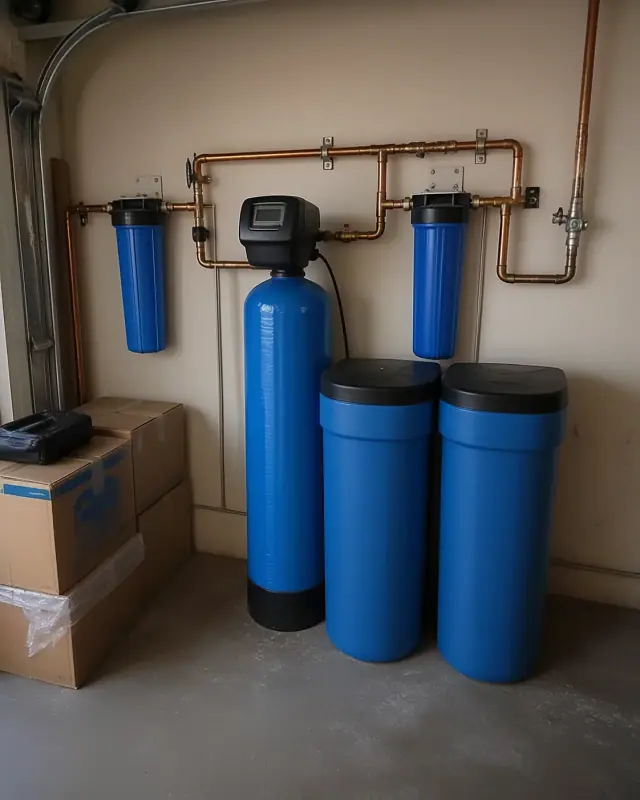
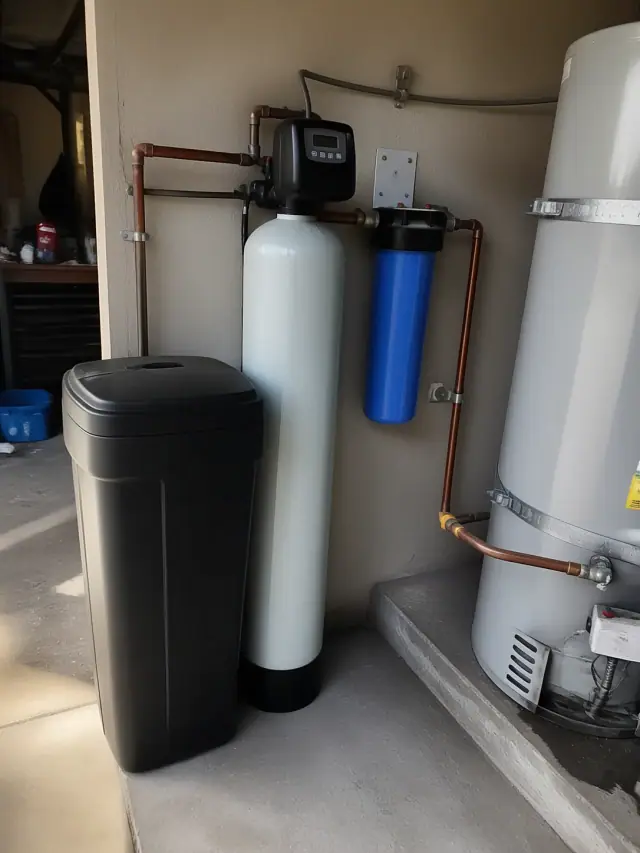
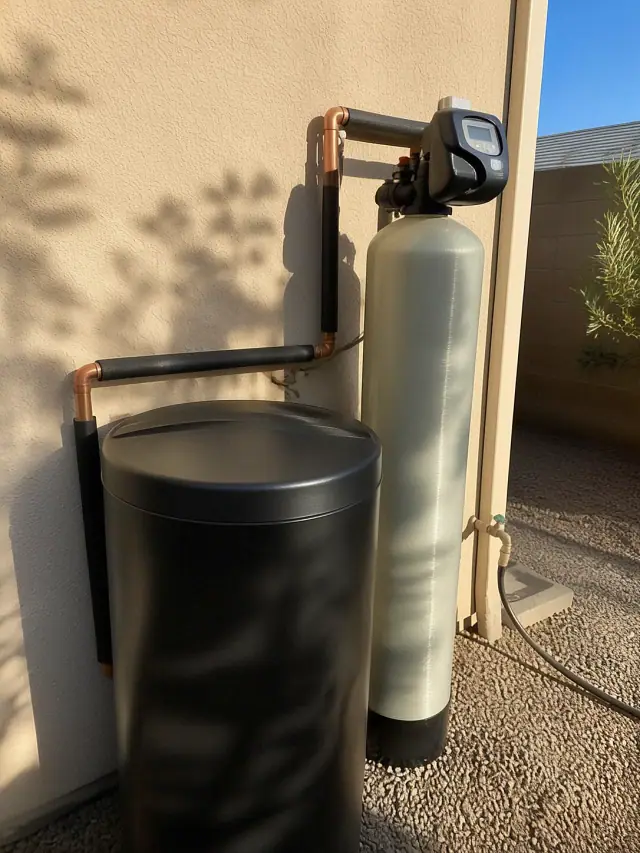
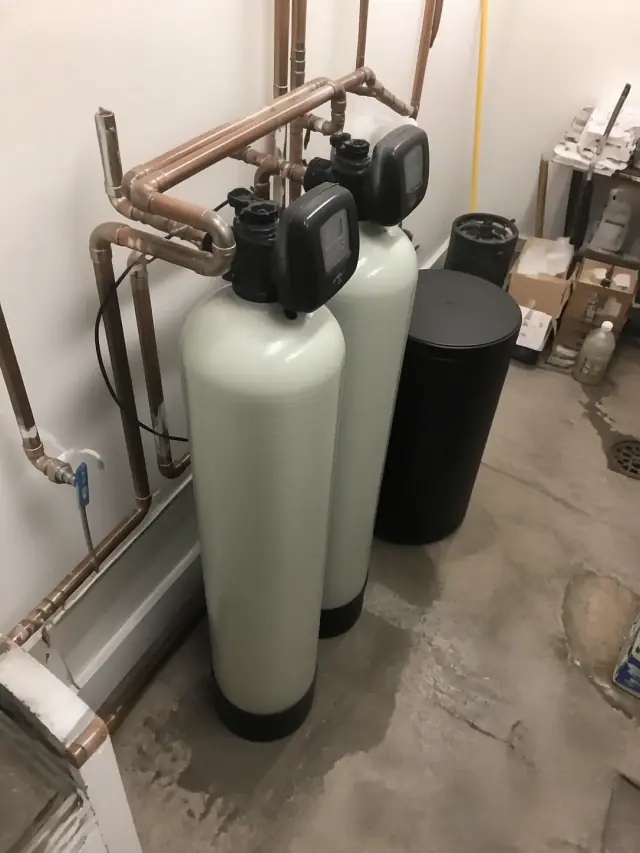
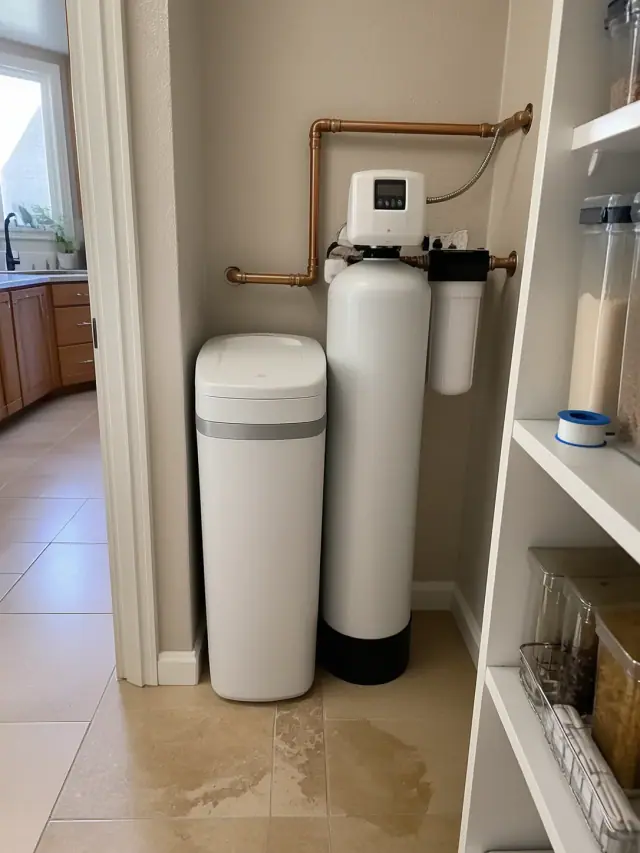
A water softener treats all water entering the property and removes calcium and magnesium hardness through ion exchange. In the Phoenix and Mesa area, 12-20 GPG hardness can scale pipes, fixtures, and water heaters, so we recommend a correctly sized point-of-entry system rather than a point-of-use shortcut.

Explore Service

Reverse Osmosis

Placeholder image 2

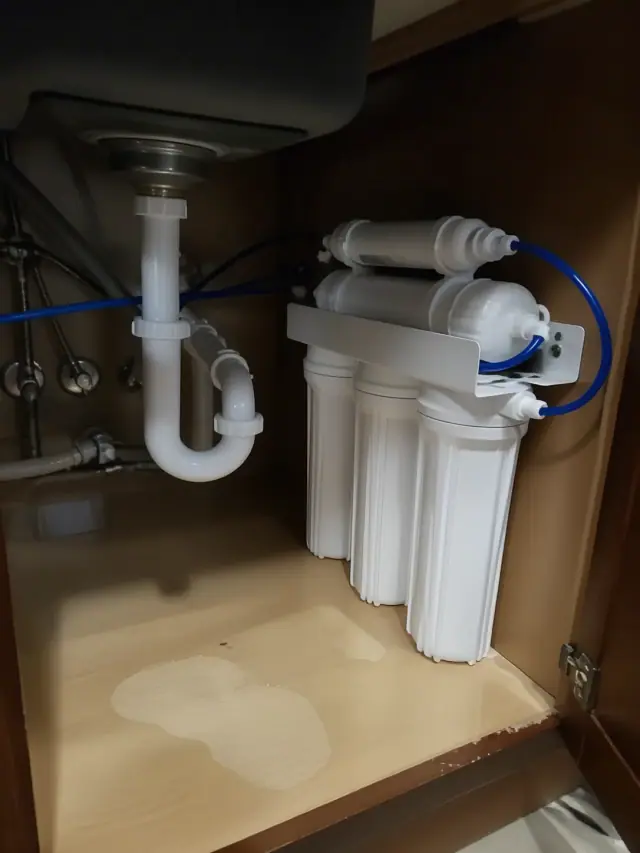
Reverse osmosis treats drinking and cooking water at a single tap, typically the kitchen, by pushing water through a semipermeable membrane that reduces total dissolved solids, chlorine-related taste, nitrates, certain heavy metals, and other dissolved material. It pairs well with a whole-house softener: soft water protects plumbing while RO refines the water you drink.

Explore Service

Whole House Filtration

Placeholder image 3

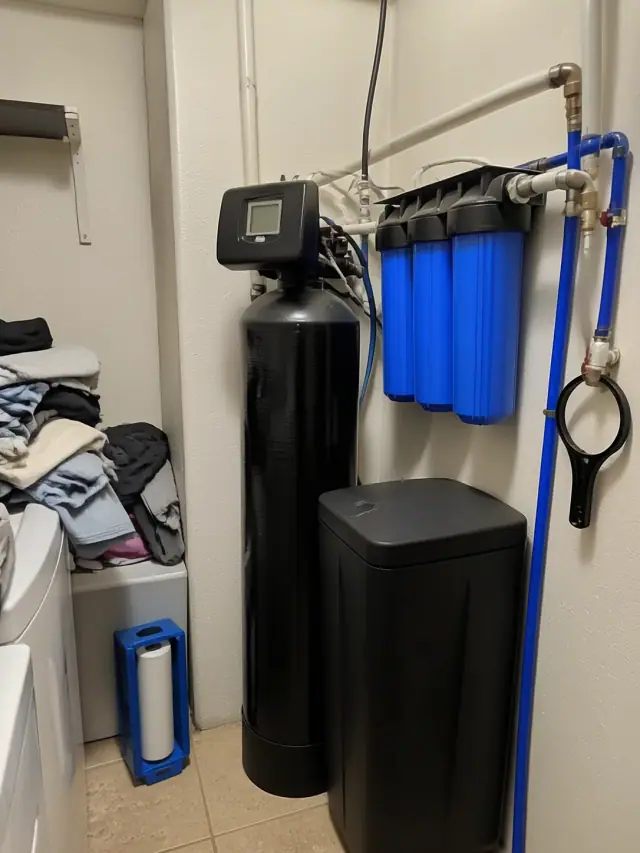
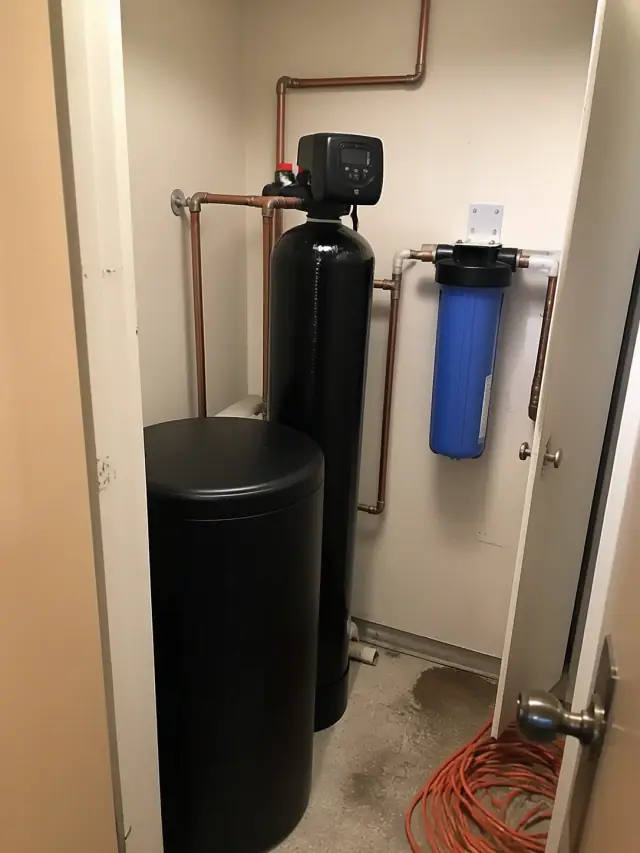
Whole-house filtration addresses water-quality concerns that softening alone does not solve, such as chlorine taste and odor, sediment, and in some cases iron. We can coordinate filtration with softening so the system protects appliances, fixtures, and the resin bed without adding unnecessary treatment stages.

Explore Service

Water Softener Repair

Placeholder image 4

If your softener is regenerating at the wrong time, using too much salt, or passing hard water, we diagnose the control valve, brine draw, resin bed, bypass position, and salt tank. We service major valve platforms including Fleck, Clack, and Autotrol.

Water Softener Maintenance

Placeholder image 5

Maintenance keeps a softener efficient through resin-bed checks, brine-tank cleaning, control-valve review, and salt bridge removal. A well-installed unit can last 15 to 25 years with proper care, and an annual check helps catch small problems before hard water slips through.

Residential Water Softener Systems

Placeholder image 6

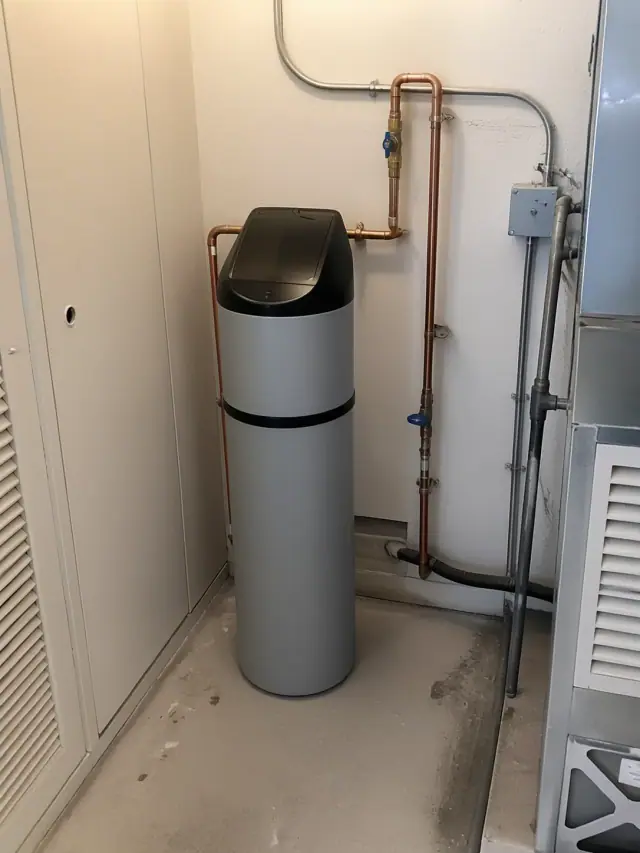
Residential systems are sized around household occupancy, daily gallons, measured hardness, iron content, and flow demand. For many Phoenix-area homes, the correct range falls between 32,000 and 80,000 grains, depending on water use and local water chemistry.

Salt Water Softener Installation

Placeholder image 7

Salt-based ion exchange is the proven choice for removing calcium and magnesium hardness from very hard Phoenix-area water. Modern demand-initiated units regenerate only when the resin is nearing exhaustion, which can reduce unnecessary salt and water use compared with older timer-based controls.

Saltless Water Softener Installation

Placeholder image 8

For customers asking about saltless water conditioner options, we explain the difference between conditioning and true hardness removal before recommending equipment. At 12-20 GPG hardness, salt-based ion exchange is typically the more effective option for actual softening, but a saltless system discussion can be part of the consultation when salt use or discharge concerns matter.

Commercial Water Softener Installation

Placeholder image 9

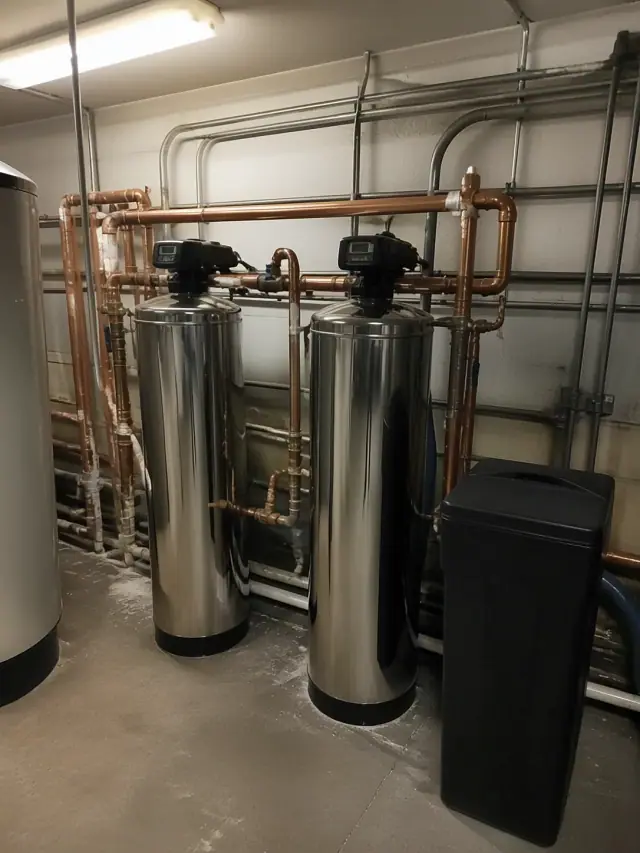
Commercial properties need systems sized for sustained flow, fixture count, appliance demand, and regeneration timing. We support businesses and multifamily properties with commercial water softener installation that keeps high-use equipment from being exposed to unnecessary scale.

Carbon Filtration Additional Treatment

Placeholder image 10

Carbon filtration can be added when chlorine taste, odor, or resin protection is part of the treatment goal. Because municipal disinfection is effective for public health but can affect taste and softener resin over time, we test chlorine residual before recommending carbon pre-filtration.

System Selection

How to Choose the Right Water Treatment System in Phoenix

The right Phoenix water-treatment setup depends on what the test shows, how your home uses water, and which problem you want to solve first. Softening handles hardness, reverse osmosis improves drinking water at one tap, carbon filtration addresses chlorine taste and odor, and additional pre-treatment may be needed when iron or sediment is present. We use those details to recommend only the equipment that fits your property.

Start With a Water Test

Testing identifies hardness in GPG, iron in ppm, pH, total dissolved solids, and chlorine residual before equipment is selected. Our on-site test takes about 20 minutes and gives a practical basis for deciding between softening, RO, carbon filtration, or pre-treatment.

Match Grain Capacity to Demand

A system must fit both hardness level and household use. A family of four using about 80-100 gallons per person per day at 15 GPG hardness may need roughly 48,000 to 60,000 grains of usable capacity between regenerations.

Check the Plumbing Layout

Installation planning looks at the main water inlet, drain access, power, and whether the garage or utility area already has a softener loop. Older 1970s and 1980s homes may need more bypass configuration work than new construction with a pre-plumbed loop, and a standard control valve commonly needs a 110-volt outlet.

Account for Iron and Sediment

Some older service areas can see sediment from aging distribution mains, and low-level iron can cause orange staining. If iron exceeds 0.3 parts per million, it should be treated before the softener so the resin bed is not overloaded.

Choose the Regeneration Style

Demand-initiated controls regenerate based on actual water volume processed rather than a fixed calendar. That matters in Phoenix-area homes because water use changes with household size, seasonal demand, guests, and appliance habits.

Compare Equipment and Operating Costs

Installed softener pricing in the Phoenix and Mesa area commonly ranges from $1,800 to $5,500 depending on capacity, control valve, filtration, and installation complexity. Salt is a smaller operating cost, often tied to the number of regenerations and the grade of salt used.

Phoenix Water Issues

Common Water Problems in Phoenix Properties

Hard water can show up as scale, spots, dry-feeling skin and hair, stiff laundry, premature water-heater stress, and repeated cleaning problems. Other water concerns may include chlorine taste and odor, sediment, iron staining, or a softener that no longer regenerates correctly. These problem cards help connect the symptom you see with the treatment or service that typically addresses it.

Test My Water

Scale in Water Heaters and Pipes

Calcium carbonate scale builds inside water-heater tanks, fixtures, and supply lines as hard water passes through the property. Hard-water scale can reduce water-heater lifespan by 30 to 50 percent compared with operation on soft water.

Spotted Dishes and Cloudy Glassware

Mineral residue left after water dries can make dishes look spotted and glassware look cloudy even after a full dishwasher cycle. Softening removes the hardness minerals that form that visible film.

Soap Scum, Stiff Laundry, and Dry Feel

Hardness minerals react with soap and detergent, leaving scum on shower glass, fixtures, laundry, skin, and hair. Soft water helps cleaners work more effectively because calcium and magnesium are no longer competing with the soap.

Chlorine Taste and Odor

Municipal chlorine disinfection supports public health, and local water is described as meeting Arizona Department of Environmental Quality and EPA Safe Drinking Water Act standards. Chlorine can still affect taste and odor, and carbon filtration may be recommended when testing shows it is a practical add-on.

Sediment or Iron Staining

Sediment may appear in some older distribution areas, and iron can leave orange staining on toilets, shower grout, or irrigation equipment. Testing helps identify whether a sediment filter, iron-removal system, or other pre-treatment should be installed upstream.

Existing Softener Problems

A softener that regenerates at the wrong time, uses excessive salt, forms a salt bridge, or passes hard water needs service before the issue grows. Repair may involve the brine tank, resin bed, control valve, or bypass position.

Why Choose Us

Why Choose Mesa Water Softeners in Phoenix?

Mesa Water Softeners brings East Valley hard-water expertise to Phoenix-area homes and businesses, using testing, right-sized equipment, and clean installation practices instead of one-size-fits-all packages. We explain what each component does, why it is recommended, and how it supports your plumbing, appliances, or drinking-water goals.

Local Hard-Water Experience

Our recommendations reflect regional water conditions that include SRP surface water from the Verde and Salt River watersheds, Central Arizona Project canal supply, and groundwater with calcium, magnesium, bicarbonate, chlorine, and dissolved solids. That local mix is why we test instead of assuming every property needs the same package.

Transparent Written Quotes

You receive a clear written quote before work begins, including equipment, labor, required fittings, bypass hardware, and any needed pre-treatment. The goal is to explain what each component does so you are not paying for add-ons that your water test does not justify.

Clean Workmanship and Support

Installations include clean plumbing layouts, secure connections, shutoff valves, correctly installed bypass valves, and appropriate drain connections with an air gap. We also set the control head for your measured hardness and remain available for maintenance, troubleshooting, and ongoing support.

Simple Process

Our Water Treatment Process in Phoenix

Every project follows a test-first process so the equipment matches the water and the installation site. We review the problem, test the water, inspect the plumbing layout, explain options, install the selected system, and stay available for maintenance or troubleshooting.

01.

Test the Water

We begin by testing hardness, iron, pH, total dissolved solids, and chlorine residual. Those results show whether the priority is softening, RO drinking water, carbon filtration, iron removal, sediment filtration, or repair of an existing system.

02.

Inspect the Installation Site

Next we look at the water inlet location, drain access, electrical access, available space, and the condition of the existing plumbing. Homes with an existing softener loop are usually simpler than retrofits that require new bypass plumbing.

03.

Size and Select Equipment

System sizing uses household water demand, measured hardness, grain capacity, flow rate, and any iron or sediment concerns. We explain the recommendation clearly so you understand why each component is included.

04.

Install the System Cleanly

A standard residential water softener installation commonly takes two to four hours when the site is ready. The water supply is typically interrupted only during main-line connections, often about 30 to 60 minutes of the total installation window.

05.

Program and Walk Through

After installation, we set regeneration parameters for the measured hardness and household usage. We also show you how the bypass, brine tank, salt level, and control valve work before we leave.

06.

Support the System Long Term

Ongoing support can include annual maintenance, salt bridge checks, resin-bed inspection, brine draw troubleshooting, and control-valve service. When replacement is more practical than repair, we remove old equipment and install a properly sized modern system.

Result Examples

Water Treatment Outcomes for Phoenix Homes & Businesses

Case Study 1: For a Phoenix household with fixture scale and hard-water spots, a whole-house softener can protect the water heater, dishwasher, washing machine, shower glass, and everyday plumbing from the mineral stress caused by very hard water.

Case Study 2: For drinking and cooking water, an under-sink reverse osmosis system at the kitchen tap can be paired with point-of-entry softening, giving the home scale control and refined water from a single coordinated treatment plan.

Case Study 3: For businesses and larger properties, commercial softeners can be sized around higher flow rates, fixture count, regeneration timing, and maintenance access so equipment is protected without oversizing the system.

Get Better Water

Schedule a Phoenix
Water Treatment
Consultation

Start with a free water test and a clear estimate. We will identify hardness, chlorine, sediment, iron, total dissolved solids, and plumbing constraints, then explain which softening, reverse osmosis, filtration, repair, or maintenance option fits your property.

Phoenix Water Help

FAQs About Water Softeners in Phoenix, AZ

These answers cover Phoenix-area water softener installation, RO systems, filtration, repair, maintenance, salt use, cost factors, and system selection. For property-specific guidance, start with a water test so the recommendation matches your hardness level, plumbing, and household demand.

Call Our Experts

Most homeowners in the Phoenix and Mesa area can expect a professionally installed whole-house water softener to fall between $1,800 and $5,500. Smaller basic systems may be closer to $1,500, while premium high-capacity units with pre-filtration can reach the upper end. Capacity, valve type, drain access, bypass hardware, and added filtration all affect the final written quote.

Yes, a softener is usually worth considering because Phoenix-area hardness is commonly described in the 12 to 20 grains per gallon range. At those levels, scale can stress water heaters, dishwashers, washing machines, fixtures, and tankless units. Hard-water scale can reduce water-heater lifespan by 30 to 50 percent, which makes prevention a practical investment for many homes.

If your home is connected to municipal water or a Maricopa County groundwater-influenced supply, testing will usually show enough hardness to justify softening. We still test before recommending equipment because hardness, chlorine, sediment, iron, and total dissolved solids can vary by property. The result tells us whether softening alone is enough or whether filtration should be added.

Salt-based ion exchange is the established method for removing calcium and magnesium hardness from very hard water. Demand-initiated control valves are preferred because they regenerate based on actual water volume processed, not a fixed timer. Saltless conditioners may be discussed, but they do not remove hardness the same way a true ion-exchange softener does.

A standard residential installation with a suitable location often takes two to four hours from start to finish. Retrofits on older homes or sites without a pre-plumbed loop can take longer if drain lines or bypass plumbing need to be added. The water supply is usually off only during main-line connections, often about 30 to 60 minutes.

At hardness levels like 12 to 20 GPG, a properly sized demand-initiated softener for a household of four commonly uses about 6 to 10 pounds of salt per regeneration. Annual salt use often falls around 200 to 400 pounds, depending on water usage and system efficiency. Retail softener salt in the Phoenix metro area commonly runs about $6 to $12 per 40-pound bag.

A water softener treats water at the point of entry to remove hardness minerals before they reach plumbing, fixtures, and appliances. Reverse osmosis usually treats water at one point of use, such as the kitchen sink, with a membrane that reduces dissolved solids and improves drinking and cooking water. Many Phoenix-area homes use both because they solve different problems.

Yes. A common setup is a whole-house softener at the point of entry plus an under-sink reverse osmosis system at the kitchen tap. The softener helps protect plumbing and appliances from scale, while RO focuses on drinking and cooking water quality.

Carbon filtration is used when chlorine taste and odor, or resin protection, are part of the treatment goal. Municipal chlorine disinfection is important for public health, but it can affect water taste and gradually stress softener resin over time. We test chlorine residual before recommending a carbon pre-filter.

Iron should be identified before the softener is sized because it loads the resin differently than calcium and magnesium. When iron exceeds 0.3 parts per million, it should be addressed upstream with an oxidizing filter or dedicated iron-removal system. Testing prevents orange staining and helps protect the resin bed.

A well-installed softener with proper salt and regular maintenance can often operate for 15 to 25 years. Annual checks of the resin bed, brine draw, control valve, and brine tank help keep the system efficient. Replacement may make more sense when the resin is exhausted or the valve is no longer cost-effective to repair.

Undersized systems regenerate too often and wear faster, while oversized systems may regenerate less often than they should and allow hardness to slip through. Many local residential systems fall in the 32,000 to 80,000 grain range depending on water chemistry and household use. For example, a family of four using about 80-100 gallons per person per day at 15 GPG hardness may need roughly 48,000 to 60,000 grains between regenerations.

Common repair signs include hard water returning, regeneration at the wrong time, excessive salt use, a salt bridge in the brine tank, or poor brine draw. We check the control valve, resin bed, brine tank, bypass position, and related settings. Repair is available for major valve platforms including Fleck, Clack, and Autotrol.

Yes. Residential systems are sized around household demand, hardness level, plumbing layout, and fixture use, while commercial systems require attention to flow rate, fixture count, regeneration timing, and maintenance access. Both types can be paired with filtration or RO when the water test supports it.

Service coverage includes Phoenix, Ahwatukee near South Mountain, Mesa, Gilbert, Tempe, Chandler, Apache Junction, and the Salt River corridor. The broader East Valley service area includes Mesa, a city of more than 504,000 residents, along with areas such as Eastmark, Las Sendas, the Heritage District, ASU-area Tempe, the Price Road Corridor, Ocotillo, and the Loop 202. Availability can be confirmed during the water test and consultation request.