Proudly serving Mesa, Tempe, Phoenix, Chandler, Gilbert, Queen Creek & surrounding areasCall or Text 24/7: 602-905-5577

Water Treatment in Scottsdale, AZ | Water Softeners, Reverse Osmosis & Filtration

Mesa Water Softeners provides water softeners, reverse osmosis, and whole house filtration for homes and businesses in Scottsdale, Arizona. We install salt-based and saltless water softener systems, configure residential water softener systems, and support commercial water softener installation when higher flow demand calls for larger equipment. Our team also handles water softener repair, water softener maintenance, salt water softener installation, saltless water softener installation, and carbon filtration additional treatment. Every recommendation starts with testing so the system matches your hardness level, plumbing layout, and daily water use.

Scottsdale and the East Valley deal with mineral-heavy water from Salt River Project and Central Arizona Project sources, with local hardness commonly running between 12 and 20 grains per gallon. That level of hardness can leave white scale on faucets, reduce water-heater efficiency, and make soap and shampoo work harder than they should. We size equipment around real water conditions instead of guessing from a chart, then program the control valve for your home’s hardness and usage. The goal is practical protection for plumbing, fixtures, appliances, and drinking-water quality without pushing equipment that does not fit your home.

We serve Scottsdale neighborhoods including North Scottsdale, Old Town Scottsdale, McDowell Mountain Ranch, and DC Ranch, along with Mesa, Phoenix, Chandler, Gilbert, Tempe, Apache Junction, Paradise Valley, Queen Creek, and nearby East Valley communities. Schedule a consultation when you want a system recommendation based on actual testing instead of a shelf-bought guess.

★ ★ ★ ★ ★4.9/5 Average Rating - 20+ Years of Experience - Scottsdale Water Treatment Experts - Residential & Commercial
Water Treatment Services

Local Water Treatment Categories in Scottsdale, AZ

Scottsdale properties need more than one-size-fits-all treatment because hard water, chlorine or chloramines, sediment, total dissolved solids, household size, and plumbing layout all affect the right setup. The service categories below cover the core equipment and support options we use most often, from water softeners and kitchen reverse osmosis to whole house filtration, repair, maintenance, and commercial systems. For homeowners comparing area-specific water treatment pages, our Glendale page explains another nearby service-area option without changing the Scottsdale-focused process described here.

Water Softeners

Placeholder image 1

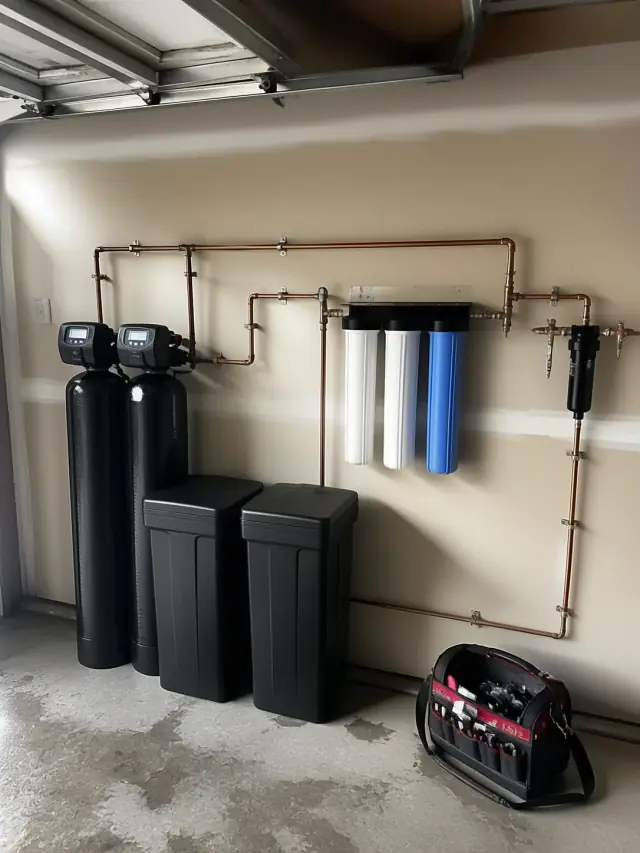
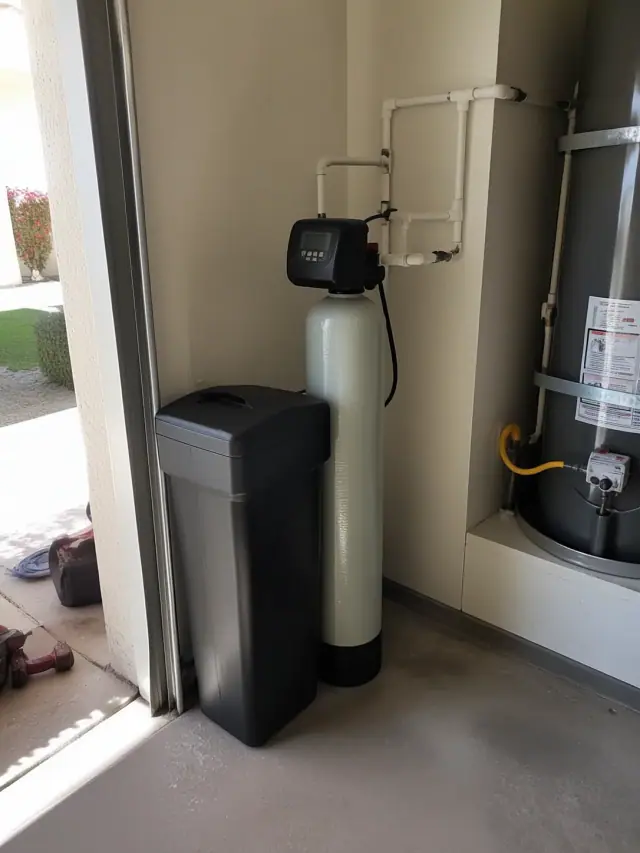
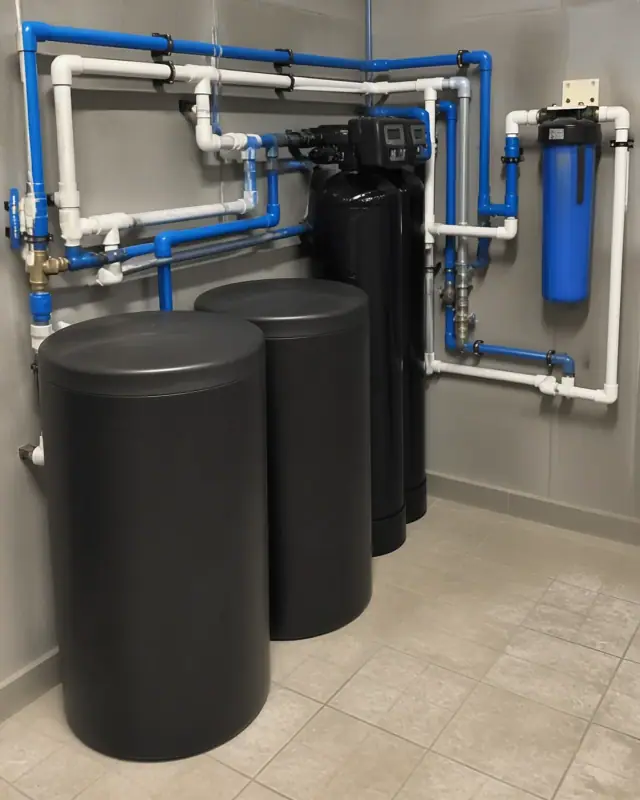
Water softeners are the core solution for Scottsdale hard water because salt-based ion exchange removes the calcium and magnesium minerals that create scale. We test the incoming water first, then install and program a system sized for the home’s hardness, number of occupants, bathrooms, and daily water use. Depending on the test results and customer preferences, the recommendation may be a salt-based softener, a saltless conditioner, or a softener paired with added filtration.

Explore Service

Reverse Osmosis

Placeholder image 2

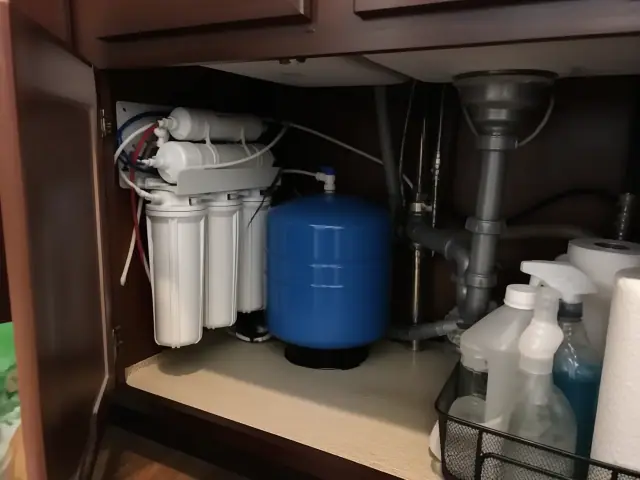
Reverse osmosis gives the kitchen tap a separate layer of drinking-water filtration that a softener alone does not provide. We install under-sink RO systems as standalone equipment or as part of a complete softener and filtration package, especially where chlorine, chloramines, total dissolved solids, or taste concerns are part of the water profile. Feeding softened water into an RO membrane can also extend membrane service life by reducing hardness load before the water reaches the membrane.

Explore Service

Whole House Filtration

Placeholder image 3

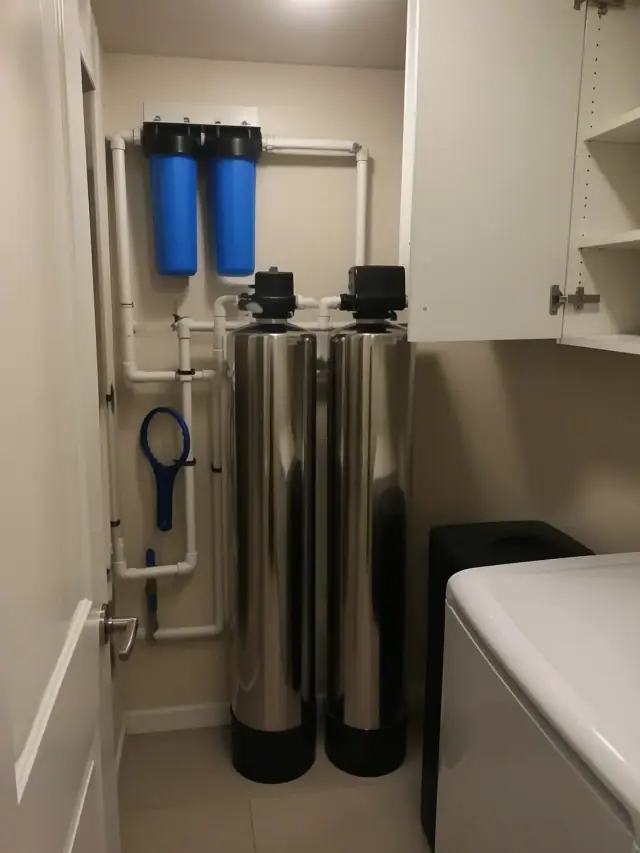
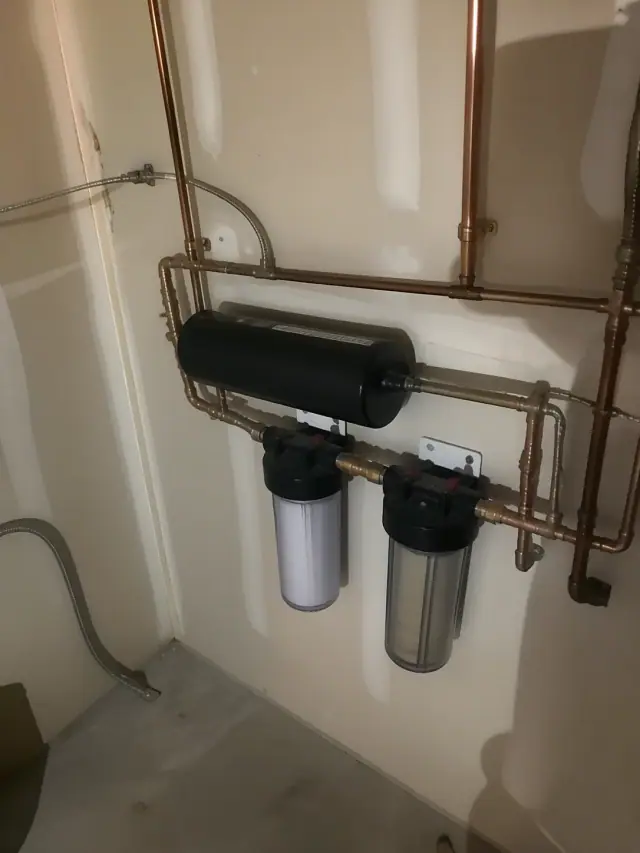
Whole house filtration treats the water entering every fixture, shower, appliance, and laundry connection, not just one drinking-water tap. We design systems that may include sediment pre-filters, carbon filtration for chlorine removal, and specialty media when testing shows iron or hydrogen sulfide concerns. The goal is to match the filter media to the actual water analysis rather than adding tanks that do not address the customer’s problem.

Explore Service

Water Softener Repair

Placeholder image 4

When a water softener starts passing hard water, stops regenerating, or shows control-valve problems, we diagnose the cause before recommending repair or replacement. Common repairs include control valve repair, resin bed replacement, brine tank replacement, injector cleaning, and timer recalibration. Professional servicing commonly ranges from $150 to $750 depending on the scope, and early diagnosis usually costs less than waiting for a full system failure.

Water Softener Maintenance

Placeholder image 5

Maintenance keeps a softener from wasting salt, missing regeneration cycles, or delivering hard water after years of use. A typical annual visit includes brine tank inspection, resin-bed checks, control-valve programming review, and output water testing for hardness breakthrough. In Scottsdale and the East Valley, resin cleaning may be needed every six to twelve months when iron is present, and brine tank cleanout every one to two years helps prevent salt bridging and mushing.

Residential Water Softener Systems

Placeholder image 6

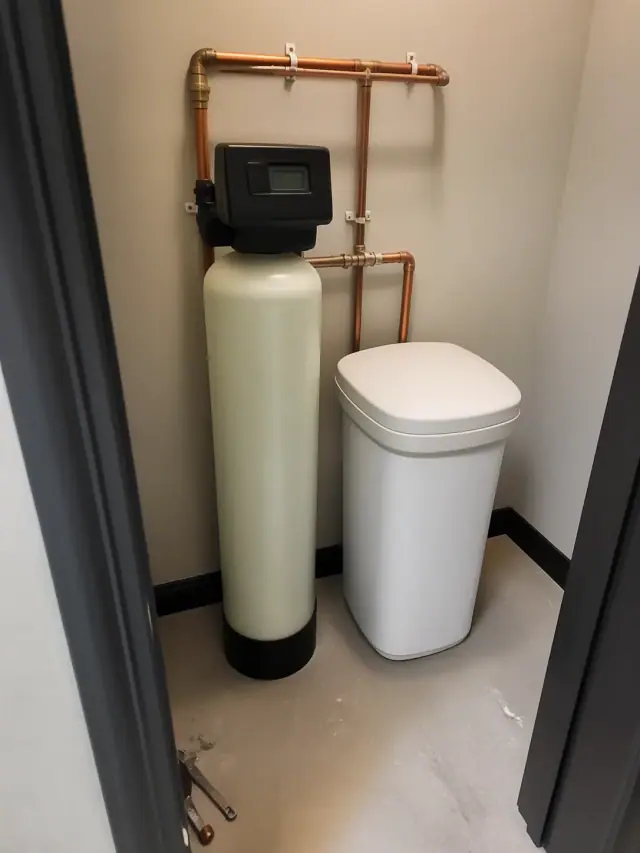
Residential systems are sized around household demand, not just the number on the equipment label. One useful sizing benchmark is a household of four using 75 gallons per person per day against 13 grains per gallon hardness, which requires roughly 39,000 grains between regeneration cycles. Proper sizing helps prevent daily regeneration, premature resin wear, salt waste, and hardness breakthrough.

Salt Water Softener Installation

Placeholder image 7

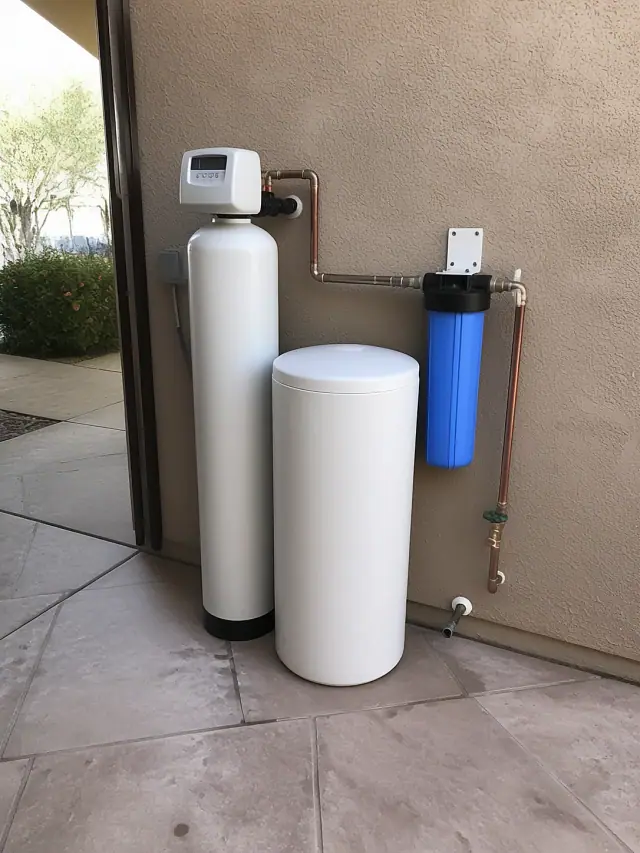
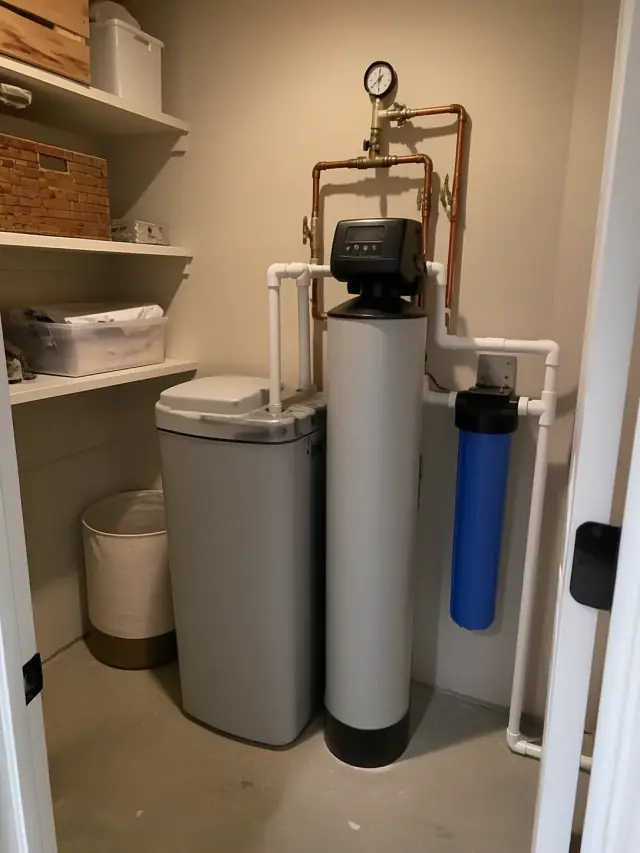
Salt water softener installation uses ion exchange resin and brine regeneration to remove hardness minerals from the home’s water supply. A standard residential installation usually includes the resin tank, brine tank, bypass valve, drain line routing, control-valve programming, and test cycling, with many routine installations completed in one to three hours. With proper maintenance, salt-based systems commonly deliver 10 to 15 years of service life.

Saltless Water Softener Installation

Placeholder image 8

Saltless water softener installation is best understood as conditioning rather than true mineral removal. These systems use template-assisted crystallization to transform calcium and magnesium into a stable form that resists sticking to pipes and heating elements, while still leaving the minerals in the water. Saltless systems require no salt, no electricity, and no drain connection, and salt-free conditioners can last more than 20 years.

Commercial Water Softener Installation

Placeholder image 9

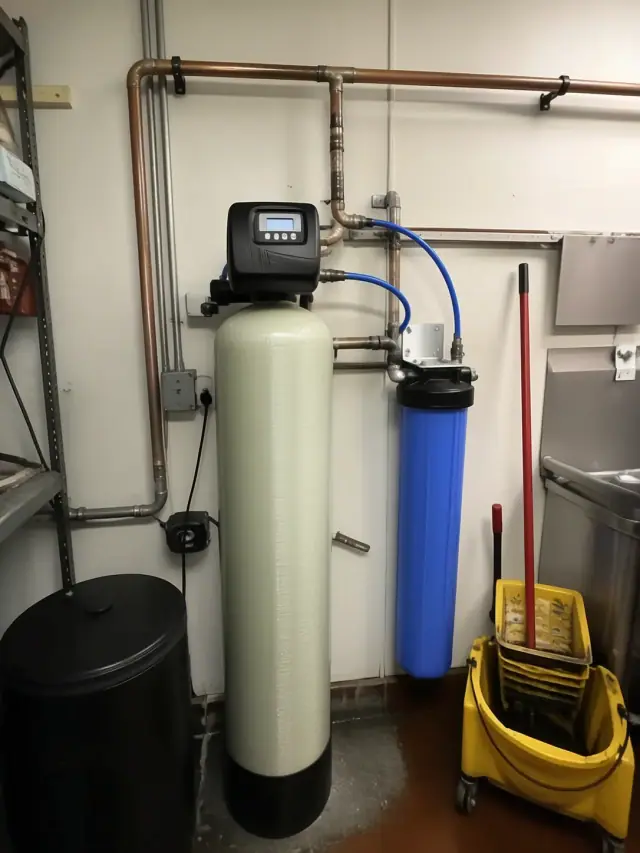
Commercial water softener installation is designed for higher flow rates, higher temperatures, and more continuous use than a typical residence. We design and install systems for restaurants, apartment complexes, laundromats, medical offices, and industrial facilities across Scottsdale, Mesa, and the greater Phoenix metro. Commercial projects may require larger resin tanks, higher-capacity control valves, and scheduled service intervals so equipment is protected under steady demand.

Carbon Filtration Additional Treatment

Placeholder image 10

Carbon filtration is an additional treatment layer for chlorine, chloramines, taste, odor, and resin protection concerns. A carbon pre-filter upstream of a softener can help protect the resin from disinfectant exposure, while whole-house carbon can improve shower, laundry, and fixture water throughout the property. It pairs especially well with an under-sink RO system when the goal is both whole-home treatment and high-quality drinking water at the kitchen tap.

System Selection

How to Choose the Right Water Treatment System in Scottsdale

Choosing the right Scottsdale water treatment system starts with testing, then moves to sizing, technology selection, plumbing access, and budget. Installed residential softener costs typically range from $1,200 to $5,000, with most properly sized high-efficiency salt-based systems falling between $1,500 and $3,500 for many homes. Equipment alone can range from about $900 for an entry-level unit to more than $6,000 for larger-capacity or specialty equipment, so the best recommendation is the one that fits the home instead of the broadest possible price range.

Water Test Results

A useful recommendation starts with testing for hardness in grains per gallon, chlorine or chloramines, iron, pH, sediment, and other conditions that affect performance. Two nearby homes can test differently because of distribution branches, plumbing age, or localized iron intrusion. Testing first prevents the common mistake of installing a system that looks right on paper but is undersized or mismatched for the water actually entering the home.

Grain Capacity & Household Demand

Grain capacity should be tied to household use, not a generic equipment chart. We look at the number of people in the home, daily water consumption, bathrooms, incoming hardness, and expected flow demand before recommending a system. This keeps the softener from regenerating too often, wasting salt, or sitting idle long enough for channeling and hardness breakthrough.

Salt-Based vs Saltless Goals

Salt-based softeners are the most effective option when the goal is actual hardness mineral removal. Saltless conditioners are a better fit when the customer wants scale control without salt, electricity, or a drain connection, but they do not remove calcium and magnesium from the water. We explain that difference clearly so the choice matches the customer’s priorities instead of a label on the tank.

Plumbing, Drain & Bypass Planning

A good installation plan accounts for where the main water line enters, where the system can sit, how the drain line will route, and whether a bypass and shutoff valves are already present. Salt-based systems need a brine tank and drain connection for regeneration, while saltless systems can simplify installation where drain access is limited. Planning these details early helps avoid awkward placement and later service headaches.

Integrated Filtration Layers

A softener solves hardness, but it is not designed to solve every water concern. Whole-house carbon can address chlorine and chloramines, sediment filtration can protect downstream equipment, and under-sink reverse osmosis can improve drinking water at the kitchen tap. The best Scottsdale setups often combine technologies into one coherent system rather than adding disconnected filters one at a time.

Efficiency & Service Life

Modern demand-initiated softeners track actual water use and regenerate when the resin is exhausted instead of on a fixed timer. That can reduce unnecessary salt and water use while improving consistency during heavy-use weeks. Service life also matters: salt-based systems commonly last 10 to 15 years with proper maintenance, while salt-free conditioners often exceed 20 years.

Scottsdale Water Issues

Common Hard Water Problems in Scottsdale Properties

Hard water problems usually show up as scale, failing appliances, poor lather, cloudy fixtures, or a softener that no longer keeps up. Scottsdale and the surrounding East Valley share mineral-heavy local supply water, and a typical Scottsdale or Mesa household may see about 12.8 grains per gallon — enough to create visible scale quickly. A water test tells us whether the answer is softening, filtration, RO, repair, maintenance, or a layered treatment plan.

Test My Water

White Scale on Fixtures

White crust on faucets, glass, shower doors, and around fixtures is the visible sign of calcium and magnesium left behind as hard water dries. At local hardness levels around 12.8 grains per gallon, scale can become noticeable within weeks on surfaces that get wet repeatedly. A properly sized softener is the direct solution when testing confirms hardness as the cause.

Water Heater Scale Buildup

Hardness minerals accumulate on water-heater elements and tank walls, which reduces thermal efficiency and can shorten the life of the appliance. Scottsdale homes with untreated hard water often see the hidden cost before they see a full failure: more energy used, more noise, and more sediment at the bottom of the tank. Softened water helps reduce new scale formation after installation.

Poor Soap and Shampoo Lather

Calcium and magnesium react with surfactants before soap and shampoo can clean effectively. That is why hard water can make showers feel less clean, laundry feel stiff, and dishwashers leave spots even when detergent is used correctly. Softening removes those hardness minerals so soaps can work the way they are supposed to.

Chlorine, Chloramines & Taste

A softener is not a drinking-water system and does not remove every disinfectant, taste, odor, or dissolved-solid concern. Carbon filtration and reverse osmosis are the better tools when the water test points to chlorine, chloramines, total dissolved solids, or kitchen-tap taste issues. That is why many Scottsdale installations combine a softener with carbon filtration and under-sink RO.

Softener Not Regenerating

A softener that stops regenerating may have a control-valve issue, injector blockage, timer problem, programming error, or brine draw failure. The symptom is usually hard water returning even though the system is still connected and using salt. Repair starts with diagnosis so we know whether the fix is cleaning, programming, a valve repair, resin service, or replacement.

Salt Bridges & Brine Tank Problems

Salt bridges and salt mushing can keep the brine tank from feeding properly, which prevents the resin bed from regenerating. The system may look full of salt while still passing hard water because the brine solution is not being made correctly. Periodic brine tank cleaning and correct salt use help avoid this common maintenance problem.

Why Choose Us

Why Choose Mesa Water Softeners in Scottsdale?

Mesa Water Softeners focuses on measured water conditions, proper system sizing, professional installation, and long-term service support. Our team emphasizes certified water softener technicians, appropriate licensing and insurance for Arizona plumbing-related work, clear upfront pricing, and workmanship support after installation. That matters in Scottsdale because the wrong system can waste salt, pass hard water, or fail to address chlorine, sediment, and drinking-water concerns that require additional treatment.

Local Scottsdale & East Valley Expertise

We understand water conditions across Scottsdale and the East Valley, including North Scottsdale estate lots, Old Town Scottsdale’s older plumbing, and newer developments such as McDowell Mountain Ranch and DC Ranch. The broader service area includes Mesa, a 504,258-resident East Valley city as of the 2020 census, along with Phoenix, Chandler, Gilbert, Tempe, Apache Junction, Paradise Valley, and Queen Creek. Local familiarity helps us account for seasonal water blending, pipe age, and neighborhood-specific plumbing conditions.

Clear Upfront Pricing

Water treatment pricing depends on the equipment type, grain capacity, plumbing work, pre-filtration, and whether RO is included. We explain those factors before work begins so customers understand why one system costs more than another. We emphasize clear, upfront pricing with no hidden fees, surprise charges, or last-minute upsells before installation.

Licensed, Insured Installation Support

Water softener installation modifies the home’s main water supply line, so it should be handled by qualified technicians. Work is performed by certified water softener technicians with appropriate licensing and insurance for plumbing-related work in Arizona, and Arizona plumbing work is governed by the Arizona Registrar of Contractors. Warranty coverage depends on equipment, with many systems carrying five to ten years on control valve and tank components and resin bed coverage commonly running ten years under normal operating conditions.

Simple Process

Our Water Treatment Process in Scottsdale

Our process is built to move from testing to system design to clean installation without guessing. Each step connects the customer’s symptoms with measurable water conditions, practical plumbing requirements, and a system that can be maintained after the installation is complete.

01.

Test the Water

We begin with a water test for hardness, chlorine or chloramines, iron, pH, sediment, and other conditions that influence system design. This gives us a real baseline for Scottsdale water entering your home instead of relying on a generic citywide assumption.

02.

Size the System

Next we size the equipment based on household occupants, bathrooms, daily water use, incoming hardness, and the desired number of grains between regeneration cycles. Correct sizing is what keeps a softener efficient and prevents salt waste or hardness breakthrough.

03.

Explain Options and Pricing

We explain whether a salt-based softener, saltless conditioner, whole-house filtration, reverse osmosis, carbon filtration, repair, or maintenance plan fits the test results. You get clear pricing before work begins, including the factors that affect the final installed cost.

04.

Install the Equipment

For a standard softener installation, we shut off the main supply, connect at the appropriate point before the water heater, install the bypass valve, set the resin and brine tanks, route the drain line, and complete the plumbing connections. Most residential installs are completed in one to three hours when the plumbing is straightforward.

05.

Program and Verify Performance

After installation, we program the control valve for your measured hardness and household use, then test the system through a regeneration and output-water check. This verifies that the system is delivering soft water and that the customer understands how to monitor salt and basic operation.

06.

Maintain and Support the System

We remain available for annual service, troubleshooting, resin cleaning, brine tank cleanout, valve repair, and system replacement planning. Ongoing support helps the equipment reach its expected service life instead of failing early from neglected maintenance.

Result Examples

Water Treatment Outcomes for Scottsdale Homes & Businesses

Case Study 1: Result Example 1: A Scottsdale family replacing an undersized or shelf-bought unit can move to a demand-initiated softener sized for occupants, bathrooms, hardness, and water use, helping reduce salt waste and hardness breakthrough.

Case Study 2: Result Example 2: A homeowner with fixture scale and poor drinking-water taste can pair a softener with whole-house carbon and under-sink reverse osmosis, addressing hardness at plumbing fixtures and drinking-water concerns at the kitchen tap.

Case Study 3: Result Example 3: A restaurant, laundromat, apartment property, medical office, or industrial facility can use commercial softening equipment with larger resin tanks and higher-capacity control valves to protect hot-water and high-use equipment.

Get Better Water

Schedule a Scottsdale
Water Treatment
Consultation

Get a water treatment recommendation based on actual Scottsdale water conditions, your household or business demand, and the equipment that solves the specific problem. Request an estimate for softener installation, repair, maintenance, reverse osmosis, whole-house filtration, saltless conditioning, commercial service, or carbon filtration additional treatment.

Local Water Treatment Help

FAQs About Water Treatment in Scottsdale, AZ

These FAQs cover the most common questions about Scottsdale water softeners, reverse osmosis, whole-house filtration, carbon treatment, repair, maintenance, sizing, pricing, and service planning.

Call Our Experts

Total installed cost for a residential water softener in Scottsdale and the greater East Valley typically ranges from $1,200 to $5,000 depending on system type, grain capacity, and plumbing complexity. Many properly sized high-efficiency salt-based systems fall between $1,500 and $3,500 for common residential installations. Equipment alone can range from about $900 for an entry-level unit to more than $6,000 for larger-capacity or specialty systems.

We install salt-based ion exchange water softeners, saltless water conditioners using template-assisted crystallization, dual-tank systems for high-demand homes, and filtration systems that can integrate with softening. The right choice depends on water testing, household size, plumbing layout, and preferences around salt use and maintenance. We explain the difference between true softening and saltless conditioning before recommending equipment.

Yes. Every project starts with water testing so we can measure hardness, chlorine or chloramines, iron, pH, sediment, and other factors that affect system design. Scottsdale and East Valley water is commonly described as 12 to 20 grains per gallon for hardness, but individual homes can vary by neighborhood, distribution branch, and plumbing condition.

Most standard residential water softener installations take one to three hours from start to finish when the plumbing is straightforward. That includes shutting off the main supply, connecting before the water heater, installing the bypass valve, setting the tanks, routing the drain line, programming the control valve, and testing the completed system. More complex installs with new plumbing runs, pre-filtration, or RO integration can take longer.

Installation is performed by certified water softener technicians carrying appropriate licensing and insurance for plumbing-related work in Arizona. Water softener installation involves modifications to the home’s main water supply line, so qualified installation matters. Arizona plumbing-related work is governed by the Arizona Registrar of Contractors for applicable scopes of work.

Warranty coverage depends on the equipment installed. Many systems carry manufacturer warranties of five to ten years on control valve and tank components, with resin bed coverage commonly running ten years under normal operating conditions. Installation workmanship support is also available for problems caused by a connection or configuration the company installed.

Yes. Scottsdale homes often benefit from layered treatment: a softener for hardness, whole-house carbon for chlorine or chloramines, sediment filtration where needed, and under-sink reverse osmosis for drinking water at the kitchen tap. Feeding softened water into an RO membrane can also reduce hardness load and help extend membrane service life.

Annual service is the right baseline for most households. A service visit should include brine tank inspection and cleaning, resin-bed checks, control-valve programming review, and treated-water testing for hardness breakthrough. In systems exposed to iron, resin cleaning may be needed every six to twelve months, and brine tank cleanout every one to two years helps prevent salt bridges and mushing.

Mesa and the surrounding East Valley commonly measure between 12 and 20 grains per gallon for hardness. A typical Scottsdale or Mesa household may see about 12.8 grains per gallon. Those levels are high enough to create visible scale, reduce water-heater efficiency, and make soaps and detergents less effective.

Salt-based systems are best when you want true removal of calcium and magnesium hardness minerals. Saltless conditioners are a strong option when you want scale control without salt, electricity, or a drain connection, but they condition minerals rather than removing them. The right choice depends on your water test, plumbing access, maintenance preferences, and whether true soft water or scale reduction is the priority.

A softener removes hardness minerals, but it is not designed to remove all taste, dissolved-solid, chlorine, chloramine, or drinking-water concerns. Reverse osmosis provides point-of-use filtration at the kitchen tap for a different purpose. Many customers use both: softening for the whole home and RO for drinking and cooking water.

Carbon filtration is used for chlorine, chloramines, taste, odor, and resin-protection concerns. A carbon pre-filter can protect softener resin from disinfectant exposure, while whole-house carbon improves water entering showers, laundry, and fixtures. It is often paired with a softener and under-sink RO as part of a complete treatment plan.

Repair can make sense when the issue is a control valve, injector, brine tank, timer, programming, or resin problem and the system still has useful life left. Replacement is often more cost-effective when a system is more than 10 to 15 years old or repeatedly underperforms. We diagnose the problem first and explain whether repair or replacement is the more practical option.

Sizing depends on the number of occupants, daily water use, bathrooms, and incoming hardness. One useful benchmark is four people using 75 gallons per person per day against 13 grains per gallon hardness, requiring roughly 39,000 grains between regeneration cycles. An undersized system regenerates too often, while an oversized system can waste salt or allow resin-bed channeling.

Yes. Commercial systems are designed for higher flow rates, higher temperatures, and continuous demand in places such as restaurants, apartment complexes, laundromats, medical offices, and industrial facilities. These projects may require larger resin tanks, higher-capacity control valves, and more frequent service intervals than residential systems. We also set up service planning so the system is maintained on a schedule.