Proudly serving Mesa, Tempe & surrounding areasCall or Text 24/7: 602-905-5577

Water Softener Maintenance in Mesa, Arizona

Mesa Water Softeners provides water softener maintenance in Mesa, Arizona for homes and businesses dealing with hard East Valley water. Our service covers preventive maintenance, emergency water softener repair, resin bed restoration, valve servicing, brine tank cleaning, and reverse osmosis maintenance coordination. We inspect salt-based and metered systems, test the incoming water, and adjust regeneration settings around real household or commercial demand. From Dobson Ranch to Red Mountain, we help keep softeners exchanging calcium and magnesium properly before scale reaches fixtures, pipes, and appliances.

Mesa's municipal water supply draws from Salt River Project and Central Arizona Project infrastructure, and hardness levels routinely exceed 200 parts per million. That is well above the 120 ppm threshold where scale damage to pipes, appliances, and fixtures accelerates. The City of Mesa also uses chloramine disinfection year-round, so resin beds, valve seals, and brine systems need attention that matches local water chemistry. Our certified technicians follow industry-recognized best practices and start each recommendation with water testing, not assumptions.

Schedule a maintenance visit when hard water returns, salt use changes, the system runs continuously to drain, or you want a routine annual check before summer demand increases. We provide clear options, upfront pricing, and practical service plans built around your water test results.

Mesa Water Softeners provides water softener maintenance throughout Mesa and the greater Phoenix metro area, including Tempe, Phoenix, Scottsdale, Chandler, Gilbert, Glendale, Peoria, Goodyear, Avondale, Surprise, Queen Creek, Apache Junction, Paradise Valley, Fountain Hills, Cave Creek, Laveen, Ahwatukee, Guadalupe, and more.

★ ★ ★ ★ ★4.9/5 Average Rating · 20+ Years of Experience · thousands of Customers Helped · Licensed & Insured · Residential & Commercial

Water Softener Systems & Benefits

What Is Water Softener Maintenance?

Water softener maintenance is the professional inspection, testing, cleaning, and adjustment that keeps a softener producing consistent soft water. It includes checking the control valve, bypass valve, brine tank, brine line, injector, drain line, resin tank, and regeneration settings so every cycle can complete properly.

In Mesa, maintenance matters because high calcium carbonate loads and chloramine-treated water put more stress on resin and valve components than softer-water regions. For the city's 504,258 residents across neighborhoods such as Dobson Ranch and Red Mountain, routine service helps prevent hard water breakthrough, scale buildup, and avoidable appliance strain.

A complete visit starts with water testing for hardness, chloramine, iron, sediment, pH, and total dissolved solids, then moves through system diagnostics. The goal is to find the specific cause of performance decline, whether it is salt bridging, resin fouling, an incorrect regeneration schedule, or worn valve seals.

Benefits of Regular Water Softener Maintenance

Regular service protects both water quality and equipment value. A well-maintained softener in Mesa can last 15 to 20 years or more, while neglected systems in local conditions may fail in 7 to 8 years and push homeowners toward a premature replacement that can cost $1,100 to $3,300 installed.

  • Keeps regeneration cycles timed to actual water use instead of guesswork.
  • Maintains resin capacity so soft water stays consistent between cycles.
  • Reduces scale buildup inside water heaters, washing machines, dishwashers, and fixtures.
  • Catches salt bridges, salt mushing, and clogged injectors before the system cycles without brine.
  • Documents hardness, chloramine, iron, sediment, pH, and TDS readings during service.
  • Helps control salt and water waste by correcting brine draw and rinse settings.
  • Supports both residential water softener service and commercial water softener maintenance needs.
  • Coordinates softener service with reverse osmosis maintenance when both systems are installed.
Water Softener Services

Water Softener Services

Mesa Water Softeners services the parts of your system that determine performance: resin, brine preparation, control valve sequencing, water testing, and connected filtration. Each service is matched to the symptoms you are seeing and the water chemistry we measure on site.

Preventive Water Softener Maintenance

Placeholder image 1

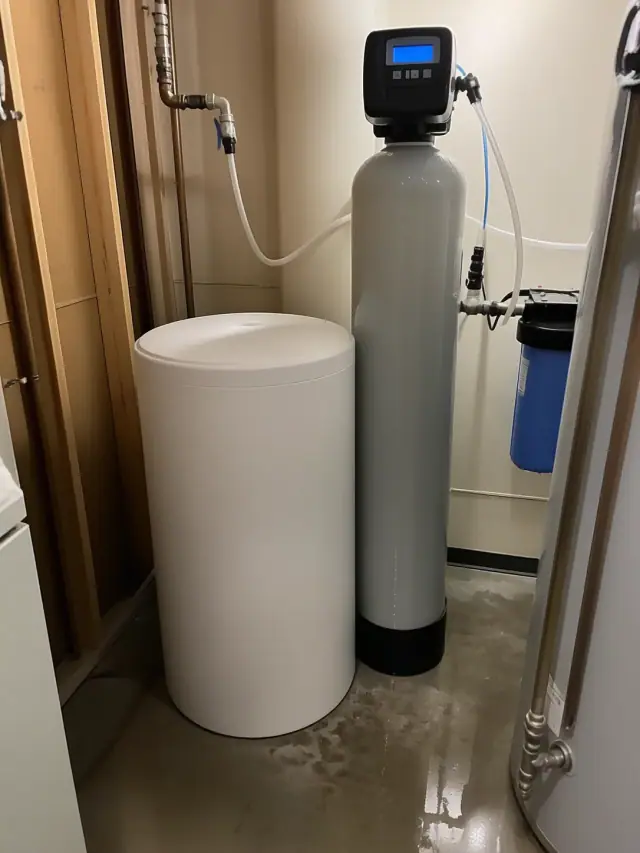
Preventive maintenance checks system settings, salt condition, brine draw, drain flow, and post-softener hardness before small issues become failures. In Mesa, annual service is the practical baseline because local hardness and chloramine accelerate wear on resin and valve components.

Request Estimate

Emergency Water Softener Repair

Placeholder image 2

Call for repair when soft water suddenly disappears, water leaks from the valve or tank connections, the unit runs continuously to drain, or salty water enters the home supply. We troubleshoot the brine system, resin tank, and control valve sequence to isolate the failure and restore proper operation.

Request Estimate

Resin Bed Restoration

Placeholder image 3

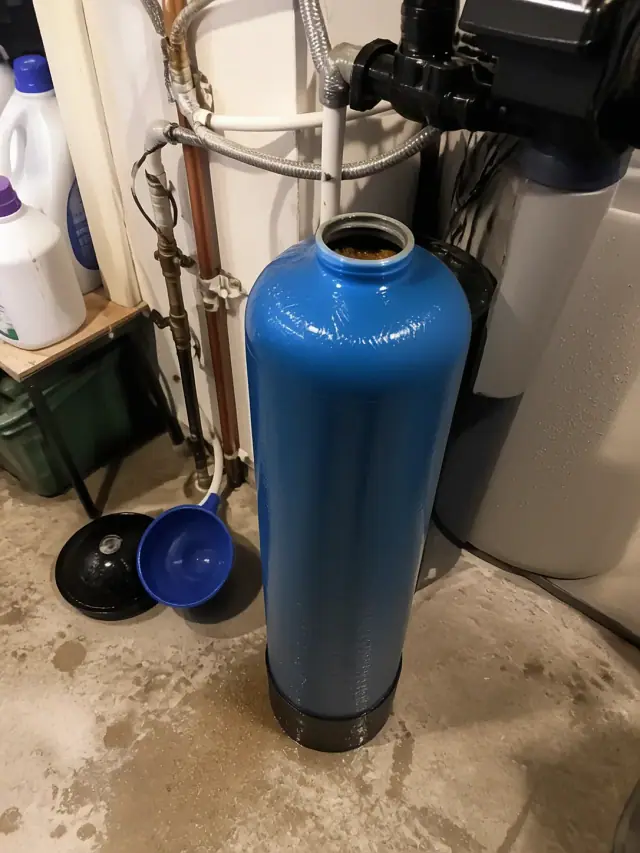
Resin bed service removes iron fouling, mineral loading, and performance loss that prevent beads from exchanging calcium and magnesium effectively. Mesa water can foul resin within 2 to 3 years without iron-specific treatment, so cleaning or replacement is based on test results rather than age alone.

Request Estimate

Control Valve Servicing

Placeholder image 4

The control valve moves the softener through service, backwash, brine draw, slow rinse, and fast rinse positions. We inspect motors, pistons, seals, spacers, and bypass assemblies so water does not bypass the resin bed during service mode.

Request Estimate

Brine Tank Cleaning & Salt Management

Placeholder image 5

Brine tank maintenance clears salt bridges, removes salt mushing, checks the float assembly, and confirms the tank can create a strong brine solution. Keeping salt between one-third and two-thirds full helps prevent overpacking while avoiding regeneration cycles without enough brine.

Request Estimate

Reverse Osmosis Maintenance Coordination

Placeholder image 6

A water softener helps protect reverse osmosis membranes by reducing hardness before drinking-water filtration. When your home has both systems, we can coordinate softener service with RO pre-filter, post-filter, membrane, and storage-tank maintenance on a planned schedule.

Request Estimate
Maintenance Options

Types of Water Softener Service

Different softeners need different maintenance depending on system design, water use, salt type, resin condition, and local water quality. These service options cover routine tune-ups, demand-initiated metered systems, resin work, brine tank cleanouts, and commercial maintenance programs.

Placeholder image 7

Routine Annual Maintenance

Routine annual maintenance is the starting point for most Mesa homes. The Water Quality Association recommends professional inspection every 1 to 2 years under normal conditions, and Mesa Water Softeners uses annual service as the local baseline because Mesa water is harder and more chemically demanding than many markets.

  • Incoming hardness and post-softener hardness testing
  • Salt level, salt type, and brine tank condition review
  • Injector, float, drain line, bypass, and valve inspection
  • Regeneration settings checked against actual household demand
  • Practical recommendations without pressure-based upsells
Request Estimate
Placeholder image 8

Metered Softener Service

Metered systems regenerate from measured water use instead of a fixed timer, which improves salt efficiency when the meter and control valve are calibrated correctly. A Mesa household of four using about 80 to 100 gallons per person per day can exhaust a 32,000-grain softener within 2 to 4 days at typical local hardness levels.

  • Demand-initiated controls verified for accurate metering
  • Capacity settings matched to measured hardness and usage
  • 32,000-grain systems checked for frequent regeneration demand
  • 48,000 to 64,000 grain systems reviewed for brine dose accuracy
  • Salt and water efficiency compared with soft water consistency
Request Estimate
Placeholder image 9

Resin Bed Replacement

Resin beads typically function for 10 to 15 years under normal conditions, but Mesa's chloramine-treated water can shorten that service life. Replacement becomes necessary when cleaning no longer restores capacity, hardness remains high immediately after regeneration, or fine yellow-brown resin particles appear at fixtures.

  • Effluent hardness checked immediately after regeneration
  • Iron fouling and chlorine or chloramine degradation assessed
  • Resin condition compared with system age and service history
  • Replacement recommended only when cleaning will not restore capacity
  • Full rated softening capacity restored without replacing the whole unit
Request Estimate
Placeholder image 10

Brine Tank Cleanout

A brine tank cleanout removes old salt, compacted sludge, and blocked pickup-screen material so the softener can draw a proper brine solution. We recommend this service every 5 to 7 years as part of whole home water softener service, with timing adjusted when heat, salt type, or mushing causes problems sooner.

  • Remaining salt removed before the tank is rinsed
  • Mushed salt and residue cleared from the tank bottom
  • Brine grid, air check, float, and pickup screen inspected
  • High-purity evaporated pellets recommended over rock salt when appropriate
  • Potassium chloride reviewed as a sodium-free option that can cost 30% to 40% more per bag
Request Estimate
Placeholder image 11

Commercial Water Softener Maintenance

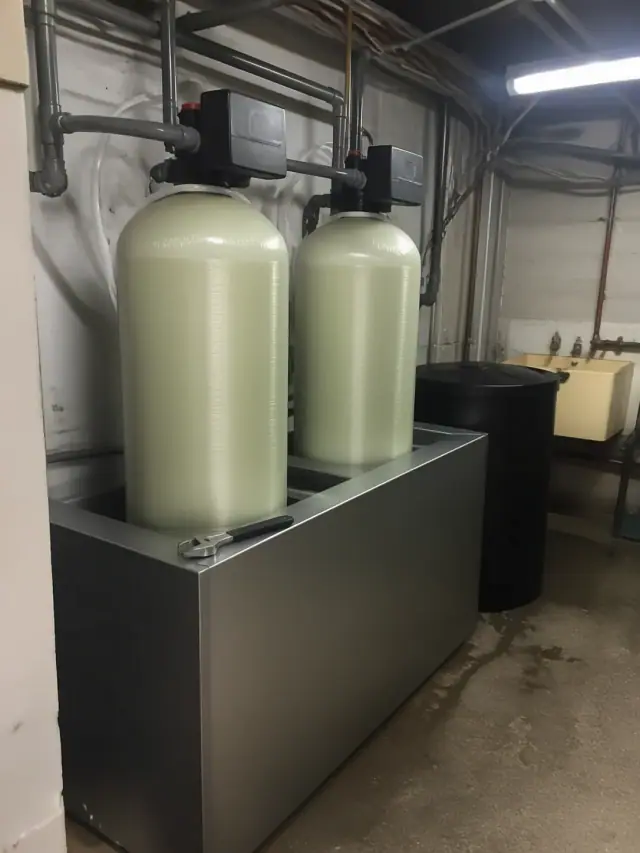
Commercial water softener maintenance supports restaurants, medical facilities, light industrial spaces, and other Mesa businesses that depend on reliable soft water. Multi-unit systems and higher demand may require more frequent service intervals than a standard residential schedule.

  • Maintenance intervals scaled to system size and daily water demand
  • Valve sequencing and brine draw checked across multi-unit setups
  • Hardness breakthrough diagnosed before it affects fixtures or equipment
  • Service documentation built around water test results and observed wear
  • Ongoing troubleshooting support after maintenance or installation visits
Request Estimate
Finding Your Right Fit

Choosing the Right Water Softener System

The right maintenance plan depends on incoming hardness, water use, system grain capacity, resin condition, and whether you also use reverse osmosis or whole-house filtration. We combine water testing with a mechanical inspection so the recommendation fits your system instead of a generic checklist.

Water Testing First

Every visit begins with testing for total hardness, pH, total dissolved solids, chloramine or chlorine residual, iron, manganese, and turbidity. Iron above 0.3 mg/L or free chlorine above 1.0 mg/L changes the maintenance strategy because resin cleaning or carbon prefiltration may be needed.

Mesa-Specific Scheduling

Mesa heat and seasonal water use change how a softener should be set. Summer temperatures can exceed 110°F in unconditioned utility spaces, so we look for salt bridging, evaporation, and higher regeneration demand before those issues affect soft water.

Clear Pricing and Support

You receive pricing before work begins, with service recommendations tied to testing and inspection results. Professional water softener service in Mesa commonly ranges from $150 to $600 per visit depending on the scope, and planned maintenance usually costs less than late-stage repair.

What Sets Us Apart

Why Choose Us for Water Softener Maintenance?

Mesa Water Softeners brings local water-chemistry knowledge, careful diagnostics, and a no-high-pressure approach to every maintenance call. We explain what the water test shows, what the system inspection confirms, and which option is most practical for your home or business before any repair, cleaning, or replacement work starts.

Get a Free Quote

Hard Water Breakthrough

Hard water breakthrough shows up as poor soap lather, filmy dishes, fast calcium buildup on aerators, and a mineral feel after showering. We test post-softener hardness, then trace the issue back to brine preparation, resin capacity, or control valve sequencing.

Salt Bridges and Mushing

A salt bridge leaves a hardened crust above the water line, while salt mushing compacts sludge at the bottom of the brine tank. Both conditions stop the softener from making or drawing strong brine, so the regeneration cycle runs without properly restoring the resin.

Regeneration Valve Failure

Valve problems can leave the unit stuck in service, backwash, or continuous drain, or let hard water bypass the resin bed through worn seals. In Mesa high-cycling installations, control valve seal packs may need rebuilding every 5 to 8 years.

Iron and Sediment Fouling

Dissolved ferrous iron can oxidize on resin beads and reduce exchange capacity, while sediment can plug screens and restrict flow. Older neighborhoods such as Lehi and the Alma School corridors may also see sediment after main breaks or seasonal flushing.

Resin Bead Degradation

When resin is chemically degraded or physically worn, cleaning may no longer restore softening capacity. Signs include hardness readings that stay high after regeneration, declining performance between cycles, or fine yellow-brown resin particles appearing at faucets.

High Salt Use and Short Cycling

Mesa hardness can cause frequent regeneration, especially on undersized systems or controls set without current water-use data. We compare salt dose, grain capacity, household demand, and brine draw so the system is not wasting salt while still protecting soft water quality.

How it works

Our Water Softener Process

Our maintenance process moves from testing to inspection, diagnosis, service work, and a clear maintenance plan. That sequence keeps the visit focused on the actual cause of hard water, salt waste, or mechanical failure.

01.

Test Incoming Water

We measure incoming hardness in grains per gallon or mg/L as CaCO3, then check chloramine, iron, pH, sediment, and TDS. For outlying well-water properties near Apache Junction or unincorporated Maricopa County east of Mesa, additional groundwater indicators may be appropriate.

02.

Inspect the Softener

The inspection covers the control valve body, bypass valve, inlet and outlet connections, brine line, float assembly, drain line flow control, and resin tank condition. This gives us a mechanical baseline before recommending cleaning or repair.

03.

Evaluate Salt and Brine Draw

We check salt level, salt type, bridging, mushing, tank water level, brine valve movement, and injector condition. A clogged injector or stuck float can let the softener cycle without actually regenerating the resin.

04.

Verify Resin and Regeneration

After regeneration, we test effluent hardness to confirm whether the resin is exchanging properly. We also verify backwash flow rate, brine draw volume, and rinse duration against your system design and water use.

05.

Clean, Repair, or Rebuild

Service may include resin cleaner treatment, brine tank cleanout, injector cleaning, valve seal and spacer replacement, or a full control valve replacement when the valve body has failed. The work is matched to the diagnosis rather than added automatically.

06.

Review Results and Next Steps

Before we leave, we explain the test results, what was adjusted or repaired, and what you should monitor between visits. Homeowners should check salt monthly, inspect for bridging every 2 to 3 months, and do a simple hardness strip test quarterly.

Get Better Water

Schedule Water
Softener
Maintenance

Protect your system before hard water, scale, or salt problems become expensive repairs. Request a free water softener quote from Mesa Water Softeners, or call to schedule maintenance, diagnostics, brine tank service, resin cleaning, or valve repair.

Service Help

Water Softener Maintenance FAQs

These answers cover common questions about water softener maintenance, repair, resin service, brine tanks, metered systems, and Mesa water conditions. For a specific recommendation, a water test and system inspection provide the most accurate answer.

Call Our Experts

Yes. Regular professional service helps a water softener keep working efficiently through its full service life, especially in Mesa where water hardness and chloramine treatment increase wear. Without service, performance often declines gradually until hard water is already reaching fixtures and appliances.

Annual salt-based water softener maintenance in Mesa commonly totals $150 to $900 when salt and professional service are both included. Professional service typically ranges from $150 to $600 per visit, with a routine annual inspection, hardness test, and system check often closer to $150 to $250. Salt costs commonly add $60 to $240 per year depending on system size, salt type, and regeneration frequency. Planned preventive service often runs $150 to $300, while a late control valve, resin bed, or brine tank failure can run $400 to $800 or more before any downstream damage is considered.

A well-maintained water softener in Mesa should last 15 to 20 years, though high hardness above 200 ppm and chloramine disinfection can be demanding on resin and valve parts. Neglected systems in local conditions may fail in 7 to 8 years. Resin beds often need replacement after 10 to 15 years, and control valve seal packs may need rebuilding every 5 to 8 years in high-cycling systems.

A complete service includes incoming water testing, post-softener hardness testing, and inspection of the control valve, bypass, resin tank, brine tank, brine line, injector, float, and drain line. We also verify regeneration cycle timing, salt condition, brine draw, rinse settings, and signs of resin fouling. Resin cleaner treatment or brine tank cleaning is recommended when the inspection shows it is needed, and resin-bed sanitization with a dedicated cleaner every 6 to 12 months may be appropriate in Mesa conditions.

Metered systems regenerate based on measured water use instead of a fixed clock schedule, so the meter assembly and demand-initiated controls must be checked during service. The resin tank, brine system, and valve still need the same core inspection. When properly configured, a metered design can reduce salt waste while keeping soft water consistent.

Call when there is a sudden complete loss of soft water, visible leaking at the control valve or tank connections, continuous water running to drain, or salt water entering the home supply. These failures can waste water or create plumbing problems if ignored. Less urgent issues such as gradual hardness breakthrough or higher salt use can usually be handled with a scheduled diagnostic visit.

Yes. A softener helps protect a reverse osmosis membrane by reducing calcium and magnesium hardness before water reaches the RO system. Maintenance for the combined setup includes annual softener service plus RO maintenance annually or biannually for pre-filters, post-filters, membrane evaluation, and storage-tank sanitization.

Check the salt level monthly and keep the tank between one-third and two-thirds full. Do not pack the tank to the top, because that can contribute to bridging, and do not let it run so low that the softener regenerates without enough brine. Inspect for a salt bridge every 2 to 3 months, especially in hot garage installations.

Salt bridges form when salt hardens into a crust above the water line, leaving an air gap between the salt mass and the brine solution below. Mesa heat can accelerate the problem in unconditioned utility spaces where summer temperatures may exceed 110°F. If a broomstick stops before reaching the water level, a bridge may be present.

Resin replacement becomes necessary when resin cleaning no longer restores exchange capacity. Signs include high hardness readings right after regeneration, soft water fading quickly between cycles, or fine yellow-brown resin particles appearing at fixtures. In Mesa, chloramine-treated water can degrade resin faster than normal conditions.

Yes. We test for hardness, pH, TDS, chloramine or chlorine residual, iron, manganese, and turbidity during service. Iron above 0.3 mg/L can require resin cleaning or an iron prefilter, and free chlorine above 1.0 mg/L may justify evaluating carbon prefiltration to protect the resin bed.

A full brine tank cleanout is typically recommended every 5 to 7 years as part of scheduled whole home water softener service. It may be needed sooner if salt mushing blocks the pickup screen or if low-purity salt leaves heavy residue. Cleanout includes removing old salt, rinsing the tank, and checking the air check, brine valve, and grid.

Yes. Commercial systems serving restaurants, medical offices, light industrial spaces, or other high-demand uses may need more frequent maintenance than a residential unit. Service intervals depend on water demand, system size, hardness load, and whether there are multiple softeners working together. Testing and inspection results determine the right schedule.