Proudly serving Mesa, Tempe, Phoenix, Chandler, Gilbert, Queen Creek & surrounding areasCall or Text 24/7: 602-905-5577
Aerial view of a residential neighborhood with terracotta-roof homes and desert landscaping in Mesa, AZ.

Carbon Water Filtration in Mesa, AZ | Chlorine Removal & Water Treatment

Mesa Water Softeners provides carbon filtration service in Mesa, Arizona for homeowners and commercial properties dealing with chemical taste, odor, sediment, and hard-water side effects. We install point-of-entry carbon filtration, whole-home water treatment, sediment pre-filtration, carbon block and granular activated carbon systems, reverse osmosis integration, and complete multi-stage treatment designs. Each system starts with water testing so the media, tank size, contact time, and plumbing layout match your actual tap water. Our goal is to solve the water-quality problem in front of us, not push a one-size-fits-all unit.

Mesa water draws from Salt River Project and Central Arizona Project canal supplies, and the finished water can arrive with hardness around 15.2 grains per gallon plus chlorine or chloramine residuals. In a city of 504,258 residents, those issues show up as swimming-pool smell, white scale, metallic taste, and fixtures or appliances that take extra wear. Carbon filtration is especially useful for reducing chemical taste and odor, but chloramine requires the right carbon grade and enough contact time. We test first, explain what we find, and recommend only the treatment stages your water actually needs.

We install NSF-certified systems with proper bypass valve placement, clean plumbing connections, and maintenance guidance before the job is complete. If your home also needs softening, RO drinking water, iron treatment, or UV disinfection, we design those stages in the correct sequence instead of adding disconnected equipment.

Mesa Water Softeners provides carbon filtration service in Mesa and surrounding East Valley communities including Tempe, Chandler, Gilbert, Apache Junction, and the broader East Valley metro area.

★ ★ ★ ★ ★4.8/5.0 Customer Rating · 21 Years of Water Treatment Experience · 1,000+ Water Systems Serviced · Licensed, Bonded & Insured · Home & Business Water Solutions

Carbon Filtration Systems & Benefits

What Is Carbon Filtration?

Carbon filtration is a water treatment method that uses activated carbon media to adsorb chlorine, chloramines, volatile organic compounds, disinfection byproducts, and many odor-causing chemicals. Activated carbon has an enormous internal pore structure; a quality media bed can have surface area reaching into the millions of square meters per kilogram. Instead of dissolving or neutralizing every contaminant, carbon traps target compounds on its porous surface as water moves through the filter bed or carbon block.

For Mesa homes, the key design question is whether the water carries free chlorine, chloramine, sediment, iron, hydrogen sulfide, or a mix of issues. Chloramine is more persistent than free chlorine, so a standard undersized carbon filter may not provide enough empty-bed contact time for dependable reduction.

Carbon filtration does not replace a water softener when the problem is calcium and magnesium hardness. Most Mesa systems work best as part of a treatment sequence that may include sediment pre-filtration, carbon, softening, and reverse osmosis for drinking water.

Benefits of Carbon Filtration

A properly specified carbon filtration system makes water easier to live with throughout the home. It can improve taste and smell, reduce chemical exposure at appliances and fixtures, protect downstream RO membranes, and give Mesa homeowners a clearer maintenance plan based on real water testing.

  • Reduces chlorine and chloramine taste and odor at the point of entry.
  • Helps limit chemical vapors in showers, laundry, ice makers, and kitchen taps.
  • Protects rubber seals, plastic appliance parts, and RO membranes from chlorine degradation.
  • Pairs with sediment filters to keep carbon media from plugging prematurely.
  • Supports multi-stage treatment for VOCs, disinfection byproducts, hydrogen sulfide, iron, and TDS concerns when testing shows they are present.
  • Preserves household water pressure when tank diameter, media volume, and peak flow are sized correctly.
  • Gives under-sink drinking water a more polished taste when carbon block or RO is added.
  • Creates a clear replacement schedule for cartridges, media tanks, UV lamps, and RO membranes.
Carbon Filtration Services

Carbon Filtration Services

Mesa Water Softeners installs and supports carbon-based treatment for whole homes, drinking water taps, and commercial properties. The right service depends on the disinfectant in your water, your peak flow rate, whether sediment or iron is present, and whether you also need softening or reverse osmosis.

Whole House Carbon Filters

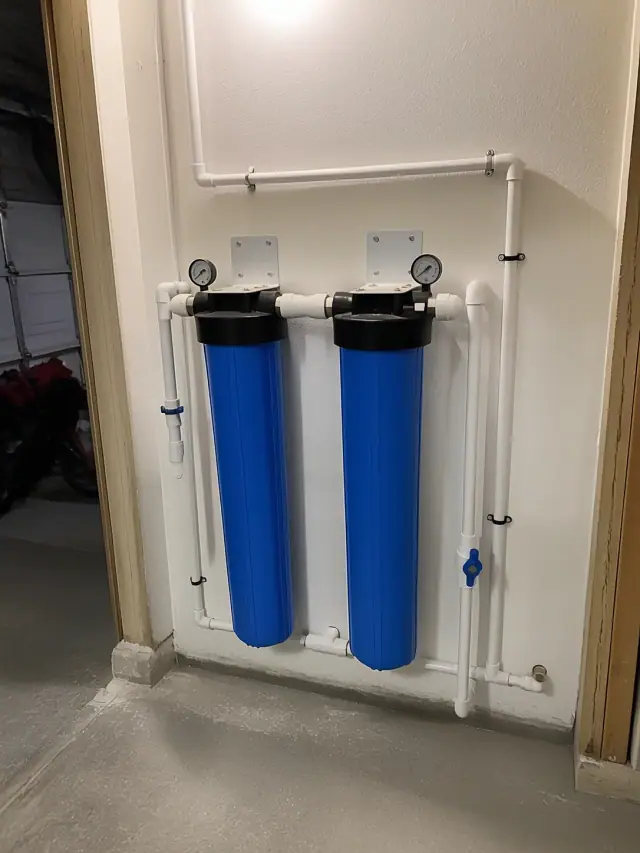
Whole house carbon water filtration system with blue filter housings installed on a garage wall in Mesa, AZ.

A whole house carbon filter installs at the main supply line so all showers, faucets, laundry equipment, water heaters, and appliances receive treated water. For Mesa homes with chemical taste or odor complaints, point-of-entry filtration reduces chlorine or chloramine exposure before the water spreads through the plumbing system.

Request Estimate

Activated Carbon Water Filters

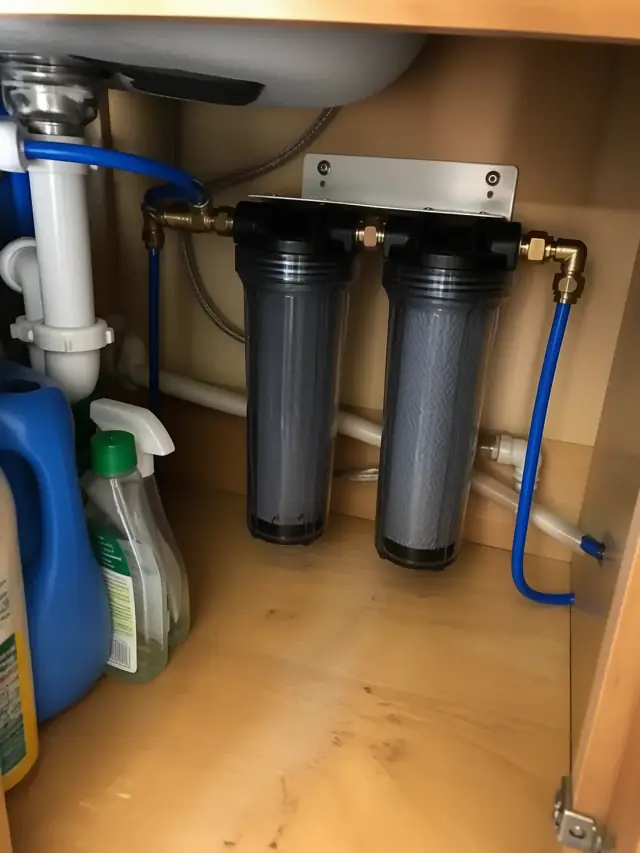
Carbon water filtration system installed under a kitchen sink in a home in Mesa, AZ.

Activated carbon water filters use granular, catalytic, or block carbon depending on the job. Coconut shell carbon is often used for residential applications because its micropore-heavy structure is well suited for chlorine, chloramines, VOCs, pesticide residues, trihalomethanes, and haloacetic acids.

Request Estimate

Sediment Pre-Filtration

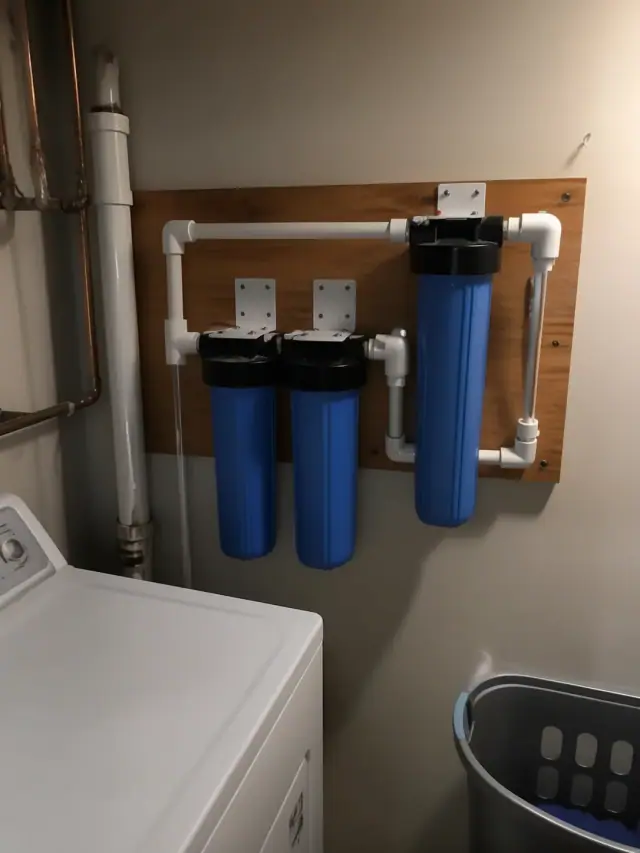
Completed water filtration system with blue filter housings installed in a laundry room in Mesa, AZ.

Sediment pre-filtration protects the carbon stage from fine particles that can shorten media life and reduce flow. In Mesa, a 5-micron sediment filter is often the minimum starting point, with tighter filtration considered when testing shows turbidity or cloudy water.

Request Estimate

Reverse Osmosis Integration

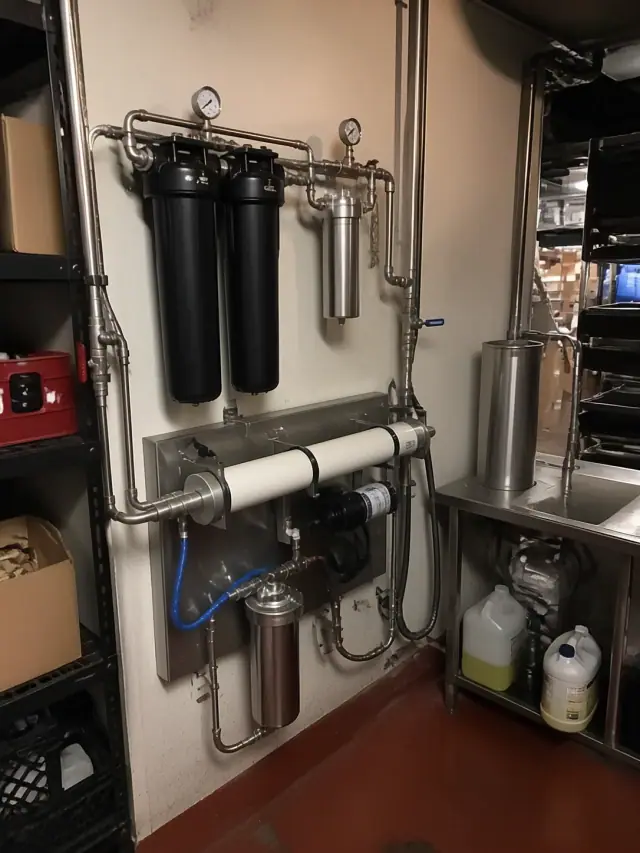
Carbon filtration and reverse osmosis water system installed in a commercial restaurant back room in Mesa, AZ.

Carbon filtration and reverse osmosis work best together for drinking water. Carbon protects polyamide RO membranes from chlorine damage, while RO brings total dissolved solids below 50 parts per million in most cases at the kitchen tap.

Request Estimate

Iron Removal Water Treatment

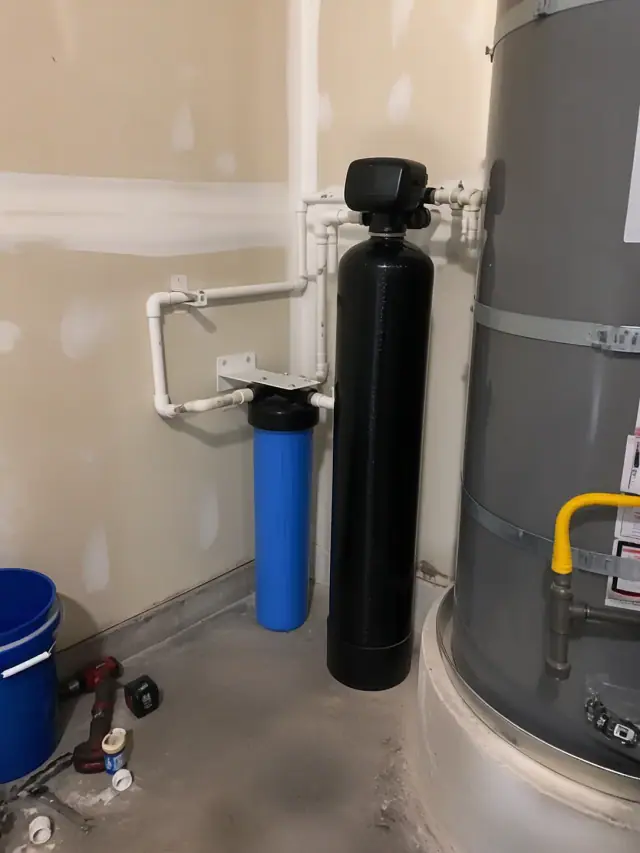
Iron removal water treatment system installed in a residential garage in Mesa, AZ.

Some Mesa properties and surrounding Maricopa County wells show iron that stains fixtures orange-brown, discolors laundry, or creates a metallic taste. When testing shows iron above 0.3 milligrams per liter, we place iron removal ahead of carbon so the carbon bed does not foul prematurely.

Request Estimate

Under Sink Carbon Filters

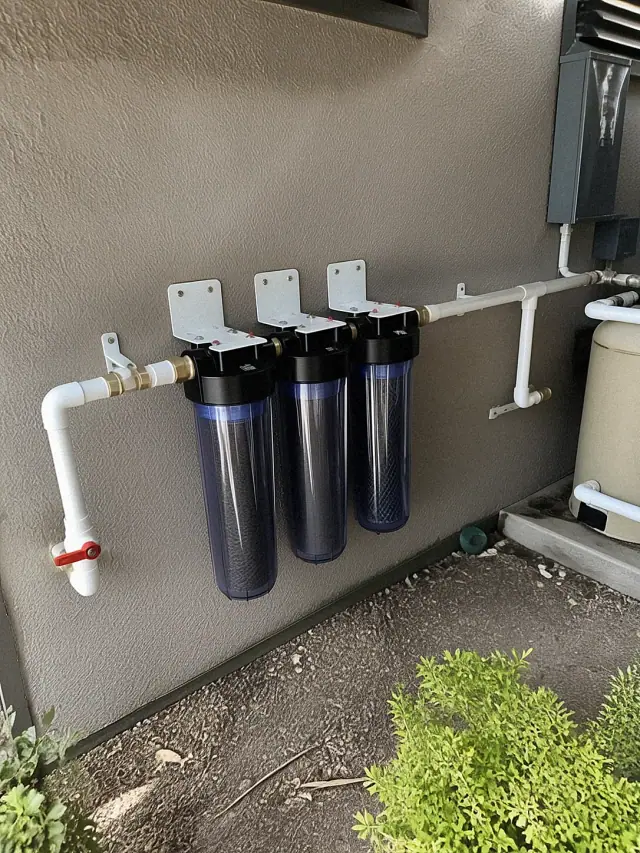
Carbon filtration system with PVC piping installed on an outdoor stucco wall in Mesa, AZ.

Under-sink carbon filters polish drinking and cooking water without treating every gallon used in the house. Carbon block cartridges are especially useful at the kitchen tap because they provide consistent contact time and can filter fine particles at lower flow rates.

Request Estimate
Carbon Filtration System Types

Types of Carbon Filtration Systems

Carbon filtration is not one piece of equipment. Mesa homes may need a whole-home media tank, a carbon block drinking-water filter, catalytic carbon for chloramine, sediment protection before the carbon bed, or a combined treatment train with softening and RO.

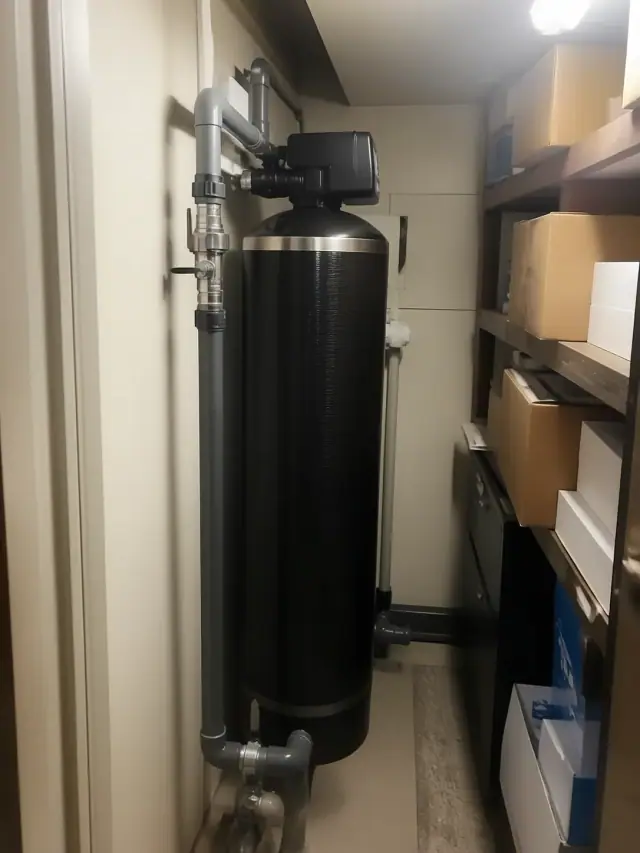
Industrial carbon filtration system installed with PVC piping in a utility closet in Mesa, AZ.

Whole House Carbon Filter Systems

Whole-house carbon systems are installed at the point of entry and sized around the home's plumbing demand. A typical Mesa family of four may need a system rated for 10-13 gallons per minute so multiple fixtures can run without sending water through the carbon too quickly.

  • Installed upstream of fixtures, appliances, and branch lines
  • Designed for chlorine or chloramine reduction across the home
  • Sized by peak flow rate, tank diameter, and media volume
  • Helps reduce chemical odor in showers, laundry, and hot-water use
  • Includes a bypass valve so maintenance can be performed without shutting down the house
Request Whole-Home Estimate
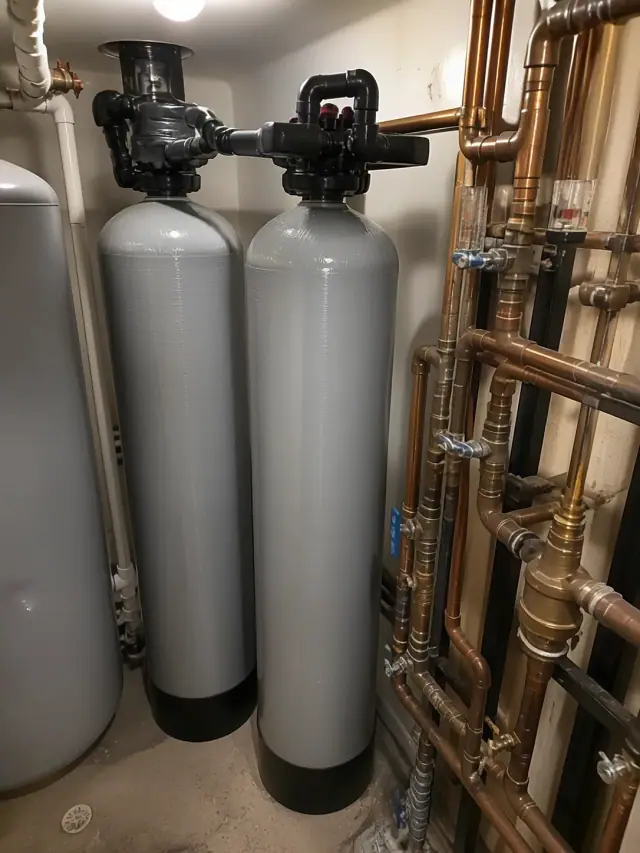
Two large grey carbon filtration tanks connected by copper pipes in an apartment utility closet in Mesa, AZ.

Granular Activated Carbon Media Tanks

Granular activated carbon media tanks handle higher whole-home flow with less pressure drop than compact carbon blocks. For chloramine, catalytic carbon or a larger media bed may be selected to provide the longer contact time required for effective reduction.

  • Uses loose carbon media in a service tank
  • Appropriate for point-of-entry residential and commercial flow rates
  • Good fit when pressure drop must be controlled
  • Can be backwashed when equipped with the right control valve
  • Media life is planned around water chemistry and usage volume
Request Media Tank Sizing
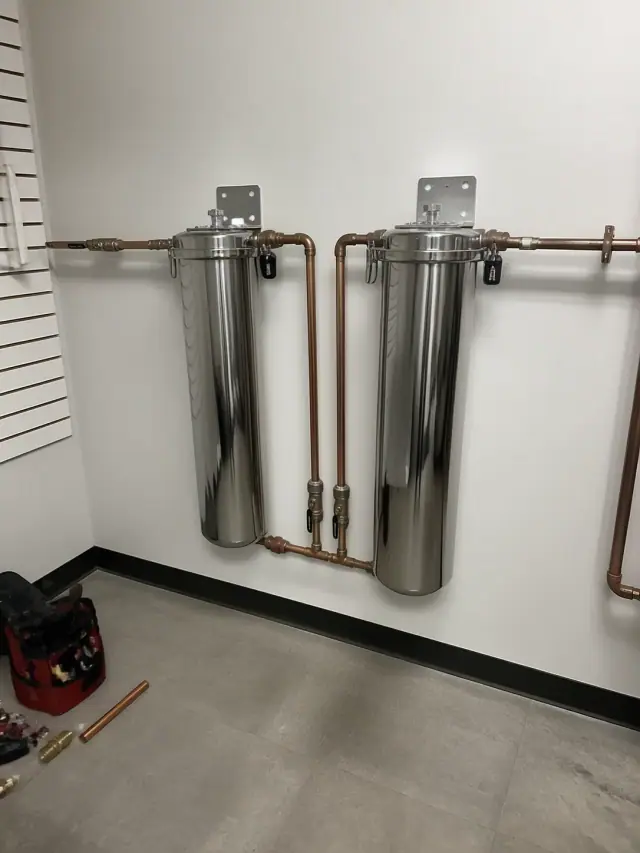
Stainless steel carbon filtration system with copper piping installed in a Mesa, AZ retail backroom.

Carbon Block Drinking Water Filters

Carbon block filters compress activated carbon into a solid matrix for point-of-use drinking water. Many carbon block units filter in the 0.5- to 5-micron range, and some 0.5-micron absolute filters can also capture cysts such as Cryptosporidium and Giardia.

  • Best suited for kitchen taps and dedicated drinking-water faucets
  • Provides more consistent contact time than loose granular cartridges
  • Helps polish taste after a whole-home softener or carbon system
  • Fits under-sink layouts with accessible cartridge replacement
  • Can be paired with RO when lower TDS is the drinking-water goal
Request Drinking Water Filter
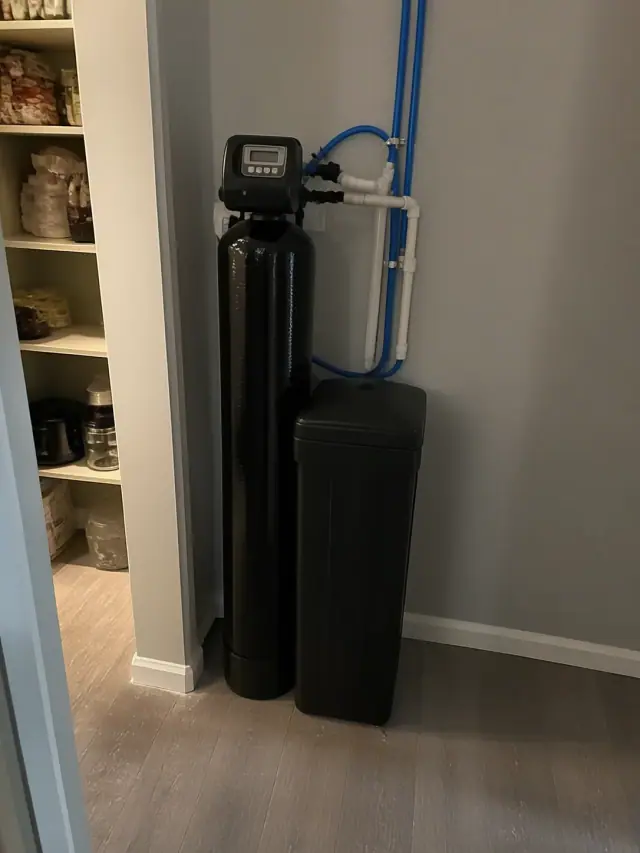
Newly installed water softener and carbon filtration system in a Mesa, AZ home pantry.

Carbon & Water Softener Combinations

Carbon filtration removes many chemical taste and odor concerns, while a water softener addresses the calcium and magnesium that create white scale. In a combined Mesa system, carbon is typically placed before the softener to protect ion exchange resin from chlorine or chloramine exposure.

  • Treats chemical odor and hard-water scale as separate problems
  • Helps protect softener resin from disinfectant residuals
  • Can be built as separate tanks or selected hybrid media when appropriate
  • Supports cleaner water for water heaters, fixtures, and appliances
  • Leaves room for RO drinking water downstream when desired
Request Combined Treatment
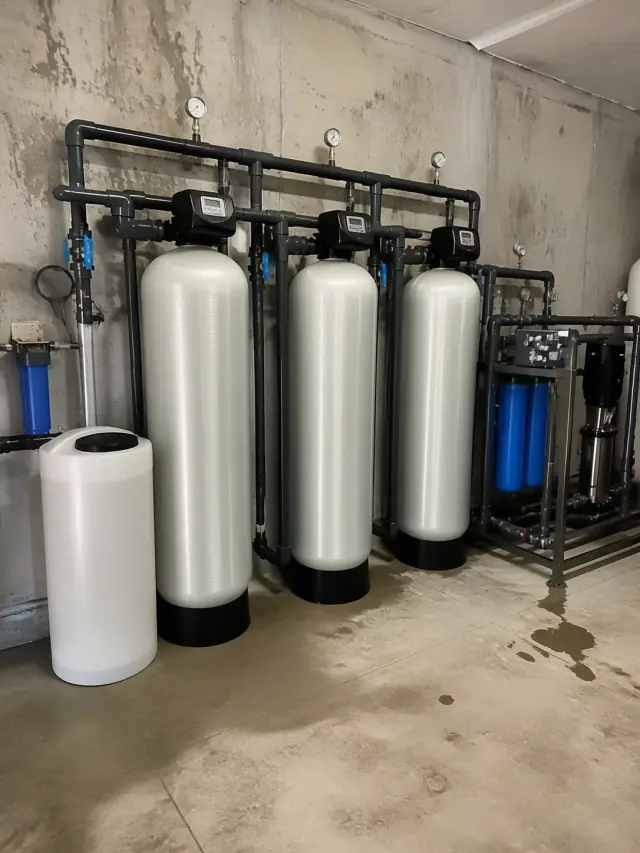
Commercial water filtration system with silver tanks and piping in a utility room in Mesa, AZ.

Multi-Stage Commercial Water Filtration

Commercial filtration uses the same treatment principles but is sized for larger daily volumes and higher peak flow. Restaurants, offices, medical spaces, and process-water users may need parallel tanks, redundancy, or specialized stages so maintenance does not interrupt operations.

  • Sized beyond typical residential 10-15 gallons-per-minute demand
  • Built differently from residential systems often estimated at 50-100 gallons per person per day
  • Supports food preparation, ice machines, and equipment protection
  • Can include sediment, carbon, softening, RO, iron removal, or UV stages
  • Designed with maintenance access and service continuity in mind
Request Commercial Sizing
Finding Your Right Fit

Choosing the Right Carbon Filtration System

The right system depends on what testing shows at your tap: disinfectant type, hardness, total dissolved solids, pH, iron, hydrogen sulfide, sediment, and household flow demand all matter. We use that information to decide whether carbon alone is enough or whether the system should include softening, RO, iron removal, UV disinfection, or staged pre-filtration.

Custom Water Testing First

Every recommendation starts with testing for hardness, TDS, pH, chlorine and chloramine residuals, iron, hydrogen sulfide, and other parameters suggested by the property. That prevents undersized or misconfigured carbon equipment and gives you a clear explanation of what each stage is supposed to solve.

Local Mesa Water Expertise

Mesa water arrives through a local mix of Salt River Project and Central Arizona Project canal supplies, then moves through a distribution system that can vary by neighborhood and season. We account for Mesa's chloramine use, high hardness, monsoon-related sediment events, and older areas such as Dobson Ranch, Riverview, and Main Street homes built in the 1970s and 1980s.

Clean Installation & Maintenance Support

Point-of-entry systems are installed with secure connections, appropriate fittings for copper, CPVC, or PEX, and a bypass valve for service access. Before we leave, we review cartridge, media, RO membrane, and UV lamp replacement schedules so you know what maintenance is coming.

What Sets Us Apart

Why Choose Us for Carbon Filtration Service?

Mesa Water Softeners approaches carbon filtration as a water-quality diagnosis, not a product package. You get testing first, system sizing based on your home and water chemistry, clean plumbing standards, and ongoing maintenance support after installation.

Request Water Assessment

Chemical Taste & Chloramine Odor

When treated water smells like a swimming pool or tastes chemical, the issue is often chlorine or chloramine residual. Mesa uses chloramine in portions of the system because it is stable in long distribution lines, so carbon media must be selected and sized for contact time rather than just installed as a small generic filter.

White Scale on Fixtures

White deposits on faucets, shower glass, water heaters, and appliances come from hardness minerals, not from a lack of carbon. Mesa's hardness around 15.2 grains per gallon calls for softening or conditioning in addition to carbon filtration when scale is the complaint.

Cloudy Water or Sediment

Fine sediment can show up as cloudiness, especially after monsoon-season runoff causes Salt and Verde River tributaries to carry suspended particles into canal water supplies. A sediment stage placed before carbon protects the media bed from plugging and keeps particles from shortening filter life.

Metallic Taste

A metallic taste can come from copper, zinc, iron, or older plumbing conditions, and carbon alone may not solve the cause. Testing separates mineral, metal, and disinfectant issues so the system can include iron removal or other treatment only when needed.

Rotten Egg Smell

Rotten egg odor usually points to hydrogen sulfide, a dissolved gas that may need aeration or specific media ahead of carbon. We identify whether hydrogen sulfide is present before recommending a treatment stage, because odor complaints can have more than one cause.

Iron Stains & Discolored Laundry

Orange-brown fixture staining and laundry discoloration are signs that iron may be present. When iron is not addressed upstream, it can foul carbon media and reduce the performance of the entire system.

How it works

Our Carbon Filtration Process

Our process is built around diagnosis, design, installation, and maintenance. Each step narrows the treatment plan so your final system fits Mesa water conditions, your plumbing layout, and the way your household or business uses water.

01.

Test Your Water at the Tap

We start by testing water from your specific tap instead of relying only on citywide averages. The test may include hardness, total dissolved solids, pH, chlorine, chloramine, iron, hydrogen sulfide, and sediment indicators.

02.

Identify the Treatment Priorities

We explain which issues are affecting taste, odor, scale, staining, or equipment protection. This is where we determine whether carbon alone makes sense or whether sediment filtration, softening, RO, iron removal, or UV should be included.

03.

Size the System Correctly

We calculate household usage and peak flow so the tank, media volume, and service rate support enough contact time. Undersizing can allow water to move through the bed too quickly, while oversizing can add unnecessary cost.

04.

Install with Service Access

We install the selected equipment at the right point in the plumbing sequence with secure connections and a bypass valve. The layout keeps filter housings, control valves, and cartridges accessible for future maintenance.

05.

Review Maintenance & Replacement

Before the job is complete, we walk you through the service schedule for each stage. Cartridge carbon may need replacement every 6-12 months, while larger GAC tanks may run 3-5 years before media replacement depending on chemistry and usage.

06.

Provide Ongoing Support

We remain available after installation for filter changes, media replacement planning, troubleshooting, and system adjustments. RO membranes typically last 2-5 years with good pre-filtration, iron or specialty media tanks generally last 5-10 years, and UV lamps should be replaced annually when a UV stage is installed.

Get Better Water

Schedule a Carbon
Filtration
Consultation

Ready to get rid of chemical odor, sediment, metallic taste, or hard-water side effects? Request an estimate from Mesa Water Softeners and we will test first, explain your options, and design a carbon filtration or multi-stage treatment plan around your water.

Water Treatment Help

Carbon Filtration FAQs

These answers cover common questions about carbon filtration, whole-house filters, drinking-water systems, maintenance, and Mesa water conditions. For the most accurate recommendation, start with a water test at your property.

Call Our Water Experts

Replacement depends on system type, water quality, and usage. Cartridge-based carbon filters usually fall in the 6-12 month range, while larger granular activated carbon media tanks may last 3-5 years before media replacement. Iron or specialty media tanks in multi-stage systems often run 5-10 years, and UV lamps should be changed annually if included.

Activated carbon is used for chlorine, chloramines, volatile organic compounds, pesticide residues, hydrogen sulfide odor, and disinfection byproducts such as trihalomethanes and haloacetic acids. It does not remove hardness minerals, nitrates, fluoride, or heavy metals unless the system includes another stage such as softening, specialty media, or reverse osmosis.

Granular activated carbon uses loose media in a tank or cartridge, which works well for whole-home flow rates with lower pressure drop. Carbon block compresses carbon into a solid matrix with more consistent contact time and finer particle filtration, so it is usually better for point-of-use drinking water.

Yes. In Mesa, a common setup places carbon first to reduce chlorine or chloramine and then a softener to remove calcium and magnesium hardness. That sequence helps protect ion exchange resin while addressing both chemical odor and white scale.

The treatment chemistry is similar, but commercial systems are sized for higher flow, larger daily volume, and operational continuity. A restaurant or business may need larger tanks, parallel equipment, or redundancy so service can continue during maintenance.

No, carbon filtration alone does not remove calcium and magnesium hardness. Mesa hardness around 15.2 grains per gallon requires a water softener or conditioner if the goal is to reduce white scale on fixtures, shower doors, and water heaters.

Operating cost is mainly filter cartridge or media replacement, plus any electricity used by an automated control valve. Granular activated carbon treatment can range from roughly 10 cents to $1.00 per 1,000 gallons depending on system capacity and media grade. Mesa Water Softeners explains equipment, installation, and maintenance costs before you commit.

Testing identifies hardness, TDS, pH, chlorine, chloramine, iron, hydrogen sulfide, and sediment before any equipment is selected. Without that step, a carbon system may be too small for chloramine, unprotected from sediment, or missing the separate softening or iron stage the water actually needs.

Chloramine is more stable in long distribution systems than free chlorine, which is why it can be harder to reduce with a small generic filter. It usually requires enough carbon contact time and, in many cases, catalytic carbon or a larger media bed matched to the flow rate.

They solve different problems. A whole-house carbon filter treats water at the point of entry for showers, appliances, laundry, and taps, while an under-sink filter focuses on drinking and cooking water at one faucet. Many homes use both when they want whole-home odor reduction and higher-quality kitchen water.

A sediment pre-filter is often recommended when fine particles or cloudiness are present. In Mesa, a 5-micron sediment filter is commonly used ahead of carbon to keep the media bed from plugging prematurely, with tighter options considered when testing shows significant turbidity.

Yes. Carbon pre-filtration protects RO membranes from chlorine damage, and reverse osmosis can reduce total dissolved solids for drinking water at the kitchen tap. With good pre-filtration, RO membranes commonly last 2-5 years depending on influent water quality and usage.

The clearest sign is the return of the taste, chemical odor, rotten egg smell, or discoloration the system originally corrected. Reduced flow may indicate a plugged sediment stage, while discolored water after a period of clear water can signal a saturated or bypassed filter stage. Scheduled replacement prevents that decline from becoming the way you notice the issue.