Proudly serving Mesa, Tempe, Phoenix, Chandler, Gilbert, Queen Creek & surrounding areasCall or Text 24/7: 602-905-5577
Aerial view of a residential neighborhood with terracotta-roof homes and desert landscaping in Mesa, AZ.

Water Treatment in Tempe, AZ | Water Softeners, Reverse Osmosis & Filtration

Mesa Water Softeners provides water softeners, reverse osmosis, and whole house filtration for homes and businesses in Tempe, AZ. We also handle water softener repair, maintenance, residential systems, salt water softener installation, saltless water softener installation, commercial water softener installation, and carbon filtration as an additional treatment. Our work is built around East Valley water conditions, where hardness, chloramines, TDS, sediment, and iron can all affect comfort and equipment performance. Every recommendation starts with understanding your water instead of forcing one system into every property.

Tempe borders Mesa directly to the west, and we serve the full city from the ASU campus area near Apache Boulevard to neighborhoods south of Elliot Road. Older plumbing configurations in 1970s and 1980s neighborhoods, water pressure variations near Tempe Town Lake infrastructure, and hard East Valley water make sizing and installation details matter. In Arizona, Mesa and Tempe tap water regularly exceeds 200 mg/L of calcium and magnesium, which can leave visible scale and reduce water heater efficiency. We test hardness, iron, pH, TDS, chlorine, and chloramine levels before recommending equipment, so the final setup matches the actual water in your home.

Schedule an estimate to compare installation, repair, maintenance, filtration, and RO options for your Tempe property before scale, taste, or appliance problems get worse.

★ ★ ★ ★ ★4.8/5.0 Customer Rating - 21 Years of Water Treatment Experience - 1,000+ Water Systems Serviced - Licensed, Bonded & Insured - Home & Business Water Solutions
Water Treatment Services

Local Water Treatment Categories in Tempe, AZ

Tempe homeowners and businesses often need more than one treatment stage because hard water, chloramine taste, elevated TDS, sediment, and plumbing layout vary by property. The categories below cover water softeners first, then drinking-water RO, whole-house filtration, repair, maintenance, residential and commercial softener options, salt-based and saltless installations, and carbon filtration for additional treatment. For another nearby service area, see Phoenix .

Water Softeners

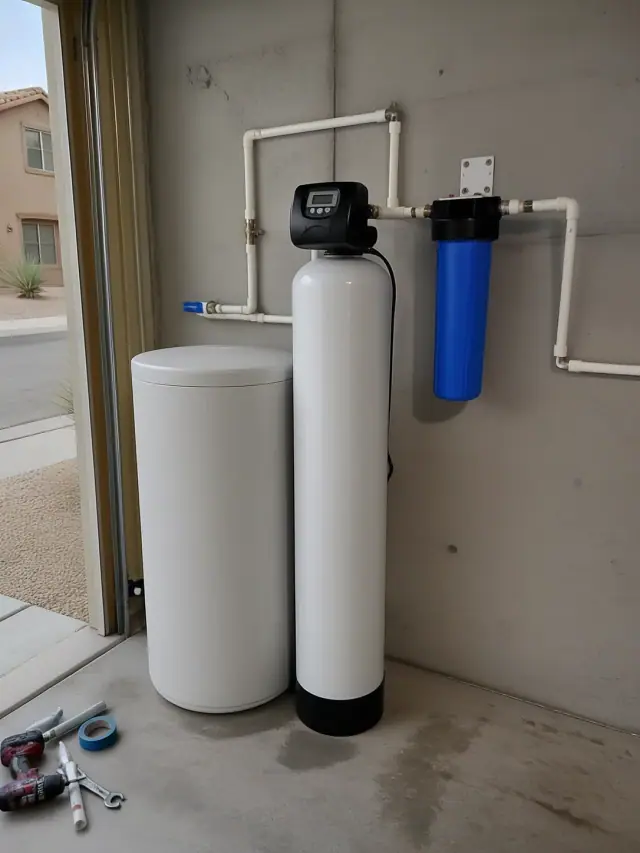
Newly installed water softener system with two white tanks and blue filter in a residential garage in Tempe, AZ.

Water softeners address the permanent hardness common in Tempe and the East Valley by reducing calcium and magnesium before the water reaches fixtures, water heaters, dishwashers, and laundry equipment. We size each system from the water test and household demand, then install clean plumbing, a proper bypass valve, drain connection, and programming that fits your usage.

Explore Service

Reverse Osmosis

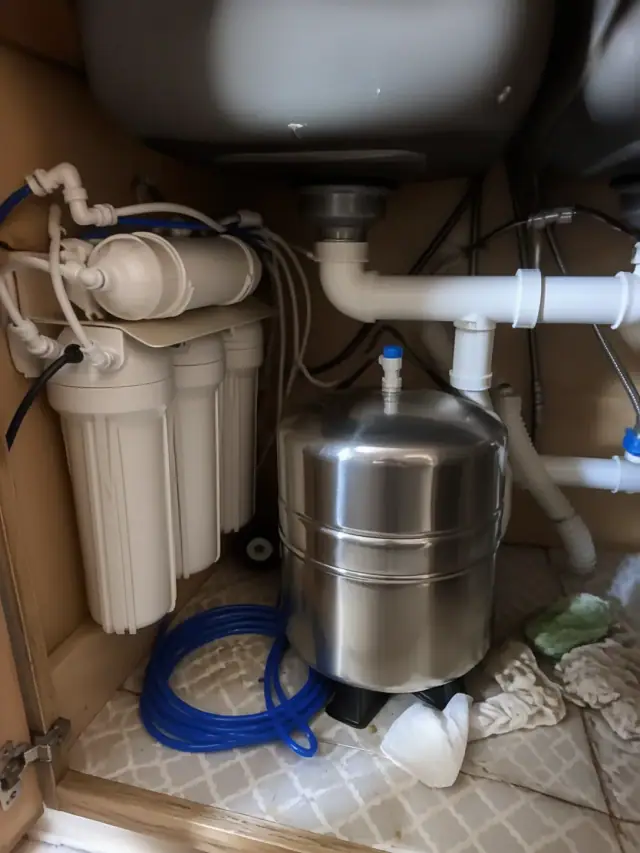
Newly installed reverse osmosis water filtration system under a kitchen sink in a Tempe, AZ home.

Reverse osmosis is the drinking-water upgrade for dissolved solids, nitrates, chloramines, and contaminants that a softener does not remove. A typical under-sink RO setup uses sediment prefiltration, carbon block, the RO membrane, and post-carbon polishing before sending water to a dedicated tap.

Explore Service

Whole House Filtration

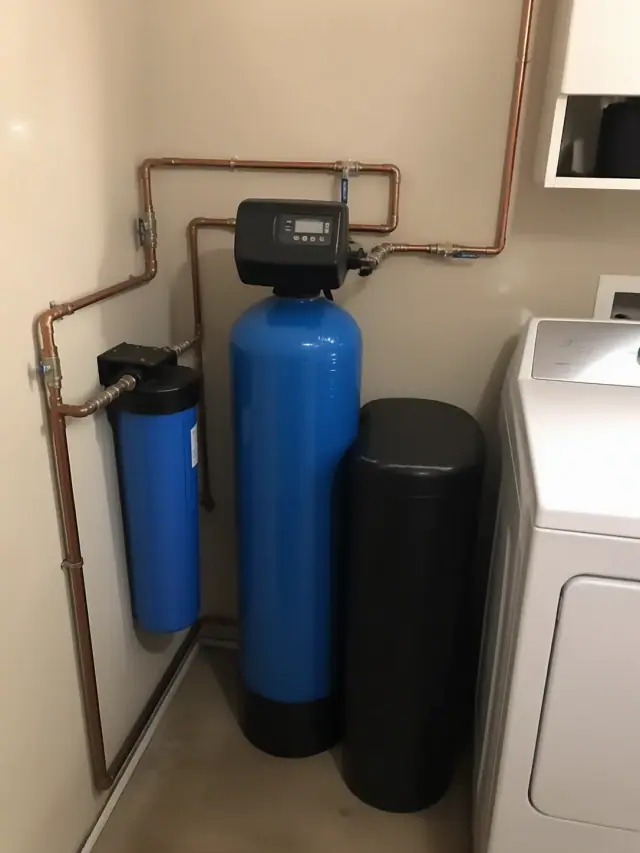
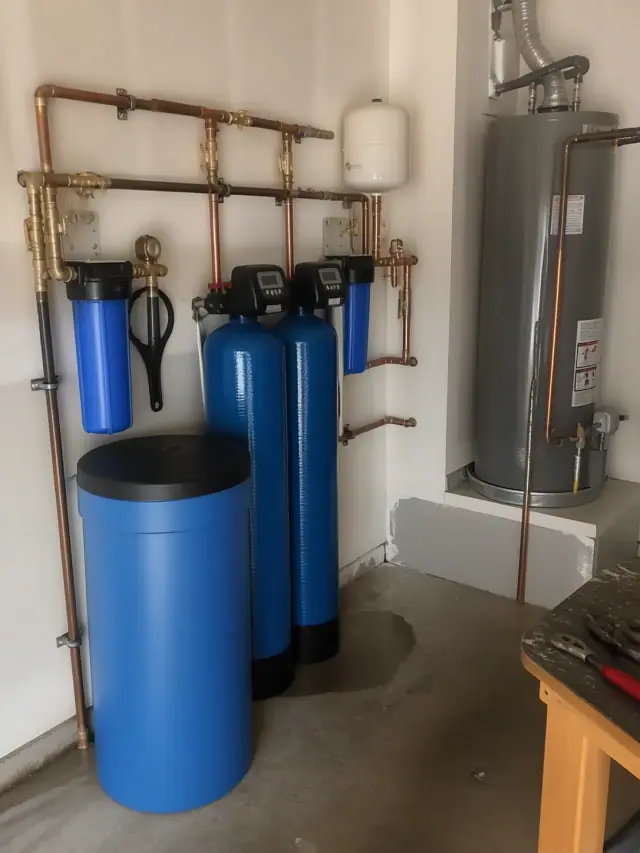
Water softener and whole house filtration system with copper piping installed in a laundry room in Tempe, AZ.

Whole house filtration treats water at the entry point before it reaches fixtures and appliances. In Tempe, that often means pairing a softener with sediment filtration and large-format carbon media, including 5-micron sediment filtration and carbon block housings when taste, odor, or particulate problems need attention.

Explore Service

Water Softener Repair

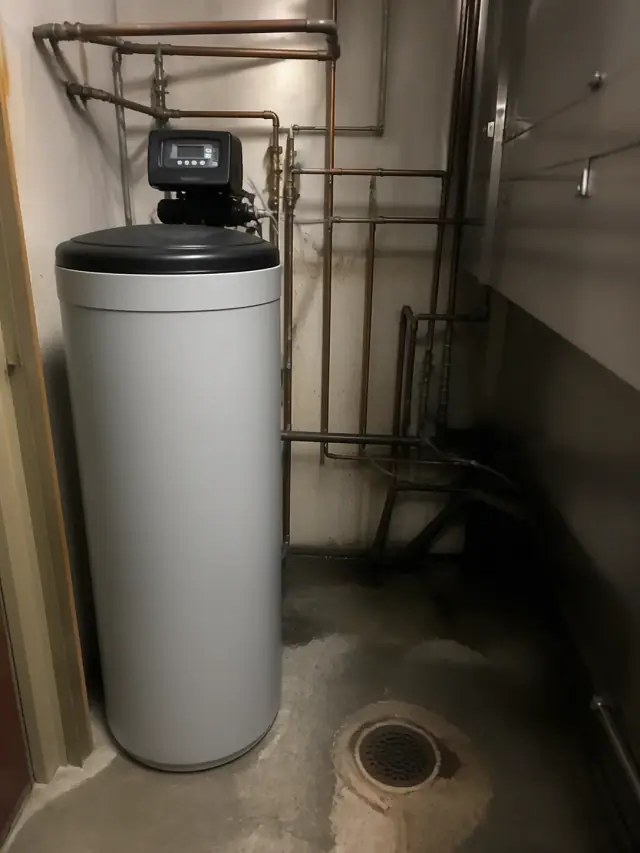
Industrial water softener system repair with copper piping in a dimly lit back room in Tempe, AZ.

Repair starts with diagnosing the actual failure instead of replacing parts blindly. We service major softener types, including timer-based and demand-initiated systems, and look for resin bed issues, control valve problems, salt bridging, brine tank failures, and settings that no longer match Tempe water conditions.

Water Softener Maintenance

New water softener and filtration system installed in a garage in Tempe, AZ.

Maintenance keeps a softener reliable in high-hardness Arizona water. Most residential systems need a salt check every 4 to 6 weeks, brine tank cleaning once a year, and resin bed or control valve inspection every 2 to 3 years, especially where chloramine or iron exposure can foul media.

Residential Water Softener Systems

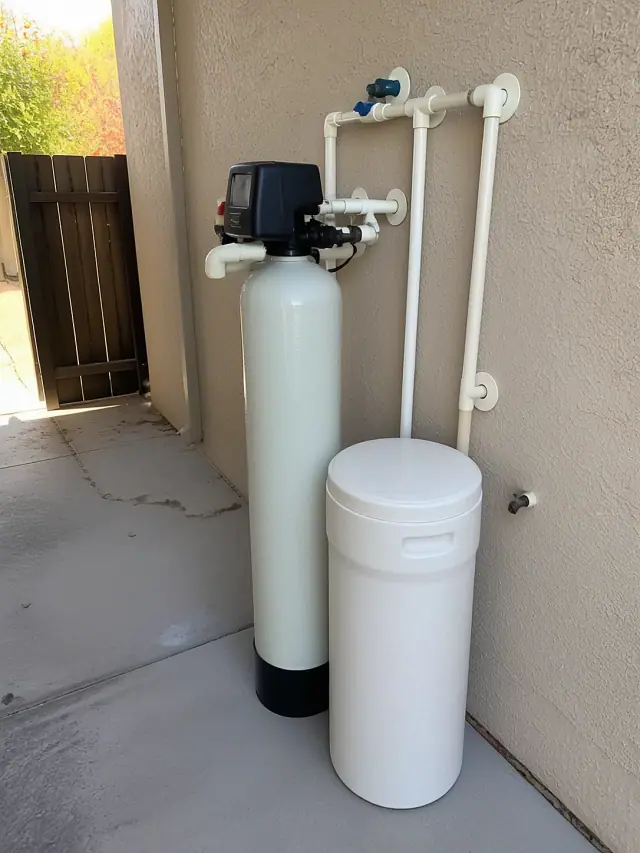
Newly installed residential water softener system with PVC piping against a house wall in Tempe, AZ.

Residential systems are matched to the number of people in the home, water use, plumbing layout, and test results. A two-person household and a family of six do not need the same capacity, so we calculate daily grain removal demand before recommending equipment.

Salt Water Softener Installation

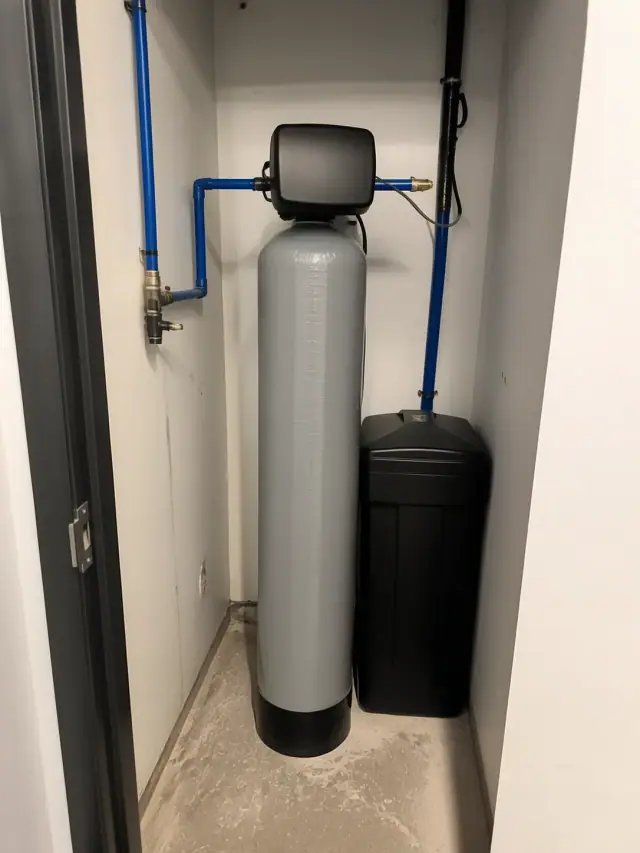
Salt water softener installation with blue PEX piping in a small utility closet in Tempe, AZ.

Salt-based ion exchange systems are the most effective option for most Tempe homes when the main problem is calcium and magnesium hardness. Modern demand-initiated models regenerate based on actual water use rather than a fixed timer, which reduces unnecessary salt and water use compared with older timer-based systems.

Saltless Water Softener Installation

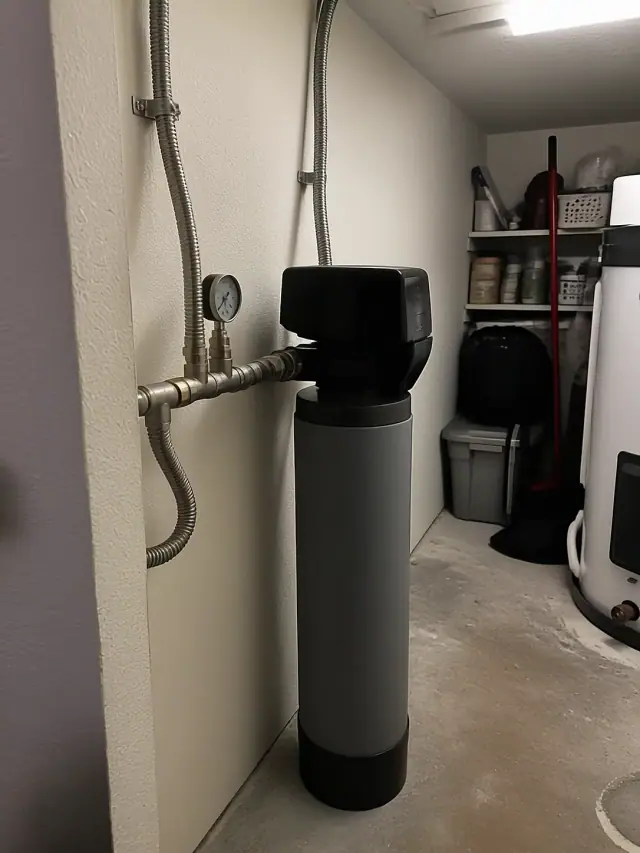
Saltless water softener installation with stainless steel pipes in a Tempe, AZ apartment utility room.

Saltless water conditioner installations are best discussed after testing because these systems condition scale behavior rather than removing hardness minerals through ion exchange. We explain what saltless equipment can and cannot address in Tempe water, then compare it with salt-based softening, carbon filtration, or RO when the goals include scale control, taste, or drinking-water quality.

Commercial Water Softener Installation

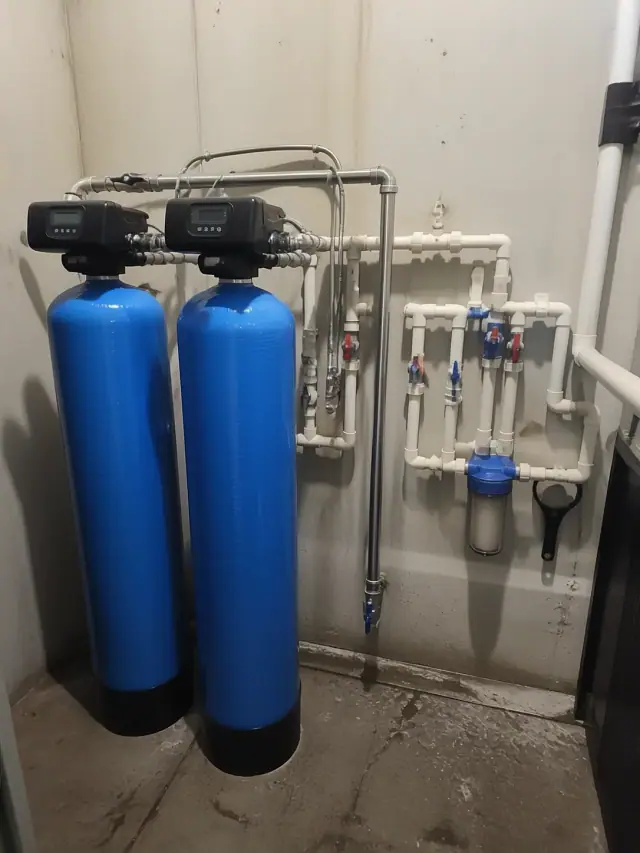
Commercial water softener system with blue tanks and stainless steel piping in a Tempe, AZ utility room.

Commercial softener installation protects equipment that runs continuously, including restaurants, laundromats, dental offices, hotels, and light industrial properties. Scale inside commercial water heaters and boilers reduces heat transfer efficiency, so system capacity, flow rate, brine tank sizing, and service access matter more than in a simple residential installation.

Carbon Filtration & Additional Treatment

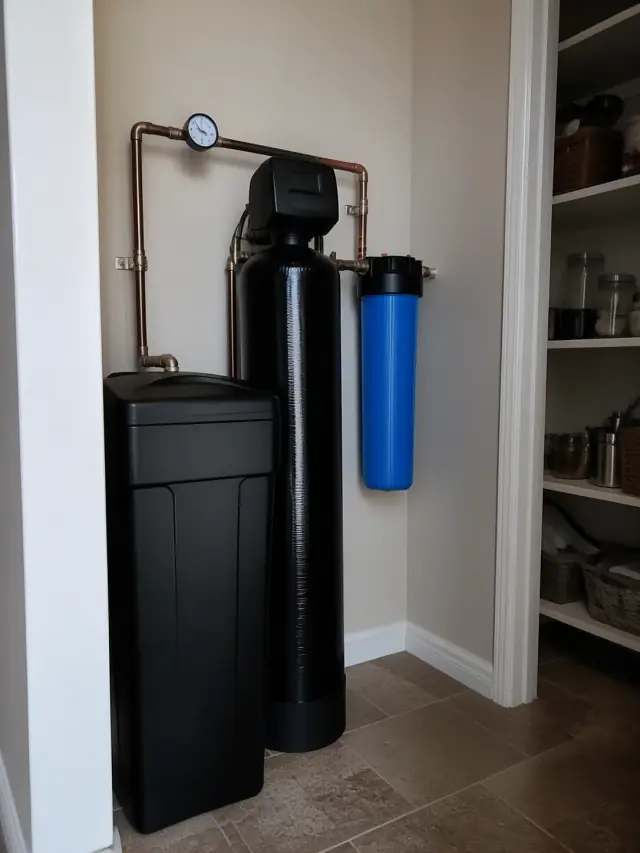
Newly installed water softener and carbon filtration system with copper piping in a Tempe, AZ home.

Carbon filtration is an additional treatment when taste, odor, chloramines, or chlorine exposure remain a concern after softening. Because chloramines are more stable than free chlorine, catalytic carbon is often the better media choice than standard activated carbon when chloramine reduction is part of the treatment goal.

System Selection

How to Choose the Right Water Treatment System in Tempe

The right setup depends on what your water test shows, how much water your property uses, and which problems matter most: scale, taste, odor, TDS, sediment, iron, or appliance protection. A Tempe home may need a demand-initiated softener alone, a softener plus catalytic carbon, an under-sink RO system, or a staged whole-house design.

Start With Water Testing

Test hardness, iron, pH, TDS, chlorine, and chloramine before choosing equipment. Tempe water can vary by neighborhood and season, so a test-first approach prevents oversizing, undersizing, and installing filtration that does not match the actual issue.

Match Capacity to Household Demand

Capacity should reflect daily water use multiplied by hardness in grains per gallon, because that number drives resin capacity and regeneration frequency. This is why household size, fixture count, and usage patterns matter as much as the brand or model.

Compare Salt and Saltless Options

Salt-based ion exchange removes hardness minerals, while saltless conditioners are generally used for scale-control goals. We compare both approaches against your test results so you understand which option fits your Tempe water and which concerns still need filtration or RO.

Add Carbon for Chloramine Taste

A softener does not remove chloramines, taste, or odor by itself. When those are part of the complaint, catalytic carbon can be placed before or alongside the softener to protect resin and improve whole-home water quality.

Plan the Loop, Drain, and Space

Installation details affect reliability. We review where the main line enters, whether a softener loop is already present, how close the drain is, and whether there is enough room for the softener and brine tank before quoting the job.

Choose Serviceable Equipment

A good system should be easy to bypass, program, refill, inspect, and service. We prefer clean plumbing, professional-grade fittings, accessible controls, and equipment sizing that supports long-term maintenance rather than a one-size-fits-all installation.

Tempe Water Issues

Common Water Problems in Tempe Homes

Hardness is the headline problem, but it is rarely the only one. Tempe properties can deal with scale, chloramine taste and odor, elevated TDS, sediment, iron, aging plumbing layouts, and softener wear caused by frequent regeneration in high-hardness water.

Test My Water

Visible Scale on Fixtures

White crust on faucets, shower glass, and appliances is usually the visible sign of calcium and magnesium hardness. In Mesa and Tempe, tap water regularly exceeding 200 mg/L can leave scale within weeks and keep building inside equipment you cannot easily see.

Dry Skin, Hair, and Laundry Feel

Hard water and disinfectant residuals can make soap less effective, leave laundry feeling stiff, and be harsh on skin and hair. Softening addresses the hardness side, while carbon filtration may be recommended when chlorine or chloramine feel and odor are part of the complaint.

Water Heater and Appliance Scale

Scale on heating elements and inside water heaters reduces heat transfer, so equipment works harder over time. In East Valley homes, softening can help extend major water-using appliance life by 3 to 5 years when the system is properly sized and maintained.

Chloramine Taste and Odor

A standard softener is not designed to remove chloramine taste or odor. Catalytic carbon filtration is used when chloramines need to be reduced because the chloramine bond is more stable than free chlorine and requires the right media.

Salt Bridging and Brine Tank Issues

Salt bridging, salt mushing, and brine tank problems can keep a softener from regenerating even when the tank looks full. Regular salt checks and annual brine tank cleaning help prevent these issues before hard water returns at every fixture.

High TDS in Drinking Water

Elevated total dissolved solids can affect drinking-water taste even after hardness is treated. Reverse osmosis addresses dissolved solids and uses multiple filtration stages, making it a common add-on when families want better water at the kitchen sink.

Why Choose Us

Why Choose Mesa Water Softeners in Tempe?

Mesa Water Softeners brings East Valley water treatment experience to Tempe homes and businesses without turning every consultation into a pressure sale. Our process is simple: test the water, explain the options, quote the needed work, install cleanly, and remain available for repair, maintenance, and system optimization.

East Valley Water Knowledge

Tempe water conditions are tied to the same regional mineral challenges that affect Colorado River blends, Salt River Project surface water, and Maricopa County groundwater across the East Valley. That local context helps us program regeneration, choose media, and recommend softening, carbon, RO, or combined treatment in the right order.

Assessment Before Recommendation

We measure what is actually in your water before specifying equipment. That means checking hardness and related factors, reviewing the plumbing loop, drain access, bypass setup, and brine tank space, then explaining the system size and treatment stages in plain language.

Clean Installation and Support

Installation quality matters as much as equipment selection. Our licensed installers check secure connections, proper bypass operation, regeneration programming, brine tank salt level, and flow rate before the job is wrapped up.

Simple Process

Our Water Treatment Process in Tempe

From the first test to final programming, the goal is to match the system to the property rather than forcing a standard package. The same process applies whether you need a new water softener, an RO drinking-water system, whole-house filtration, repair, or maintenance.

01.

Water Test and Plumbing Review

We start by testing hardness, iron, pH, TDS, and chlorine or chloramine levels on-site. Then we review the main line, available loop, drain route, installation space, and bypass needs.

02.

System Recommendation

Once the test and plumbing review are complete, we match the treatment plan to your goals. That might be a demand-initiated softener, a salt-based system, a saltless conditioner discussion, RO, catalytic carbon, or an integrated multi-stage setup.

03.

Clear Written Estimate

Your estimate explains the equipment, labor, bypass valve, drain connection, initial salt load, programming, and any added plumbing required if no loop exists. The goal is a complete scope before installation is scheduled.

04.

Professional Installation

During installation, we use clean plumbing practices, secure connections, and professional-grade fittings. Homes with an existing softener loop typically take 2 to 3 hours, while installations requiring new plumbing generally take 4 to 6 hours.

05.

Programming and Startup

Before leaving, we check flow, bypass operation, brine tank setup, and regeneration programming. Demand-initiated units are set around actual water use and test results rather than a fixed one-size schedule.

06.

Maintenance Guidance

We explain salt type options, including solar salt, pellets, and potassium chloride, plus regeneration schedule expectations and warning signs to watch for. For most residential Tempe systems, that includes salt checks every 4 to 6 weeks and deeper valve or resin inspections every 2 to 3 years.

Result Examples

Water Treatment Outcomes for Tempe Homes & Businesses

Case Study 1: For a Tempe homeowner seeing scale on faucets and shower glass, the usual outcome is a properly sized softener that reduces hardness throughout the home and helps protect the water heater, dishwasher, and laundry equipment.

Case Study 2: For a kitchen drinking-water complaint, reverse osmosis can address dissolved solids, nitrates, chloramines, and other contaminants a softener leaves behind, then deliver polished water through a dedicated tap.

Case Study 3: For commercial properties such as restaurants, laundromats, dental offices, hotels, and light industrial facilities, commercial softener sizing helps reduce scale inside high-use water heaters, boilers, fixtures, and cleaning equipment.

Get Better Water

Schedule a Water
Treatment
Consultation

Tell us what you are noticing-scale, poor taste, dry skin, softener alarms, salt problems, or cloudy drinking water-and we will start with water testing and a practical recommendation. Mesa Water Softeners serves Tempe from the ASU and Apache Boulevard area to neighborhoods south of Elliot Road, with additional coverage across Mesa, Chandler, Gilbert, Ahwatukee, Apache Junction, Scottsdale, Queen Creek, and the broader Phoenix metro.

Tempe Water Help

FAQs About Water Softeners in Tempe, AZ

These answers cover common Tempe water softener, RO, filtration, repair, maintenance, and installation questions using the same test-first approach we use in the field.

Call Our Experts

In the Mesa and Tempe Arizona market, complete residential water softener installation typically ranges from $1,500 to $3,000, with many standard jobs falling between $1,500 and $2,400. When a dedicated softener loop already exists, some installations come in around $1,100 to $1,400 all-in. Salt-based equipment alone can range from $400 to $3,000 depending on capacity and features, with most quality residential systems falling between $800 and $1,800; emergency or after-hours service can add about $100 to $200.

A home with an existing softener loop typically takes 2 to 3 hours from start to finish. If the installation requires cutting into the main supply line, routing to a drain, or building out a utility area without a loop, the job generally takes 4 to 6 hours. In most cases, testing, programming, and the homeowner walkthrough happen during the same visit.

Yes, Arizona hardness is usually permanent, so boiling or simple filtration will not remove the calcium and magnesium that create scale. Mesa and Tempe tap water regularly exceeds 200 mg/L of calcium and magnesium, and a properly sized softener can reduce scale, improve soap performance, and help extend appliance life by 3 to 5 years. The projected household savings in this market are roughly $125 per month across energy, soap, cleaning products, and appliance costs, with many systems reaching payback in about 20 to 26 months.

For most Tempe residential applications, a demand-initiated salt-based ion exchange softener is the most effective choice for hardness because it regenerates based on actual water use instead of a fixed timer. Customers may also compare twin-tank, non-electric systems that regenerate on demand using water pressure. If chloramine sensitivity or iron is part of the water profile, catalytic carbon prefiltration may be recommended to protect the resin and improve overall water quality.

In Mesa and Tempe, where water hardness levels are consistently high, salt levels should usually be checked every 4 to 6 weeks. The brine tank should be cleaned annually to reduce salt mushing or bridging, and the resin bed and control valve should be inspected every 2 to 3 years. Maintenance also includes reviewing salt type, regeneration settings, and early warning signs that hard water is returning.

Yes, compact systems are available for condominiums and smaller properties when the plumbing layout supports them. The main considerations are water pressure, drain access, and space for the softener and brine tank in a utility closet, garage, or laundry area. We assess the actual setup before recommending a system so the quote matches the property.

A well-maintained residential water softener can last 15 to 20 years in Arizona. In very high-hardness water, systems that regenerate frequently may show resin or control valve wear closer to the 10 to 15 year range. Catalytic carbon prefiltration can help protect resin from chloramine exposure, and we will tell you when repair makes more sense than replacement.

A softener focuses on hardness minerals, while reverse osmosis is used for drinking-water concerns such as dissolved solids, nitrates, chloramines, and other contaminants. A standard under-sink RO system uses sediment prefiltration, carbon block, an RO membrane, and post-carbon polishing. It then sends treated water to a dedicated kitchen tap.

It depends on the water test and the problem you want solved. A softener treats hardness, while whole-house filtration may address sediment, chlorine, chloramines, taste, odor, or particulate issues before water reaches fixtures and appliances. Some Tempe homes benefit from a staged design that combines a softener with 5-micron sediment filtration and large-format carbon media.

Chloramines are more stable than free chlorine, which is why standard activated carbon is not always the best match. Catalytic carbon is used when chloramine reduction is the goal because it is better suited to breaking down that more stable bond. It can also help protect softener resin when placed in the right order within a multi-stage system.

A salt-based ion exchange softener removes calcium and magnesium hardness minerals. Saltless conditioners are generally used for scale-control goals and do not remove hardness minerals the same way. We explain that difference after testing so you can compare the tradeoffs honestly before choosing equipment.

Often, yes. We diagnose resin bed failure, control valve issues, salt bridging, brine tank problems, and settings that may no longer fit current water use before recommending replacement. If a timer-based system is more than 15 years old, we also compare repair value against modern demand-initiated units that may use two to three times less salt and water than older designs.

A complete quote includes equipment, labor, bypass valve, drain connection, initial salt load, and system programming. If the property needs extra plumbing work, such as cutting into the main line where no loop exists, we identify it during the assessment and include it in the scope. This keeps the estimate clear before installation is scheduled.

Mesa Water Softeners serves the full city of Tempe, including the ASU campus area near Apache Boulevard, areas near Tempe Town Lake infrastructure, and neighborhoods south of Elliot Road. We also serve nearby East Valley communities including Mesa, Chandler, Gilbert, Ahwatukee, Apache Junction, Scottsdale, Queen Creek, and the broader Phoenix metropolitan area. The shared regional water hardness means many of the same treatment principles apply across these communities.

Local testing matters because hardness, iron, pH, TDS, chlorine, chloramine, and sediment can vary by neighborhood and season. A softener capacity calculation uses daily water use multiplied by hardness in grains per gallon to estimate daily grain removal demand, which then drives regeneration frequency and resin capacity. Testing first helps avoid paying for capacity you do not need or installing treatment that misses the real issue.