Proudly serving Mesa, Tempe, Phoenix, Chandler, Gilbert, Queen Creek & surrounding areasCall or Text 24/7: 602-905-5577
Aerial view of a residential neighborhood with terracotta-roof homes and desert landscaping in Mesa, AZ.

Salt Water Softener Installation in Mesa, AZ | Systems, Service & Setup

Mesa Water Softeners provides salt water softener installation in Mesa, AZ, for homeowners and businesses dealing with very hard East Valley water. We install salt-based whole house water softener systems, saltless alternatives, reverse osmosis integration, and complete water treatment solutions built around your tested water quality. Every recommendation starts with the service your property needs, from a new softener installation to added filtration for chlorine, iron, sediment, or drinking-water taste.

Mesa water routinely measures between 12 and 25 grains per gallon of hardness, which falls into the very hard range and can accelerate scale inside pipes, fixtures, water heaters, dishwashers, and washing machines. We test hardness, chlorine or chloramine, iron, and sediment before sizing equipment, so the system is matched to your home instead of guessed from a brochure. Our installations use clean plumbing layouts, properly rated bypass valves, brine tanks, demand-initiated regeneration, and code-conscious air-gap drainage. Request an estimate if you are ready to reduce scale, improve soap performance, and protect your appliances.

After testing, we explain what your hardness number means, when a standard salt-based softener is enough, and when sediment, carbon filtration, or reverse osmosis should be added. You receive an upfront quote before work begins, with equipment and labor clearly explained.

Mesa Water Softeners provides salt water softener installation throughout Mesa and nearby East Valley communities including Chandler, Gilbert, Tempe, and Apache Junction.

★ ★ ★ ★ ★4.8/5.0 Customer Rating · 21 Years of Water Treatment Experience · 1,000+ Water Systems Serviced · Licensed, Bonded & Insured · Home & Business Water Solutions

Salt Water Softener Systems & Benefits

What Is a Salt Water Softener?

A salt water softener is a whole-house ion exchange system that removes hardness minerals before water reaches showers, appliances, and fixtures. Hard water passes through a mineral tank filled with resin beads that attract calcium and magnesium ions and release sodium ions in their place. The result is measurably softened water for the home or business.

In Mesa, that treatment matters because the local supply routinely measures between 12 and 25 grains per gallon of hardness. Water above 10.5 grains per gallon is classified as very hard on the Water Quality Association scale, and Mesa hard water regularly exceeds that mark. One grain per gallon equals 17.1 milligrams per liter of calcium carbonate, so accurate testing is the basis for sizing the right system.

A complete installation includes the mineral tank, brine tank, control valve, bypass assembly, drain connection, and programming settings. Mesa Water Softeners places the system at the point of entry when possible, usually near the garage or water heater inlet, so the whole property receives treated water.

Benefits of Installing a Water Softener

Softening Mesa's very hard water reduces the mineral reactions that create scale, soap scum, fixture crust, and cloudy glassware. A properly sized system also helps water heaters, dishwashers, washing machines, ice makers, and plumbing lines operate with less mineral buildup over time.

  • Protects water heaters and tankless heat exchangers from scale accumulation
  • Helps dishwashers deliver clearer glasses and fewer hard water spots
  • Reduces soap scum on tile, glass, tubs, and shower surfaces
  • Allows soaps, shampoos, and detergents to lather and rinse more effectively
  • Helps skin and hair feel cleaner because mineral residue rinses away
  • Supports longer fixture life by reducing calcium carbonate crust around faucets
  • Improves laundry feel by reducing mineral stiffness in fabrics
  • Keeps appliances closer to rated efficiency by limiting hardness deposits
Installation Services

Salt Water Softener Services

Mesa Water Softeners helps customers move from frustrating hard water symptoms to a system matched to their exact water quality. Services include salt-based installations, whole-house treatment, testing for hardness, chlorine, iron, and sediment, reverse osmosis integration, saltless alternatives, and ongoing maintenance guidance.

Salt Water Softener Installation

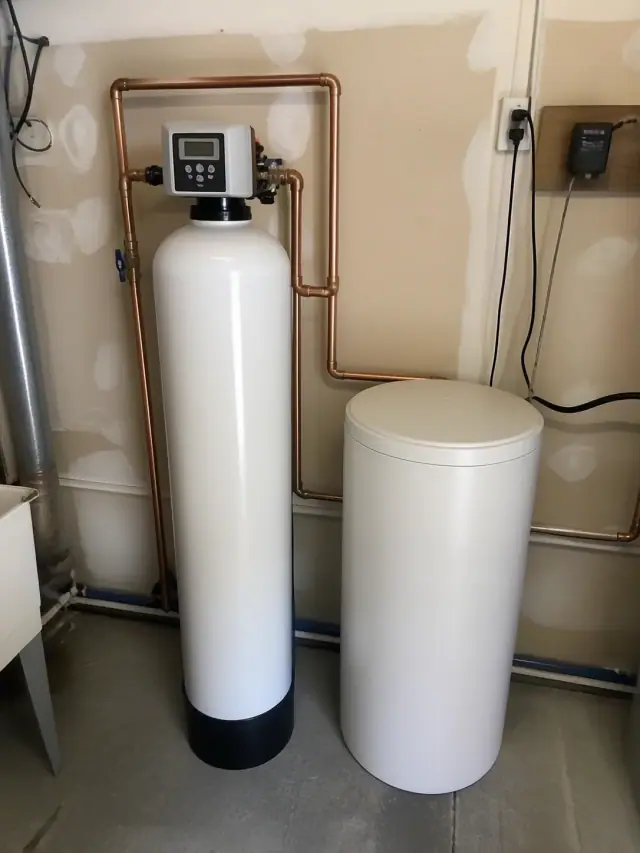
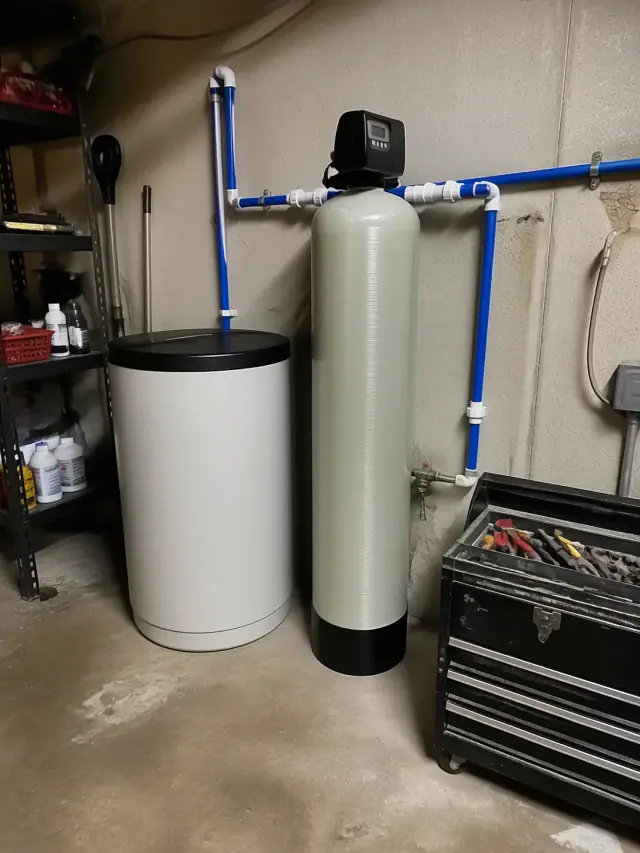
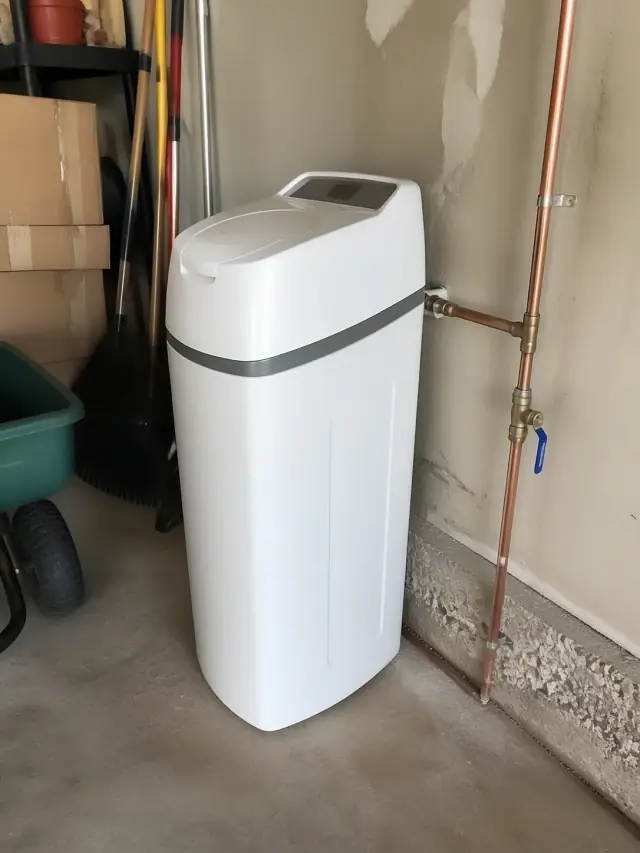
White water softener unit installed with copper pipes in a Mesa, AZ garage.

We install salt-based softeners with correctly sized mineral tanks, brine tanks, control valves, drain lines, and bypass assemblies. The system is programmed to your tested hardness level and household size so regeneration is based on actual capacity rather than a one-size-fits-all timer.

Request Estimate

Whole House Water Softener Systems

Whole house water softener system with copper piping installed in a residential garage in Mesa, AZ.

Whole-house systems treat incoming water upstream of distribution lines so showers, laundry, kitchen fixtures, and appliances all receive softened water. This approach is useful in Mesa because hard water affects far more than drinking water; it builds scale wherever heated or evaporating water touches a surface.

Request Estimate

Custom Water Testing

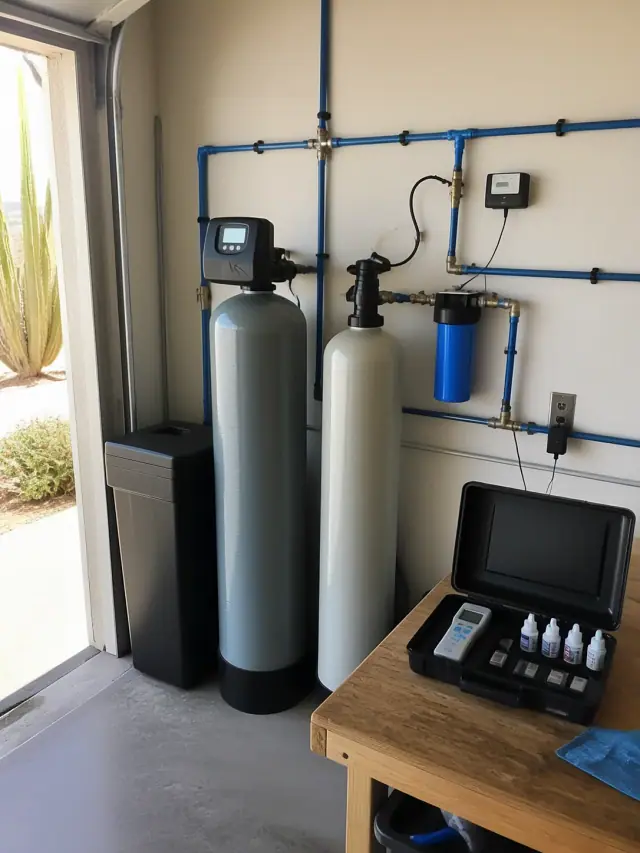
Water filtration system with blue PEX plumbing installed in a garage in Mesa, AZ.

Every recommendation starts with point-of-entry testing for hardness in grains per gallon, along with checks for chlorine or chloramine, iron, and sediment. Those results determine system capacity, whether pre-filtration is needed, and how the control valve should be programmed.

Request Estimate

Reverse Osmosis Integration

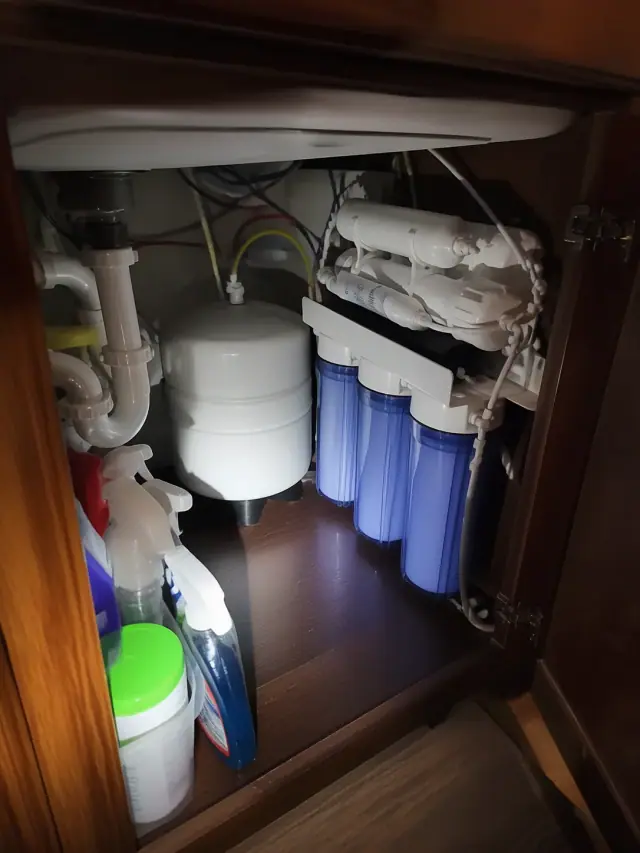
Reverse osmosis system with white tanks and blue filters installed under a kitchen sink in Mesa, AZ.

A whole-house softener removes hardness, but reverse osmosis improves drinking and cooking water by reducing dissolved solids through a semipermeable membrane. We pair RO systems with softened feed water when customers want both scale protection and cleaner-tasting water at the kitchen sink.

Request Estimate

Saltless Water Softener Alternatives

Saltless water softener system with copper piping installed on a garage wall in Mesa, AZ.

Saltless systems use template-assisted crystallization to condition hardness minerals rather than removing them through ion exchange. They can make sense for customers who want no salt, no brine discharge, or a septic-friendly option, though salt-based systems remain the strongest choice for very hard water above 15 GPG.

Request Estimate

Maintenance & System Support

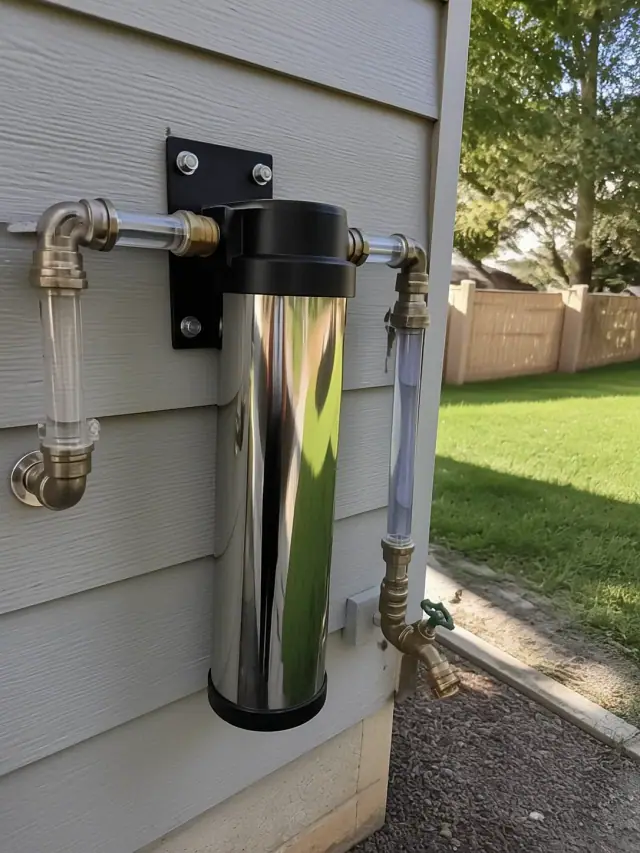
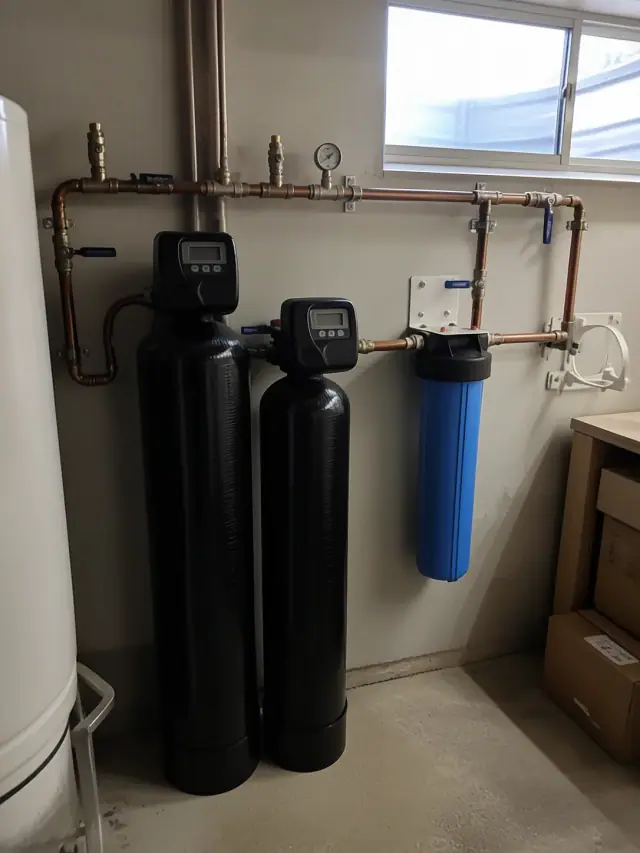
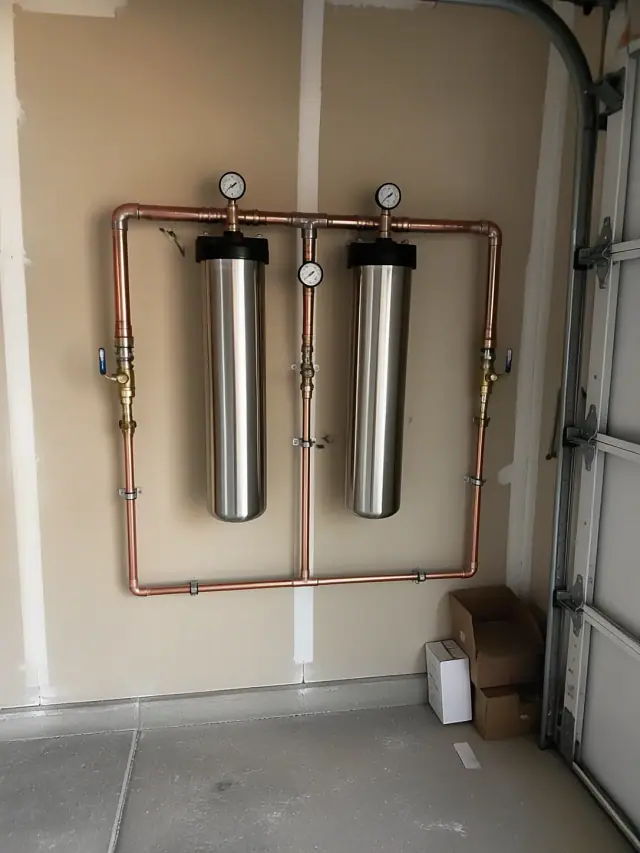
A water filtration system with copper pipes and a pressure gauge mounted on a utility room wall in Mesa, AZ.

After installation, we help homeowners understand salt refills, brine tank checks, resin care, and control valve service intervals. Most Mesa households add salt every four to eight weeks, inspect for salt bridges annually, and schedule valve seal or spacer service every five to ten years.

Request Estimate
Water Treatment Options

Types of Water Softener Systems

The right system depends on measured hardness, daily water use, budget, plumbing layout, and whether drinking-water filtration is part of the project. Mesa Water Softeners explains the cost and performance differences between standard salt-based units, higher-capacity systems, high-efficiency controls, saltless conditioners, and softener-plus-RO packages before installation begins.

Water filtration system with brine and mineral tanks installed in a Mesa, AZ garage.

32,000-Grain Salt-Based Systems

A 32,000-grain salt-based system is a common fit for smaller Mesa homes, especially one to three bathroom layouts with moderate daily demand. Local installed pricing for this size is described as approximately $950 to $1,275, depending on plumbing conditions and equipment choices.

  • Typical equipment range: $500-$900
  • Typical install range: $500-$700
  • Typical total range: $1,000-$1,600
  • Often selected for one to three bathrooms
  • Best sized after hardness testing and usage review
Request Estimate
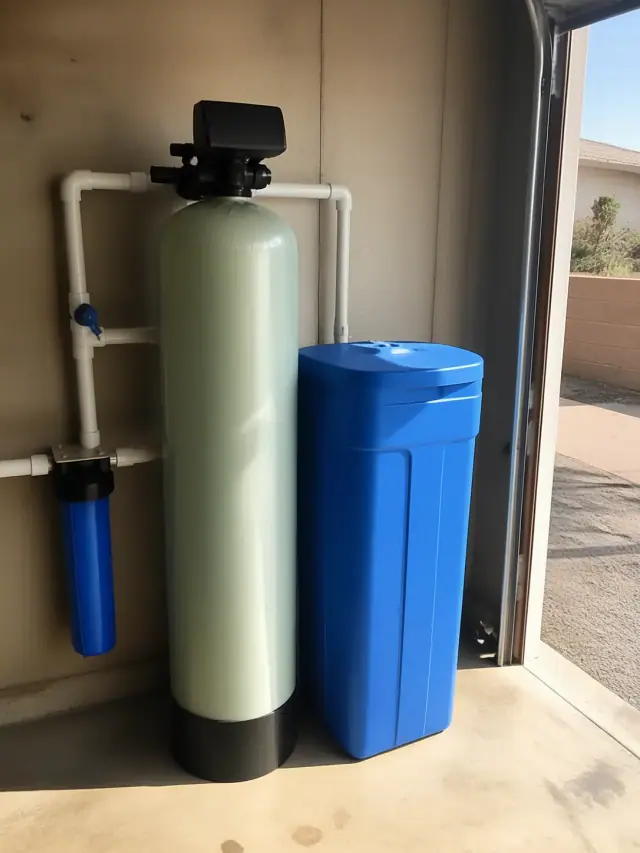
Water filtration system with a resin tank and blue brine cabinet installed in a garage in Mesa, AZ.

48,000-Grain Salt-Based Systems

A 48,000-grain system gives larger households more softening capacity between regeneration cycles. It can reduce overly frequent regeneration when daily water use or incoming hardness is too high for a smaller unit.

  • Typical equipment range: $700-$1,200
  • Typical install range: $500-$800
  • Typical total range: $1,200-$2,000
  • Useful for higher daily water demand
  • Sized to avoid wasteful daily regeneration
Request Estimate
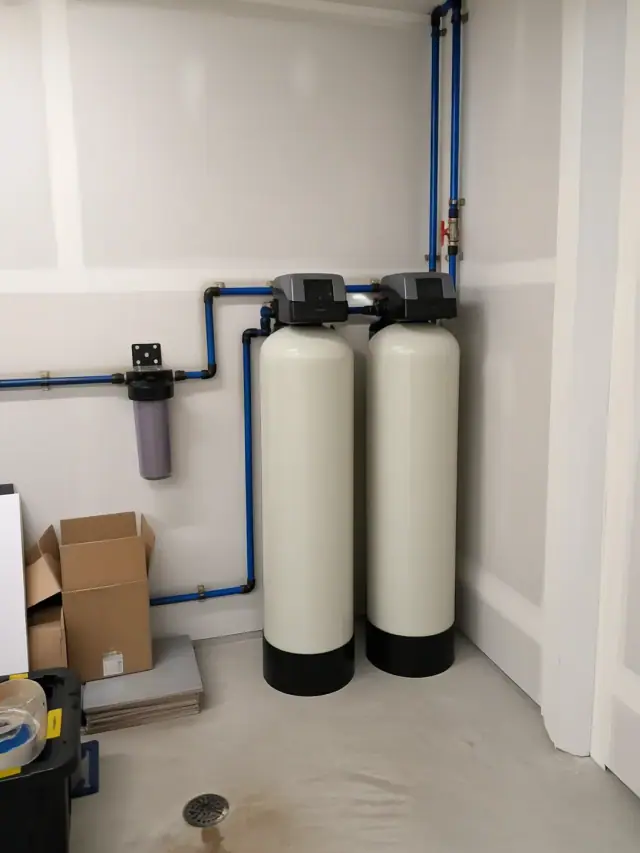
Two water filtration tanks installed with PEX piping in a Mesa, AZ garage.

High-Efficiency Demand-Initiated Systems

High-efficiency salt-based systems use a control valve that tracks actual water volume processed and regenerates only when the resin is approaching exhaustion. This is more efficient than a fixed time-clock system because regeneration follows real household use.

  • Typical equipment range: $900-$2,000
  • Typical install range: $600-$900
  • Typical total range: $1,500-$2,900
  • Uses demand-initiated regeneration technology
  • Programmed to the resin volume and salt dose
Request Estimate
Saltless water filtration system with copper piping installed in a residential garage in Mesa, AZ.

Saltless Template-Assisted Systems

Saltless systems condition hardness minerals through template-assisted crystallization instead of replacing calcium and magnesium with sodium. They do not create a brine discharge and may fit customers who prefer a no-salt treatment approach.

  • Typical equipment range: $800-$2,500
  • Typical install range: $500-$800
  • Typical total range: $1,300-$3,300
  • No salt refills or regeneration cycle
  • Best discussed against your tested hardness level
Request Estimate
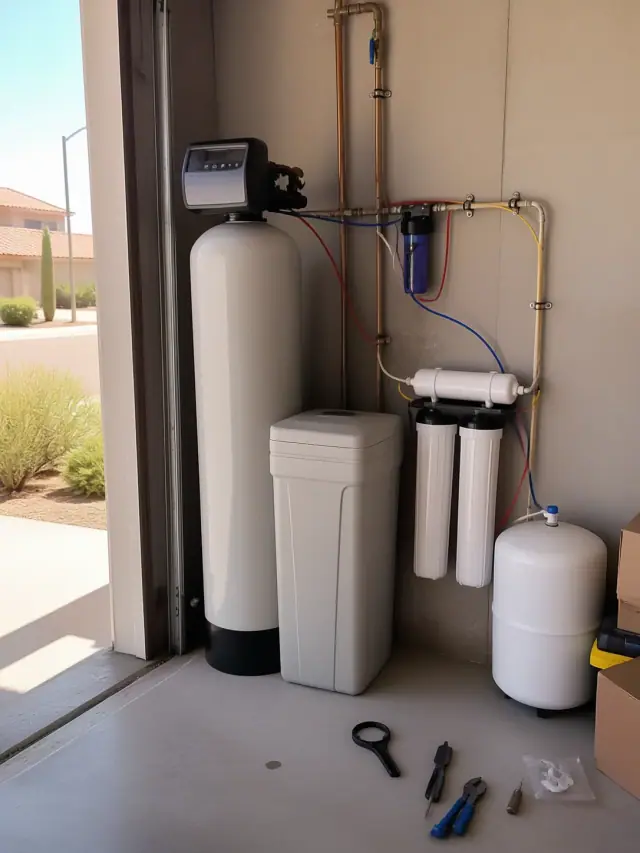
Water softener and reverse osmosis filtration system installed in a garage in Mesa, AZ.

Softener and Reverse Osmosis Packages

A salt-based softener plus a point-of-use reverse osmosis system combines whole-house scale control with dedicated drinking-water filtration. RO membranes reject dissolved solids down to 0.0001 microns, making the package useful for customers who want better fixture protection and cleaner-tasting kitchen water.

  • Typical equipment range: $1,200-$2,800
  • Typical install range: $800-$1,200
  • Typical total range: $2,000-$4,000
  • Softened feed water helps protect RO performance
  • Targets drinking and cooking water at the sink
Request Estimate
Finding Your Right Fit

Choosing the Right Water Softener System

Choosing the right water softener starts with the actual hardness load: incoming GPG multiplied by daily gallons used. A four-person household using about 75 gallons per person per day at 20 GPG creates a daily hardness load of 6,000 grains, so a 32,000-grain system would regenerate roughly every five days. Homes without a pre-plumbed softener loop, older galvanized piping, well water, iron, sediment, or high chloramine levels can change the recommended system and installation plan.

Custom Water Testing

We test incoming water at the point of entry before recommending equipment. Hardness, chlorine or chloramine, iron, and sediment results guide capacity, pre-filter decisions, brine tank sizing, and control valve programming.

Mesa Water Expertise

Mesa's water sources include Colorado River water via the Central Arizona Project canal and Salt River Project surface water, both associated with elevated total dissolved solids and desert-region hardness. That local context helps us anticipate scale, chloramine, sediment, and treatment needs before installation begins.

Clean Installation Work

A professional installation is more than setting tanks in the garage. We focus on supported piping, properly rated fittings, three-valve bypass options, separate drain paths, and air-gap drainage that helps prevent backflow contamination.

What Sets Us Apart

Why Choose Us for Water Softener Installation?

Mesa Water Softeners combines local water knowledge with practical installation details that affect performance for years. You get testing first, a written quote before work begins, recommendations that match your water rather than the most expensive system, and a setup designed for salt and water efficiency.

Get a Free Water Test

Mineral Buildup on Faucets & Fixtures

The white crust around faucet bases, showerheads, and toilet waterlines is calcium carbonate left behind as Mesa's hard water evaporates. In the desert climate, that buildup can show up quickly, clog aerators, restrict shower flow, and make fixture replacement a recurring expense unless hardness is treated at the source.

Soap Scum in Showers & Tubs

Calcium and magnesium react with soap and shampoo to create the gray film that clings to tile, glass, acrylic tubs, and shower doors. Soft water stops that chemical reaction, helping soaps lather properly and making bathroom cleaning easier between deep cleans.

Dishwasher Spots & Cloudy Glass

Spots on glasses and cloudy film after a dishwasher cycle usually come from dissolved minerals left behind as water dries. Once soft water feeds the dishwasher, mineral spotting is reduced and glassware can rinse clearer without blaming the appliance or detergent first.

Scale in Pipes & Water Heaters

Scale inside water heater tanks, heating elements, washing machine valves, and supply lines is the expensive hard water damage you usually do not see. Even a 1/16-inch layer on a water heater element can increase energy use, and tankless heaters can develop damaging heat exchanger scale within three to five years on untreated hard water.

Dry Skin, Dull Hair & Stiff Laundry

Very hard water can leave mineral residue on skin, hair, towels, and clothing, so rinsing never feels as clean as it should. Softened water rinses more completely and lets soaps, shampoos, and laundry detergent work without fighting calcium and magnesium.

Incorrectly Sized Softener Systems

An undersized system may regenerate too often, wasting salt and wearing the valve, while an oversized system may regenerate too infrequently and allow resin channeling. Accurate testing and usage calculations prevent inconsistent softness and unnecessary operating cost.

How It Works

Our Installation Process

Our process is built to remove guesswork before installation. We test the water, size the system, plan the plumbing layout, install clean connections with appropriate drainage, program the control head, and show you how to maintain the brine tank and resin bed.

01.

Test Incoming Water

We begin at the point of entry with hardness testing in grains per gallon, then check for chlorine or chloramine, iron, and sediment. The results show whether a standard softener is enough or whether carbon filtration, iron treatment, or sediment pre-filtration should be considered.

02.

Size the System

Capacity is calculated from your measured hardness and household water use, not a generic guess. This prevents daily regeneration from an undersized unit and inconsistent performance from a system that is too large for the resin bed to cycle properly.

03.

Plan Placement and Drainage

We identify the best installation point, usually in the garage near the water heater inlet or existing softener loop. The layout must allow salt access, tank clearance, stable placement, and a drain line that terminates with a proper air gap.

04.

Install Bypass and Connections

We shut off the main supply, tie into the supply line with appropriate fittings, connect the inlet and outlet, install the bypass assembly, and secure drain and overflow lines. Clean pipe support and sealed threaded connections help protect the installation over time.

05.

Program and Start Regeneration

The control valve is programmed to your tested hardness, resin volume, salt dose, household size, and regeneration settings. We run the initial regeneration cycle so the resin bed is charged and the system begins delivering soft water.

06.

Review Care and Support

Before we leave, we explain salt loading, salt bridge checks, drain line awareness, and the maintenance items that keep the system consistent. If iron levels are elevated, annual resin cleaner can help protect softening capacity.

Get Better Water

Schedule a Salt Water
Softener Consultation

Stop letting Mesa hard water shorten appliance life, spot glassware, and cover fixtures with scale. Request a free water test and upfront installation estimate from Mesa Water Softeners, and we will help you compare the right salt-based, saltless, filtration, or reverse osmosis options for your property.

Water Softener Help

Salt Water Softener FAQs

Have questions about salt water softener installation in Mesa, AZ? These answers cover cost, hardness levels, system types, sizing, maintenance, and what to expect before installation.

Call Our Experts

Salt-based water softener equipment typically ranges from $500 to $3,000, and professional installation in Mesa generally adds $500 to $1,000 depending on plumbing complexity. Most standard residential projects average around $1,500 for equipment and installation. A 32,000-grain unit for a one-to-three-bathroom home is commonly described at about $950 to $1,275 installed.

Mesa water commonly measures between 12 and 25 grains per gallon of hardness, while water above 10.5 grains per gallon is considered very hard on the Water Quality Association scale. That level of hardness can create fixture crust, soap scum, spotted dishes, dry-feeling showers, and scale inside appliances. A softener is a practical way to protect plumbing and equipment from those local water conditions.

For many Arizona homes, the value comes from reducing the scale that shortens appliance life and makes cleaning harder. Soft water can reduce detergent and soap use because it lathers and rinses more effectively. It also helps water heaters, fixtures, dishwashers, washing machines, and ice makers work with less mineral buildup over time.

A salt-based ion exchange softener removes calcium and magnesium from the water and replaces them with sodium ions. A saltless system usually uses template-assisted crystallization, which conditions hardness minerals so they are less likely to stick to surfaces rather than removing them. Saltless systems avoid salt refills and brine discharge, but salt-based systems remain the most effective option for very hard Mesa water.

A standard installation in a home with a pre-plumbed softener loop typically takes two to three hours, including programming and startup. Homes without a loop often take three to four hours because the supply line must be modified. Access, drain routing, pipe material, and any added pre-filtration can also affect the schedule.

Most Mesa households add salt to the brine tank every four to eight weeks, depending on hardness, capacity, and water use. The brine tank should be checked annually for salt bridges, and resin cleaner may be recommended annually if iron is elevated. Control valve seals and spacers typically need service every five to ten years.

DIY installation may be possible when a home already has a pre-plumbed softener loop, which is common in many East Valley homes built after 2000. However, correct sizing, bypass installation, air-gap drainage, and control valve programming all affect performance and code compliance. Professional installation reduces the risk of backflow issues, leaks, wasted salt, and inconsistent softness.

We test incoming water at the point of entry for hardness in grains per gallon, then check chlorine or chloramine, iron, and sediment. Ferrous iron and ferric iron can require different treatment approaches, and sediment may call for a pre-filter. The results determine softener capacity, filter recommendations, and regeneration programming.

The best location is typically near the main water entry point, often in the garage near the water heater inlet or existing softener loop. The mineral tank and brine tank need stable placement, service clearance, and easy access for salt loading. Drain lines should terminate with a proper air gap, and the brine overflow should use a separate drain path.

Yes. A whole-house softener removes hardness throughout the property, while a reverse osmosis system at the kitchen sink targets drinking and cooking water. RO membranes reject dissolved solids down to 0.0001 microns, and softened feed water can help protect the RO system from hardness scale.

Sizing is based on your measured hardness and daily water use. For example, a four-person household using about 75 gallons per person per day at 20 GPG creates a daily hardness load of 6,000 grains. Under that load, a 32,000-grain system would regenerate roughly every five days, which is why testing and usage review matter.

A salt-based softener is designed to remove hardness, not solve every water quality issue by itself. Elevated iron may require oxidizing filtration upstream, sediment may require a 5-micron pre-filter, and chloramine concerns may call for catalytic carbon filtration. Testing shows whether those additions are helpful for your home.

Pricing changes when a home lacks a softener loop, has older galvanized piping, needs extra bypass work, or requires pre-filtration. Well water installations are often more complex and are described in the Mesa area at about $1,646 to $3,292 including materials and labor. Mesa Water Softeners provides a written, itemized quote before work begins so equipment and labor are clear.