Outdoor Installation Can Work
A water softener can go outside in Arizona when the mineral tank, brine tank, control valve, drain, and power connection are protected like working equipment, not left fully exposed.
Yes. Mesa Water Softeners explains that a water softener can be installed outside in Arizona when the unit is shaded, ventilated, drained, powered, and protected from freeze exposure. In Mesa, the decision matters because garages are often used for vehicles, tools, or workshops, while outdoor equipment faces intense sun and occasional winter nights cold enough to damage exposed fittings.
A water softener can go outside in Arizona when the mineral tank, brine tank, control valve, drain, and power connection are protected like working equipment, not left fully exposed.
Mesa summer highs regularly clear 110 degrees F, so shade and ventilation matter as much as winter insulation around exposed fittings and bypass valves.
Before approving an outdoor location, confirm sun exposure, main-line access, drain routing, electrical availability, salt-loading clearance, and enough room for service.
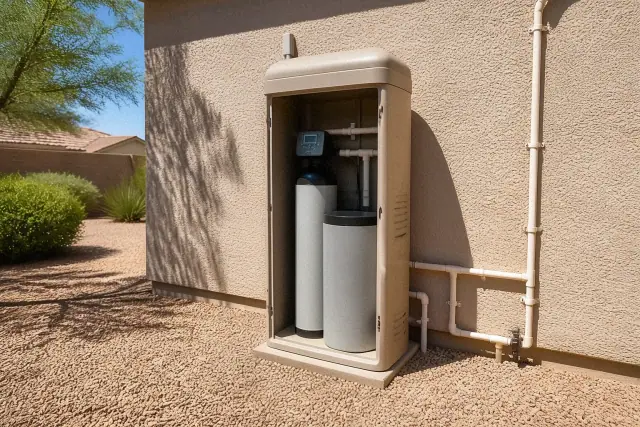
A ventilated enclosure or shade structure against an exterior wall. This image helps make service clearance, airflow, and sun protection easy to understand.
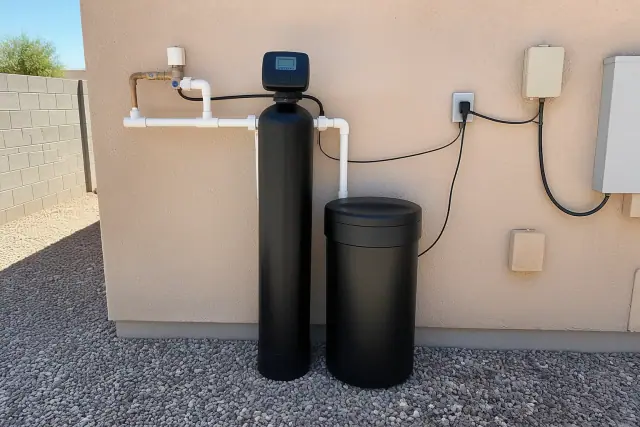
How an outdoor softener ties into the main water line before interior plumbing. Include the drain line and nearby power source as practical planning details.
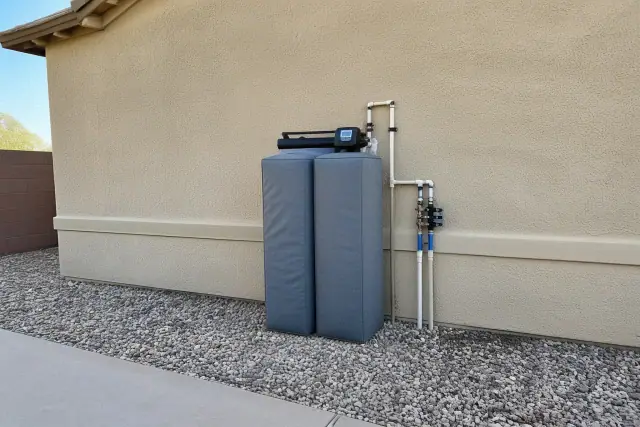
Exposed fittings and the bypass valve protected from cold. Leave enough space in the visual for salt loading, brine tank cleaning, and annual inspection.
Locate the main water line, drain path, power source, and a shaded wall or enclosure area before choosing the final equipment spot.
Direct afternoon sun, a dark cabinet, poor ventilation, no freeze protection, or a long plumbing reroute can make outdoor placement more expensive or less reliable.
Plan before peak summer heat or a cold snap, especially near outlying areas and the Superstition foothills where overnight lows can drop harder.
Do not install the softener fully exposed with no enclosure or shade, because that can void manufacturer coverage for the electronic head and cabinet.
| Condition | Why It Matters in Mesa | Preferred Setup |
|---|---|---|
| Direct afternoon sun | Unshaded cabinets can top 130 degrees F and stress electronics, resin, and plastic valves. | Use a north or east wall, shade structure, or ventilated enclosure. |
| No interior softener loop | Older slab-built ranch and single-story homes may not have indoor utility plumbing ready. | Place the unit on an outdoor pad tied into the main line before interior plumbing. |
| Winter exposure | Low 30s or high 20s can split exposed valve bodies, fittings, or pipe. | Insulate exposed fittings, protect the bypass valve, and add heat tape where needed. |
Outside placement means the softener sits on a pad or inside an enclosure and ties into the main water line before it reaches interior plumbing. It still needs the same core parts as an indoor setup: mineral tank, brine tank, control valve, bypass valve, power source, and drain line. For many older East Valley slab-built ranch and single-story homes, that can be more practical than giving up garage space or adding an interior softener loop.
The answer changes with enclosure quality, shade direction, main-line access, drain routing, electrical availability, and water hardness swings from Salt River Project canal water, Central Arizona Project deliveries, and local groundwater. Powder-coated steel, aluminum, and resin enclosures with louvered vents help against UV load and blowing dust without trapping heat. Most complete outdoor installations run $1,200-$2,800, close to the Phoenix-area average of $1,550, and most are scheduled within 7-10 days and completed in one day unless plumbing reroutes or custom enclosures add a few days.
Homeowners usually ask whether outdoor placement will hurt performance, whether it affects manufacturer coverage, and what maintenance changes once the unit is outside. The practical answer is to protect the unit from direct sun, keep the enclosure ventilated, clean the brine tank as harder Arizona water leaves scale and sediment, inspect fittings before winter, and watch for shorter regeneration cycles or rising salt use that may point to heat-stressed resin.
Send a few details about the softener location, sun exposure, drain path, power access, and whether the home already has an interior loop. A local installer can help compare indoor and outdoor placement before you approve the scope.