Yes, Usually
In Maricopa County, including Mesa, the question is usually less about whether the water is hard and more about which system and size fit the home.
If you live in Mesa, the answer is almost always yes: local tap water commonly runs hard to very hard, and that mineral load can shorten water heater life, leave scale on fixtures, and make soaps work harder. Mesa Water Softeners starts with in-home testing because hardness can vary by neighborhood and water source, but most homes are choosing between system type and proper sizing rather than whether treatment matters at all.
In Maricopa County, including Mesa, the question is usually less about whether the water is hard and more about which system and size fit the home.
Household size, bathrooms, source water, laundry volume, tankless water heaters, skin sensitivity, and visible fixture scale can all change the recommendation.
An in-home test should confirm hardness, chlorine, iron, and sediment before comparing ion-exchange softening, salt-free conditioning, or filtration combinations.
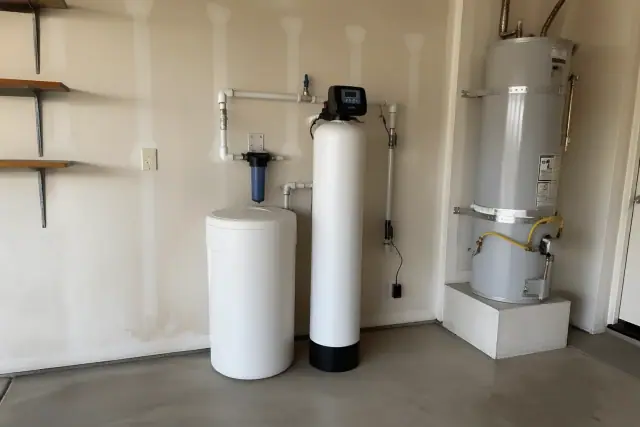
White mineral deposits on faucets, cloudy glassware, or shower doors. These are practical signs of calcium and magnesium in hard water.
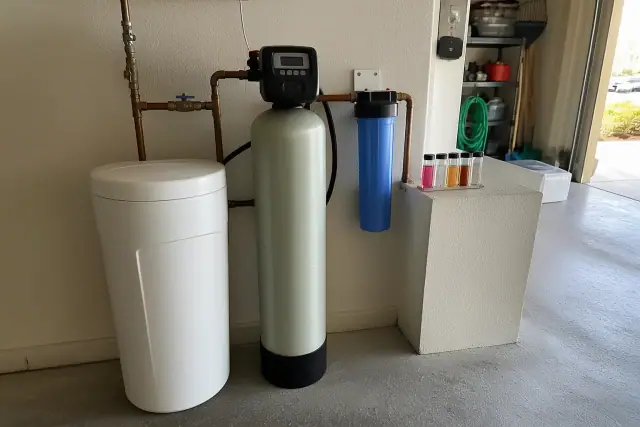
A simple test setup beside a kitchen faucet. The recommendation should be based on measured water quality, not only on a neighborhood assumption.
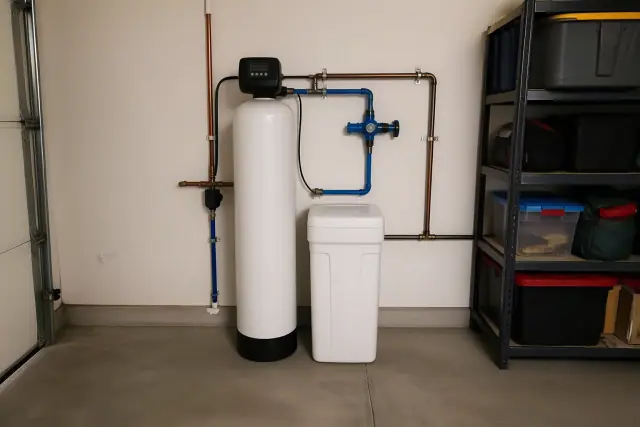
A neat softener installation with clear bypass valve placement, drain routing, and room for maintenance. Clean layout matters for long-term reliability.
Mesa water commonly tests at 12-17 gpg, and anything above 10.5 gpg is considered very hard, so most homes are not dealing with a borderline condition.
Given a typical 10-15 year system lifespan, many Arizona homeowners weigh the equipment cost against reduced scale damage, appliance repairs, and soap or detergent waste.
Act sooner if scale is showing up on fixtures, a tankless water heater is involved, or an undersized unit would push salt use toward 80-100 pounds a month.
Avoid picking the biggest or most expensive unit by default. A system matched to actual water chemistry and household demand is the better target.
| Decision Point | What the Draft Supports | Recommended Action |
|---|---|---|
| Mesa hardness level | Municipal water commonly tests 12-17 gpg; above 10.5 gpg is very hard. | Plan around softening unless an in-home test shows an unusual result. |
| Existing plumbing | Basic pre-plumbed installs are listed at $600-$1,500 and may take about half a day. | Confirm the softener loop, bypass valve placement, drain routing, and any main-line permit needs. |
| Standard system budget | Standard whole-house softeners are listed at $3,900-$5,200 and are typically planned for a 10-15 year lifespan. | Size the system to measured hardness, bathrooms, water use, and appliance load. |
| Efficiency or filtration upgrade | Demand-initiated systems are listed at $4,200-$5,800; softener plus filtration combinations at $5,500-$7,500+. | Compare upfront cost with salt, water, chlorine, iron, sediment, and maintenance priorities. |
For most Mesa homes, a water softener is a way to manage hard-water scale before it affects water heaters, faucets, dishes, laundry, hair, and skin. The exact recommendation still depends on testing because a single-person condo near Dobson Ranch and a five-bedroom home in Eastmark or Las Sendas can need different capacity.
The draft points to household size, bathrooms, laundry volume, source water, measured grain count, and sensitive appliances as key factors. Mesa water may come from Salt River Project canal water, Central Arizona Project allocations, or groundwater wells, while system options can include ion-exchange softening, salt-free conditioning, or softener and filtration combinations that account for chlorine, iron, sediment, and NSF/ANSI 44 softener performance standards.
The usual follow-ups are cost, install timing, code requirements, and whether a high-efficiency unit is worth it. Straightforward pre-plumbed installations typically take about half a day, homes without loops need added plumbing work, City of Mesa main-line work requires licensed plumber installation and permits, and demand-initiated regeneration can reduce waste enough to avoid an estimated $1,500-$2,000 in unnecessary salt purchases over a 10-year period.
Share your fixture scale, household size, bathrooms, and water heater concerns before approving equipment. A local water test can confirm hardness, chlorine, iron, sediment, and sizing needs so the recommendation fits your home.