Installed Cost Range
A normal whole-house installation in Arizona usually lands in the $1,800 to $5,500 range, with final cost tied to equipment, labor, and site conditions.
Mesa Water Softeners explains water softener installation costs in Arizona so Mesa homeowners can compare realistic ranges before scheduling work. Whole-house systems typically run $1,800 to $5,500 installed, with many Phoenix metro homes landing between $2,400 and $3,800. Final pricing changes with system type, plumbing layout, household size, permits, and whether the home already has a softener loop.
A normal whole-house installation in Arizona usually lands in the $1,800 to $5,500 range, with final cost tied to equipment, labor, and site conditions.
A pre-plumbed softener loop is cheaper than a retrofit that needs new supply lines, drain changes, electrical work, or permit coordination.
Testing hardness, chlorine, pH, iron, and sediment before ordering equipment helps match the system size to the home instead of guessing.
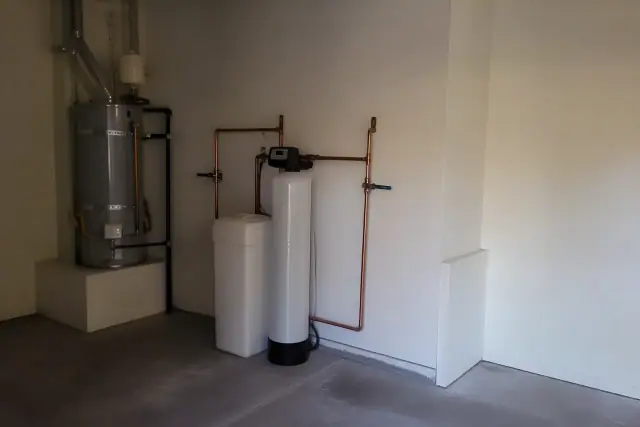
The garage or utility area where a pre-built loop can reduce labor time. Clear access is one reason a straight swap costs less.
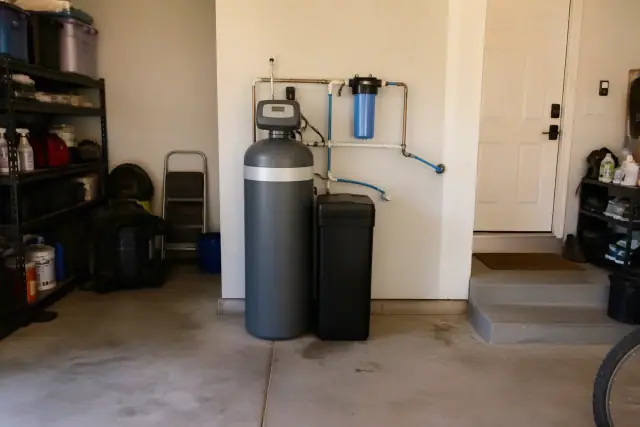
New copper or PEX routing, drain tie-in planning, or tight access points. These conditions explain why retrofit quotes can rise quickly.
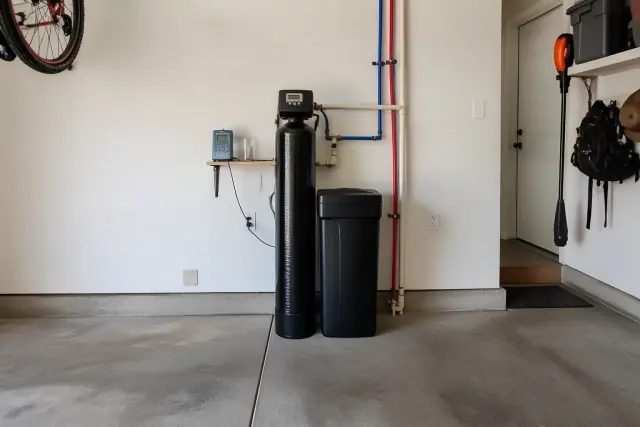
A local water test being checked before equipment is selected. Mesa hardness can shift with source mix, so measured hardness matters.
Plan on $1,800 to $5,500 for most whole-house installs, with broader statewide outliers from roughly $1,200 to $10,000 when capacity, brand, or reverse osmosis changes the scope.
A 32,000-grain unit may fit a smaller household, while a family of five in a 2,500 square foot home may need 48,000 to 64,000 grains of capacity.
A straight replacement usually takes 2 to 4 hours, while a full retrofit with new supply lines, drain work, or electrical can take 6 to 8 hours or more.
Ask whether the quote includes testing, permit fees of about $50 to $150, disposal at $50 to $150, and add-ons such as valves, drain rerouting, or a GFCI outlet.
| Cost Situation | Typical Range | What Changes It |
|---|---|---|
| Standard labor on an existing loop | $300 to $800 | Like-for-like replacement, clear access, and no new drain or electrical work. |
| Whole-house installed softener | $1,800 to $5,500 | System type, household size, plumbing layout, and included startup work. |
| Single-tank salt-based system | $900 to $2,500 installed | Usually the lower-cost option for many Mesa homes on municipal water. |
| Dual-tank or salt-free option | $1,500 to $6,000+ | Continuous soft water, salt-free conditioning, extra tanks, or more floor-space planning. |
| Retrofit or modification work | $600 to $1,500 added | New supply lines, drain connections, electrical needs, permits, or inspection timing. |
The estimate should be read as a scope question, not just a unit price. Mesa's water can run hard, with regional hardness context around 15 to 25 grains per gallon and local source-mix shifts around 12 to 20 grains per gallon. That is why water testing, fixture count, household usage, and the existing plumbing loop matter before a system is priced.
Quotes move when the job changes from a like-for-like replacement to new copper or PEX lines, drain tie-ins, backflow or air gap requirements, or electrical for a metered valve. Hourly plumbing rates in Mesa may run $75 to $150, and East Valley rates are generally within $10 to $20 per hour of Phoenix proper. Confirm whether the price includes startup programming, old-tank haul-away, permit handling, water testing, and support after installation.
Homeowners usually ask whether a plumber is needed, how long the work takes, whether a permit applies, and whether a softener is tax deductible. In most cases, professional labor is $300 to $800 on an existing loop, timing is 2 to 4 hours for a standard swap, permits apply when new potable water lines or drain connections are altered, and Arizona does not offer a standard state tax deduction for residential water softeners.
Send details about the current plumbing, household size, and hard-water symptoms. A 15 to 20 minute water test for hardness, chlorine, pH, iron, and sediment can help confirm the right system size and installation scope before equipment is ordered.