Annual Service Rhythm
Plan on one professional service visit every 12 months for most residential systems, then adjust upward when usage, hardness, or symptoms demand it.
Mesa Water Softeners recommends most Mesa water softeners get professional service once every 12 months, with monthly salt checks between visits. Mesa's 15 to 18 grains-per-gallon hardness, household usage, and equipment type can tighten that schedule. This guide explains the intervals, warning signs, costs, and maintenance steps that help prevent premature softener failure.
Plan on one professional service visit every 12 months for most residential systems, then adjust upward when usage, hardness, or symptoms demand it.
Mesa hardness, household size, system sizing, and whether the unit is point-of-use, portable, or whole-house all change how quickly salt and resin capacity are used.
Monthly salt checks, salt bridge breakup, and brine tank inspections help catch problems before scale, pressure drops, or inconsistent softening return.
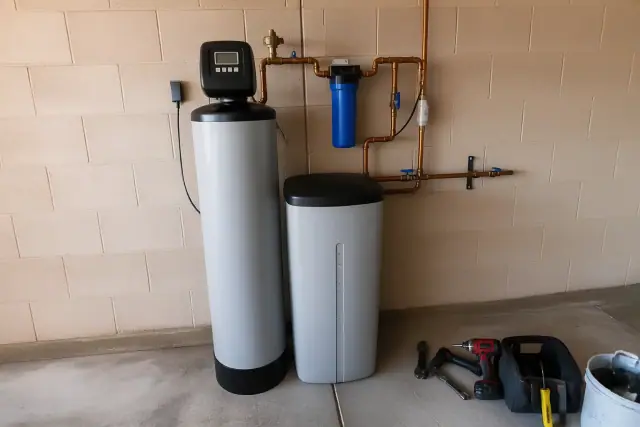
The salt level in the brine tank with the tank at least one-quarter to one-half full. This visual helps homeowners recognize when a refill or salt bridge check is due.
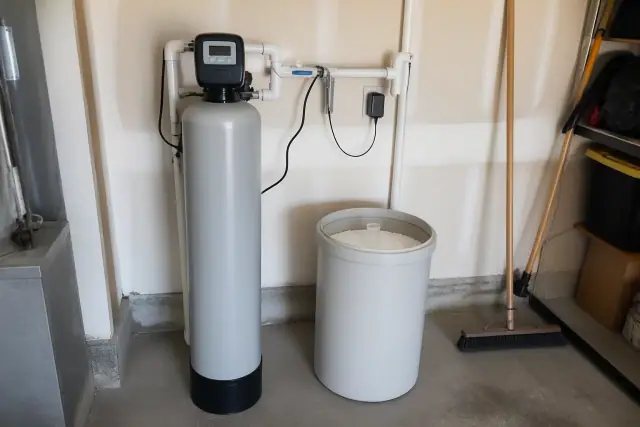
Crusted salt above the waterline and sludge-like buildup near the tank bottom. These issues can block regeneration even when the tank appears to contain salt.
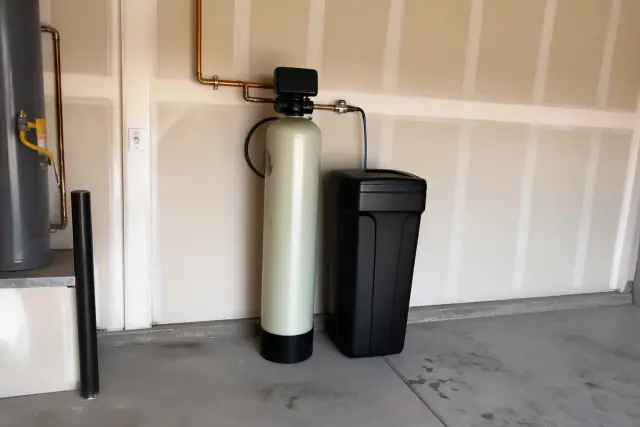
A technician checking the resin tank and valve settings. This service step connects symptoms like hard water returning or longer regeneration cycles to the correct fix.
Start with the salt level and recent water feel: soap that will not lather, white scale, cloudiness, or a salty taste can show the softener needs attention before the next annual visit.
A two-person condo near Downtown Mesa may use far less water than a five-person Las Sendas home with a pool and irrigation, so custom water testing and usage matter more than a generic calendar.
Book service sooner when pressure drops, regeneration cycles get longer or more frequent, or salt consumption rises without a matching change in household usage.
Avoid replacing a system just because performance slipped; a resin bed cleaning, valve recalibration, or brine tank cleaning may solve the issue if the unit is still within its useful life.
| Maintenance Item | Typical Interval | Why It Matters |
|---|---|---|
| Professional service visit | Every 12 months for most residential systems | Confirms hardness settings, valve operation, resin performance, and brine tank condition. |
| Salt level check | Monthly; keep the tank one-quarter to one-half full | Prevents salt starvation and catches salt bridges before hard water returns. |
| Mushing inspection | Every 2 to 3 months | Finds sludge-like buildup that can block normal regeneration. |
| Resin bed evaluation | Every 10 to 15 years, or sooner with symptoms | Helps decide whether cleaning, recalibration, repair, or replacement makes sense. |
For most Mesa homeowners, water softener service is an annual professional visit supported by monthly homeowner checks. The annual visit should confirm hardness settings, inspect the resin bed and brine tank, and verify that the control valve is regenerating correctly. In very hard 15 to 18 grains-per-gallon water, delaying service can let scale return to fixtures, water heaters, and appliances faster.
The schedule tightens when water use is high, the softener is undersized, iron or sediment exposure is elevated, or the unit is point-of-use or portable with a smaller resin volume. Demand-initiated regeneration can reduce wasted salt and water because it responds to actual usage rather than a fixed timer. Regular service also protects the expected 10-to-15-year system lifespan; neglected systems may lose several years of useful life.
Common follow-ups are cost, visit length, and whether service is enough. A basic inspection generally costs $40 to $100, repairs are usually $150 to $600, and complex whole-house valve issues can run up to $982; with salt and routine care, yearly maintenance averages around $700. Most routine visits take 30 minutes to an hour, while deeper brine tank cleaning or valve work can take longer. If the unit is under 10 years old, service often makes sense first; if it is approaching 15 years and repairs are frequent, replacement may be the better discussion, though some high-quality systems can function up to 20 years with proper maintenance.
Share your water usage, salt level, and symptoms so a local technician can help confirm whether you need routine service, brine tank cleaning, resin evaluation, or a repair estimate.